Table of contents
- Tips for Dry Van Owner-Operators
- Understand Your Costs to Set Profit Targets
- Choose High-Paying Loads and Lanes
- Minimize Deadhead with Strategic Route Planning
- Leverage Partial Loads for Higher Revenue
- Build Strong Broker and Shipper Relationships
- Improve Fuel Efficiency and Manage Maintenance Costs
- Use Dispatch Services to Your Advantage
- Conclusion: Keep Your Dry Van Truck Profitable
- Frequently Asked Questions
Tips for Dry Van Owner-Operators
Are you a dry van owner-operator struggling to boost your bottom line? In today’s competitive trucking market, running a dry van truck profitably takes more than just hard work – it takes strategy. Costs like fuel and maintenance are high, and freight rates can swing with the market. The good news is that dry van freight demand is expected to grow in 2025 (with volumes projected to rise about 1.5%), offering opportunities for those prepared to capitalize. This guide will walk you through practical dry van owner-operator tips to maximize earnings. From smart load selection and route planning to controlling expenses, these tactics come straight from industry experts and seasoned drivers. Let’s turn your dry van miles into money with strategies that keep your wheels turning and your profits growing.
Understand Your Costs to Set Profit Targets
Every successful dry van owner-operator starts with a clear grasp of their operating costs. Knowing your expenses per mile – from fuel and tires to insurance and truck payments – gives you a baseline for the rates you need to earn on each load. You have to know what profitability looks like to your business. Every truck has a different cost structure, so get your baseline first. In other words, calculate your fixed costs (truck lease/loan, insurance, permits) and variable costs (fuel, maintenance, tolls) on a per-mile basis. This cost per mile is the minimum rate your dry van truck must earn to break even.
Understanding your cost structure lets you set informed rate targets. For example, if your total cost comes out to $1.50 per mile and you want a healthy profit, you might aim for loads paying $2.00+ per mile. In early 2025, the average dry van spot rate was about $2.05 per mile (with contract rates around $2.44), but top owner-operators routinely beat the averages by targeting higher-paying freight. The key is to treat your dry van truck like a business: know your numbers and refuse loads that don’t meet your profit threshold. By being selective and basing decisions on data, dry van owner-operators can avoid running for cheap rates that barely cover costs.
Staying on top of finances also means preparing for leaner times. Trucking is cyclical – rates might dip due to market slumps or seasonal lulls. When the going gets tough, the best owner-operators adapt. They run more miles and cut costs where they can to compensate for lower rates. This might mean tightening your fuel budget, postponing non-essential upgrades, or finding extra loads to fill gaps. The bottom line: you can’t maximize earnings if you don’t first maximize your efficiency. Know your expenses in detail, set clear target rates above those costs, and measure your performance regularly. This financial discipline is the foundation for all other profit-boosting strategies for dry van trucking.
Choose High-Paying Loads and Lanes
Not all freight is equal – the loads you haul and the lanes you run make a huge difference in your owner-operator earnings. To maximize income, focus on high-paying dry van loads and profitable lanes. Start by researching trends in the spot market and understanding which industries or regions pay well for dry van freight. For instance, loads tied to retail, e-commerce, or certain manufacturing goods may offer better rates than commodity warehouse freight. Seasonal demand spikes can also work in your favor. Retail surges in the fall (September–October) often drive up dry van rates for the holiday season, and produce harvests in late spring can tighten capacity even for dry vans indirectly. Plan to be in the right place at the right time to catch these higher rates – positioning your truck in hot markets during peak seasons can yield a windfall.
Just as important is where you find your loads. Many dry van owner-operators rely on load boards and broker lists to source freight. Using the best load boards for owner-operators can connect you with higher-paying opportunities. Remember that the posted rate is often just a starting offer – savvy carriers negotiate. If you’re handling your own loads, don’t hesitate to push for a higher rate or additional pay for extra stops, detention, or layovers. Even a few more cents per mile adds up over the long haul. If negotiating isn’t your forte, consider working with a dispatch service or broker who excels at it. Professional dispatchers can often secure better rates on your behalf by leveraging their industry contacts and knowing the market benchmarks. In fact, experienced dispatchers build strong relationships with freight brokers, sometimes getting “first dibs” on choice loads and better terms – advantages that solo owner-operators typically miss out on.
Also, be strategic about lanes. Some routes consistently pay more than others due to supply-demand imbalances. For example, freight going into rural areas might pay well going in, but those areas have fewer loads outbound (meaning potential deadhead coming out). A smart dry van owner-operator will factor round-trip economics into load decisions. It can make sense to take a slightly lower rate into a busy freight hub if it sets you up for a highly paid load out. Over time, aim to develop a set of regular lanes or customers that provide steady, decent-paying freight for your dry van truck. Consistency can smooth out the swings in spot market rates. And whenever possible, look for dedicated lanes or contracts – even if the rate is just average, the reliability and reduced time searching for loads can improve your overall earnings. The goal is to keep your dry van loaded with well-paying freight as consistently as you can.
(Internal Tip: Our dry van dispatch team specializes in expert load matching for dry van trucks, focusing on highest-paying loads tailored to your lane preferences. Having a partner with a wide broker network can open doors to premium freight.)
Minimize Deadhead with Strategic Route Planning
Empty miles are revenue killers. Every mile your dry van truck runs empty (or “deadhead”) is essentially an investment with no return – you’re burning fuel and time without getting paid. One of the quickest ways to boost owner-operator earnings is to aggressively reduce deadhead and out-of-route miles. This requires strategic route planning and sometimes creative thinking. Always be planning your next move: when you take a load to a destination, you should already be working on (or have lined up) the next load out of that area. Modern load boards and freight apps can help by letting you search for loads near your delivery location ahead of time. Some even allow searching for return loads before you book the outbound. By coordinating backhauls, you can turn what would have been empty return trips into money-makers.
Think of planning trips like solving a puzzle – the aim is to connect the dots so that your dry van is almost always loaded. For example, if you deliver in a city that isn’t a freight hub, you might plan a short deadhead to a nearby major market rather than hauling cheap freight immediately out of a weak area. A 100-mile empty reposition to a strong freight city can be worth it if it leads to a high-paying load the next day. The key is to measure and minimize your deadhead percentage. Industry-wide, about 20% of miles can be empty, but top owner-operators often drive under 10% empty miles by carefully planning routes. Use all available tools: load boards, broker contacts, and dispatch services that work 24/7 to find you a reload. When working with a dispatch service, ask how they plan routes – a good dispatcher will optimize your lanes to secure reloads with minimal layover. In fact, dispatchers often leverage their network to arrange “triangulated” runs – linking a series of loads in different directions that loop you back home with very little deadhead in between.
Strategic route planning isn’t just about loads, though. It’s also about timing and regulations. As a dry van owner-operator, you have to juggle Hours of Service rules, appointment times, and traffic patterns. Plan routes that avoid known bottlenecks (rush hour in big cities) and use your hours efficiently. Sometimes leaving a few hours earlier or later can make the difference between breezing through a route or getting stuck idle (wasting time and fuel). 24/7 dispatching support can be a game-changer here – if an unexpected delay hits at 2 AM or you need to rearrange loads over a weekend, having round-the-clock help means you’re not losing precious time. A reliable dispatch partner will rework your schedule and find new loads on the fly to keep you moving, even in the middle of the night. The bottom line: every empty mile and every hour parked is lost money. By planning ahead and staying flexible on routes and timings, you ensure your dry van truck spends more time earning and less time deadheading.
Leverage Partial Loads for Higher Revenue
Want to really maximize earnings with your dry van? Don’t overlook partial loads. A partial load (or LTL – less-than-truckload) means filling your trailer with two or more smaller loads for different customers, instead of one full load. It’s a strategy that can significantly boost your revenue per mile if managed well. Think of it like ridesharing for freight: instead of one client paying for the whole trailer, you have multiple shippers each paying for their portion – and the combined income can exceed what a single full load would pay. For example, two partial dry van loads paying $1.70 per mile each effectively bring in $3.40 per mile when hauled together. Many dry van owner-operators use this tactic to exceed the typical spot rates. In fact, by combining partial loads, a dry van truck can achieve the highest rate per mile – often well above $3.00 per mile in the right scenarios.
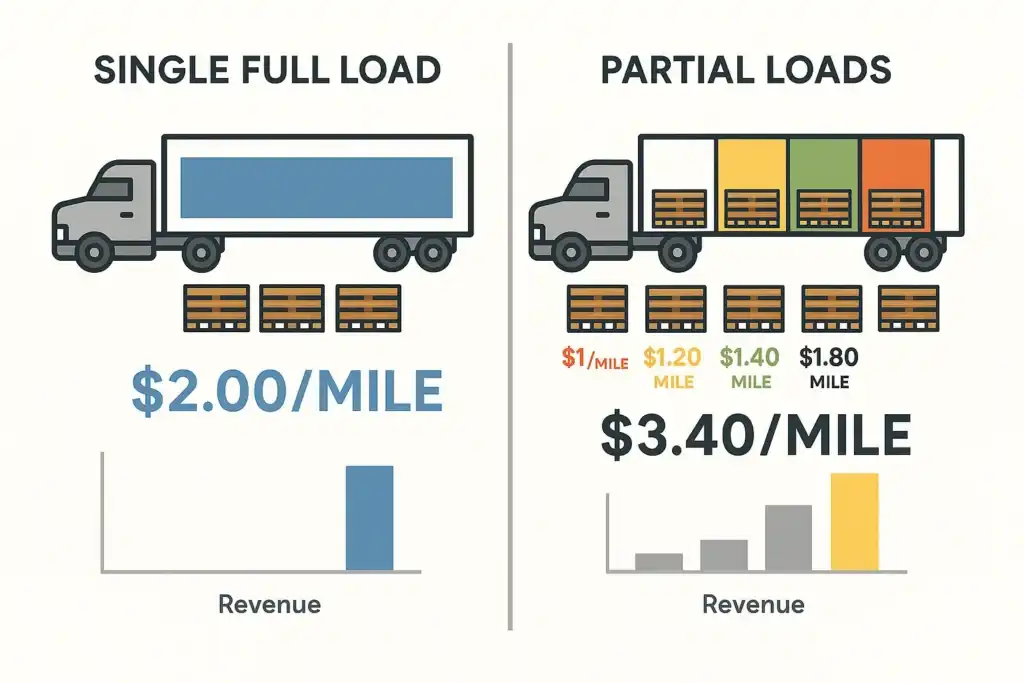
However, running partials requires careful planning and coordination. You need to ensure the loads are compatible (e.g. they physically fit together and won’t damage each other), and you must juggle multiple pickup and delivery appointments. Time management is critical: you don’t want a small partial load causing big delays that eat into your driving hours. When done correctly, though, partials can dramatically increase what you earn for a given trip. The key is to plan partial load combinations that align – for instance, picking up two loads from the same region going in the same direction, or a short hop partial that fills otherwise empty space on a longer haul. Some owner-operators use load boards specifically filtering for partials, or work with brokers who specialize in LTL matchmaking.
If this sounds complex, that’s because it can be. This is where a good dispatch service proves its worth: an experienced dispatcher can coordinate partial loads for you, handling the scheduling and paperwork for multiple shippers so you can focus on driving. They can also negotiate to make sure each partial load pays fairly – remember, you shouldn’t haul two loads for the price of one; each shipper should pay a strong rate for the space they use. With the right approach, filling your trailer via partials is a powerful dry van load strategy to increase earnings. You’ll reduce wasted capacity and achieve a higher yield from every mile driven. Many drivers are surprised at how much more they take home when they start mixing and matching loads. It may require a bit more work, but the payoff in revenue can be substantial.
Build Strong Broker and Shipper Relationships
Relationships are currency in the trucking industry. While one-off spot loads from random brokers can pay the bills, building long-term relationships can unlock better freight and steadier earnings. Seasoned dry van owner-operators make a point to network with brokers, dispatchers, and even direct shippers. Why? Because trust and familiarity lead to repeat business and preferential treatment. Brokers who know you and value your service may call you first with high-paying loads, even before posting them on load boards. They know you have a dry van truck in the area and can get the job done reliably. These kind of arrangements give you consistent work at good rates without the scramble. As one dispatch expert put it, strong broker relationships can lead to dedicated lanes, less competition for loads, and better rates and terms. In other words, who you know often directly impacts what you earn.
So how does an owner-operator build these connections? Start with professionalism and performance. Always communicate and deliver on time. If a broker or shipper can count on you to handle freight without issues, they’ll remember you. Something as simple as updating a broker promptly if you’re delayed, or being flexible to help a shipper in a pinch, can set you apart. Over time, you become a “go-to” carrier for them. It also helps to be proactive – don’t be shy about asking a broker, “Do you have any regular lanes you need covered?” or letting shippers you meet know that you’re available for dedicated work. Many small fleet owners landed lucrative dedicated contracts by simply asking and demonstrating their value.
Another avenue is partnering with a dispatch service that has an extensive broker network. Dispatchers spend all day talking to brokers and shippers, and the best dispatch services cultivate strong relationships on behalf of their carrier clients. For example, Dispatch Republic’s team has connections across a broad broker network and often bypasses public load boards to secure premium loads for our carriers (thanks to relationships that give us first pick). As a result, the carriers we dispatch get access to freight and better rates that others might never hear about. Whether you do it yourself or use a dispatch partner, investing time in relationship-building is a long-term play to boost your dry van earnings. Reliable contacts will feed you consistent loads in both good times and bad, and often at higher rates because they trust your service. In trucking, a phone call from a friendly broker with an urgent high-paying load can be worth thousands – and those calls only come when you’ve built a name for reliability.
Improve Fuel Efficiency and Manage Maintenance Costs
Increasing revenue is one side of the coin; controlling costs is the other. To truly maximize your take-home profits, dry van owner-operators must run a tight ship on expenses – especially fuel and maintenance, which are two of the largest cost centers in trucking. Let’s start with fuel. Diesel is by far the biggest expense for any dry van truck operation, often accounting for 20-30% of total costs. Saving even a few percent on fuel can save you thousands of dollars per year. How can you boost fuel efficiency? Smart driving habits make a huge difference. For example, driving at 65 mph instead of 75 mph can significantly improve your miles per gallon (because wind resistance increases with speed). Use cruise control when safe, avoid rapid acceleration and hard braking, and minimize idling. Simple steps like maintaining proper tire pressure and keeping up with engine tune-ups also improve fuel economy. According to the EPA, aerodynamic improvements like trailer skirts and reduced idling can cut fuel use by as much as 3–15%. Over tens of thousands of miles, that adds up to big savings.
Fuel cost management also includes planning where to fuel (prices vary by state and along your route), using fuel cards or discounts, and taking advantage of tools that optimize routing to reduce unnecessary miles. Some advanced operators even time their fuel purchases based on price trends. The bottom line: treat fuel like the valuable commodity it is – any gallon you save is pure profit back in your pocket and effectively raises your earnings per mile on every load.
Maintenance is the other major variable expense that can make or break your budget. A breakdown on the road can cost not only the repair bill but also downtime, which means missed load opportunities. Estimates suggest a single truck being down can cost $450–$750 per day in lost revenue. Preventive maintenance is your best defense. Stick to a regular service schedule for your dry van truck: oil changes, brake checks, tire rotations, and inspections. Catching a $100 problem in the shop can avert a $1,000 repair on the highway (plus a tow bill and a ruined delivery). On average, semi-truck maintenance and repairs run about $15,000 per year for owner-operators (not including major overhauls), and tires add roughly another $4,000 annually. If that sounds high, remember it’s much costlier to defer maintenance – emergencies and chronically poor upkeep will drive that number even higher. It’s wise to budget for maintenance (many say set aside 10–15 cents per mile) so that you’re financially prepared for wear-and-tear expenses.
Another tip: keep your equipment in good shape to avoid violations and fines. A faulty brake or light can not only sideline your truck for repairs but also cost you via DOT fines or out-of-service orders, impacting your earning ability. The FMCSA has clear maintenance regulations for commercial vehicles (49 CFR Part 396) that require regular inspections and record-keeping. Complying with these isn’t just about staying legal – it directly correlates to your profitability. A well-maintained dry van and tractor run more efficiently (better fuel mileage, fewer breakdowns) and ensure you’re always ready to haul the next load. Plus, brokers and shippers appreciate carriers with good safety records and reliable equipment, which can translate to more business. In short, maximizing earnings isn’t only about chasing higher rates; it’s also about running lean. Every dollar you save in fuel or maintenance is a dollar added to your profit. By driving smart and maintaining your rig diligently, a dry van owner-operator can significantly lower operating costs and keep more of the revenue earned.
Use Dispatch Services to Your Advantage
While independent spirit is a point of pride for many owner-operators, working smarter (not just harder) often means partnering with experts. A quality dispatch service can be a secret weapon for maximizing earnings in dry van trucking. Think of a dispatch service as your personal logistics support team: they find and book loads, negotiate top rates, plan your routes, handle paperwork, and even assist with issues on the road – all while you focus on driving. This can translate directly into higher profits in several ways:
- Better Paying Freight: Dispatchers with industry experience often know how to sniff out the top-paying dry van loads and will prioritize those for you. They leverage load boards, broker networks, and past lane data to secure freight that meets your rate targets. For example, Dispatch Republic’s dispatchers focus on finding the highest-paying loads with minimal deadhead for our clients, effectively boosting your revenue per mile.
- Expert Rate Negotiation: Seasoned dispatchers are professional negotiators. They know market rates for each lane and how to talk to brokers. By having someone dedicated to haggling on your behalf, you’re more likely to get those extra few cents (or dollars) per mile that you might have missed negotiating solo. Even small rate increases make a big difference over thousands of miles. Expert load negotiation by a dispatch service can substantially increase your weekly gross income without you having to lift a finger in the process.
- 24/7 Support and Problem Solving: Things don’t always go as planned – a pickup gets delayed, a receiver reschedules, you encounter a maintenance issue on the road. With 24/7 dispatching support, you have backup any time of day. They can communicate with brokers to adjust plans, find substitute loads if a shipment cancels last-minute, or guide you to a nearby repair shop and inform customers of delays. This around-the-clock assistance means less downtime and fewer lost opportunities. As Dispatch Republic puts it: “Our 24/7 dry van dispatch team is by your side to handle routes, resolve challenges, and keep your wheels turning”. That peace of mind and quick problem resolution ultimately keep you earning when others might be stuck.
- Route Optimization: A dedicated dispatcher will help strategically plan your trips to minimize empty miles and waiting time. They can line up back-to-back loads in advance and map out routes that save fuel and time. For instance, if you’re delivering a load in an area with slim pickings, your dispatcher will likely have already searched for the nearest good load so you’re not idling. This kind of optimized planning is hard to do alone when you’re also driving 11 hours a day. It ensures your dry van truck spends more time under paying loads and less time sitting or running empty.
- Administrative Help: While not directly “earnings,” the back-office tasks a dispatch service can handle (billing, paperwork, compliance like IFTA, etc.) save you time – and time is money. The more hours you free from administrative chores, the more hours you can drive or properly rest. Either way, it improves productivity and reduces stress, letting you focus on driving efficiently and safely for the next load.
Of course, dispatch services typically charge a percentage or fee, but a good service more than pays for itself by boosting your revenue and handling headaches. The goal is to create a win-win partnership: when you earn more, they earn more, so a quality dispatcher will be motivated to keep you loaded with great freight. Many dry van owner-operators initially hesitant about giving up a cut find that with the higher-paying freight and increased utilization they enjoy, their net earnings actually climb even after the dispatch fee. It’s worth evaluating if a dispatcher fits your business model, especially if you find yourself overwhelmed with load hunting or leaving money on the table due to lack of time or market intel. In the end, maximizing earnings is about using all available tools – and a professional dispatch service can be one of the most powerful tools in your arsenal to enhance profits.
Conclusion: Keep Your Dry Van Truck Profitable
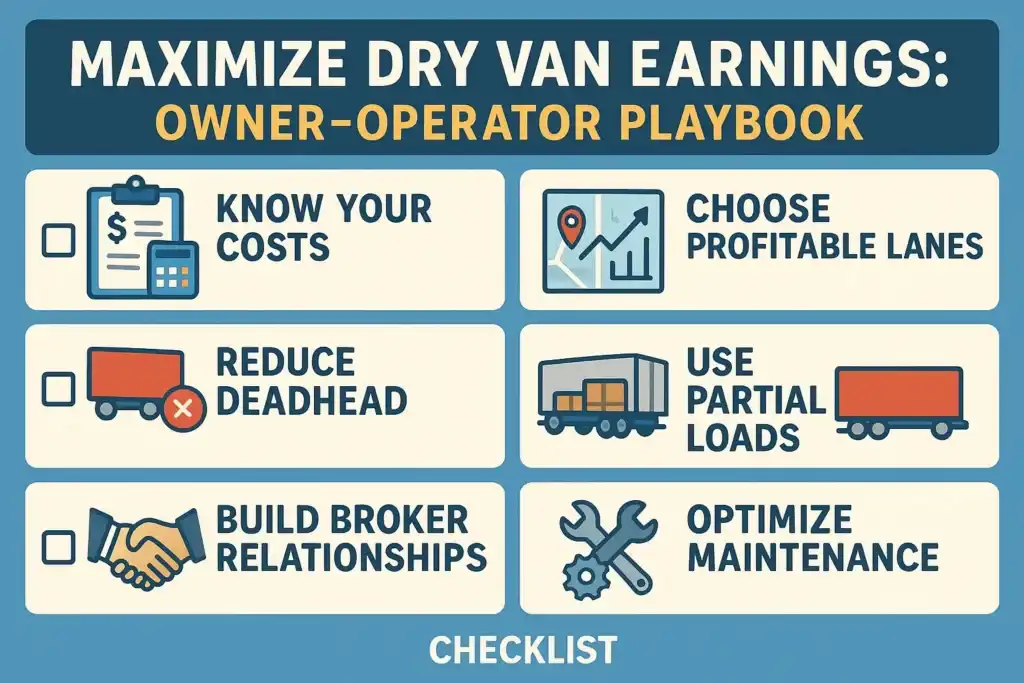
Maximizing earnings as a dry van owner-operator comes down to running smarter, not just harder. By knowing your costs, targeting high-value loads, minimizing waste (empty miles and idle time), and keeping a tight handle on expenses, you can significantly improve your profit margins. Implement these dry van owner-operator tips consistently: choose your freight and lanes wisely, take advantage of partial loads, maintain your truck diligently, and don’t hesitate to leverage outside expertise like a dispatch service or other tools that give you an edge. The trucking market will always have ups and downs, but with the right strategies, you can thrive in any cycle. Remember, every decision on the road – from which load to haul to how fast you drive – impacts your bottom line. Stay informed, stay proactive, and treat your operation like the business it is. With experience and the strategies outlined above, you’ll be maximizing earnings from your dry van truck and ensuring a prosperous, sustainable business for the long haul.
(Ready to take your business to the next level? Consider partnering with experts who can help keep your dry van loaded and profitable. When you focus on driving and let a trusted team handle the rest, you truly maximize your earnings with dry van trucking.)
For more detailed guides, check Dispatch Republic’s resources on dispatching and the trucking business. Read Owner-Operator vs. Company Driver: The Key Differences if you’re weighing career paths, and How to Become a Truck Dispatcher to understand the dispatch side of the business.
If you’re an owner-operator juggling multiple responsibilities, consider partnering with a professional truck dispatch service to take the load off your shoulders—literally. At Dispatch Republic, we specialize in helping carriers run smarter and earn more by expertly managing load boards, negotiating top rates, and handling paperwork for dry vans, reefers, flatbeds, box trucks, step decks, and even hotshots. Our team monitors multiple premium load boards around the clock, ensuring your truck stays loaded with the right freight, at the right rate, on the right lane. Whether you’re scaling up or just getting started, having a dedicated dispatch team in your corner means fewer empty miles, less stress, and more time to focus on driving and growing your business.
Frequently Asked Questions
A dry van owner-operator can maximize earnings by running efficiently and strategically. This includes choosing high-paying loads, minimizing deadhead miles, and keeping the trailer full as often as possible. Negotiating better rates, leveraging partial loads, and using a dispatch service for expert load planning are also key dry van owner-operator tips to boost profit. Additionally, controlling costs (fuel, maintenance, etc.) ensures more revenue turns into take-home income.
Some effective dry van load strategies include targeting freight in high-demand lanes or seasons (e.g. retail goods in fall peak season), combining partial loads to increase total revenue per trip, and securing dedicated lanes or repeat customers for steady income. Owner-operators should also use load boards and broker networks to find premium loads and plan backhauls, so the truck isn’t running empty. Essentially, always plan your next load and aim to haul the most profitable freight available for your dry van truck.
Earnings for dry van owner-operators vary widely based on experience, market conditions, and how efficiently they run. On average, many dry van owner-operators might gross between $150,000 to $220,000 per year, but their take-home profit after expenses could be around $60,000 to $100,000+. In 2024, for example, average owner-operator net income was about $64,000, but top performers who maximize earnings (with strong rates and cost control) can make significantly more. The more you can increase revenue (high-paying loads, more loaded miles) and decrease costs, the higher your personal income will be.
To reduce maintenance costs on a dry van truck, practice proactive and preventive maintenance. This means regularly servicing your tractor (oil changes, brakes, tires, etc.), fixing small issues before they become big problems. Staying on top of maintenance schedules can prevent expensive breakdowns. It’s also smart to budget for maintenance – setting aside a certain amount per mile or per month – so you’re financially prepared. Keeping up with FMCSA maintenance standards (like required inspections) will not only save money but also keep your dry van rig running safely and efficiently, avoiding costly downtime.
Many dry van owner-operators find a dispatch service to be worth it when it comes to maximizing earnings. A good dispatch service can secure higher-paying loads (thanks to their negotiation skills and industry contacts), plan efficient load combinations and routes (reducing empty miles and wait time), and handle paperwork and communications. This not only can increase your revenue but also saves you time and stress. While dispatch services charge a fee or percentage, the boost in negotiated rates and productivity often leads to a higher net income for the owner-operator. It’s especially valuable if you’re spending too many hours searching load boards or if you want to tap into a larger broker network for dry van freight.
Partial loads (LTL shipments) in dry van trucking are smaller freight loads that don’t fill the entire trailer. An owner-operator can carry multiple partial loads for different shippers at the same time to use all the space in the trailer. This increases revenue because the combined pay from two or three partial loads can be more than hauling one full truckload for a single customer. For example, you might haul two half-trailer loads that each pay a good rate – added together, you earn a higher total rate per mile on that trip. Partial loads do require coordination of pickups and deliveries, but when planned well (often with a dispatcher’s help), they are an excellent strategy for maximizing earnings with a dry van.
Ready to Take Your Trucking Career to the Next Level?
Whether you’re an owner-operator, a company driver, or a carrier company in need of truck dispatch services, Dispatch Republic is here to help. Our teamof experienced truck dispatchers offers affordable, professional truck dispatch solutions designed to save you time, increase your earnings, and make your business more efficient.
Thinking about outsourcing your truck dispatching? Contact Dispatch Republictoday and move smarter, not harder.
Found our Blog useful? Spread the word:
Check our latest posts:
[latest_posts_grid]
Contact us today to see how our team can support your trucking business.