
Table of contents
Specializing in car hauling loads, reefer loads, or flatbed loads can pay well – but each niche has its own rules and challenges. As an owner-operator, you need clear, practical advice: choosing the right trailer, securing your cargo, managing perishable freight, staying legal, and working smart with brokers or dispatch. In this guide we cover the essentials for car hauling, reefer, and flatbed freight, with real-world tips, up-to-date market context, and examples. You’ll learn about equipment, load planning, safety, compliance, and how specialized dispatch services can keep your truck busy and legal.
Car Hauling Tips for Owner-Operators
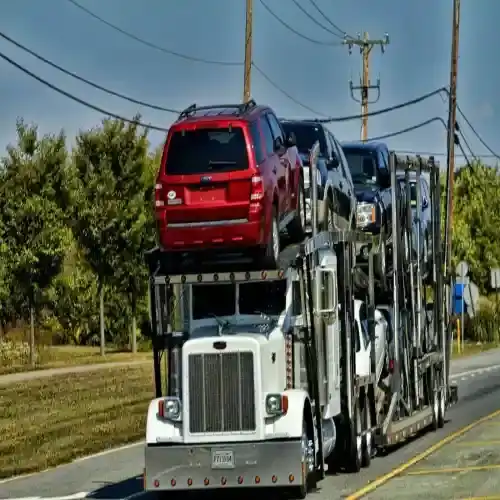
Car hauling means transporting automobiles on multi-level trailers. It’s a high-paying niche, but only if you do it right. First, pick the right rig: a heavy-duty Class A truck usually hauls a 7–10-car stinger trailer, while a pickup truck with a 2–4-car gooseneck trailer works for shorter runs. Always do a thorough pre-trip check of your trailer and truck. Test your ramps and winches, inspect tires and brakes, and verify all lights (marker lights, back-up lights) work.
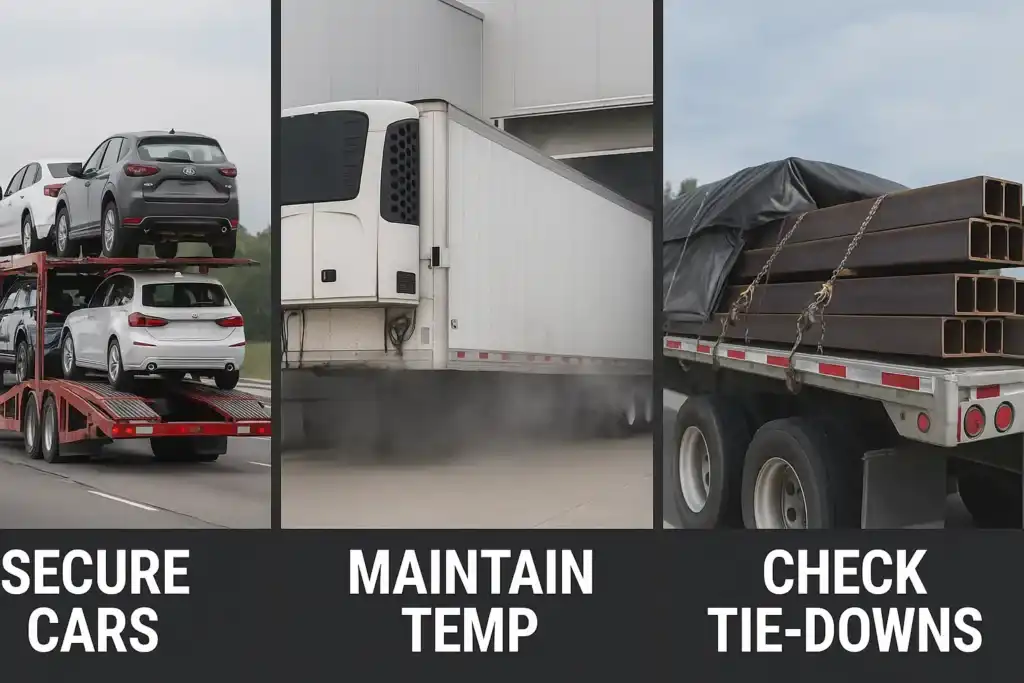
Experienced car haulers stress even weight distribution and solid securement. Heavier vehicles go on the lower decks and toward the front, light cars on top. Each vehicle needs at least two tiedowns (front and rear) – that’s what FMCSA requires – although many drivers use four for extra safety. Use wheel straps or soft nets on painted rims to avoid scratches. After tying each car, give it a firm shake test to ensure it won’t move. Always carry extra straps and an operable winch (in case a car can’t roll). Remember, car-haulers face insurance claims if a vehicle is damaged or falls off; securement isn’t negotiable.
- Right Rig & Trailer: Match truck and trailer to the job. A stinger-carrier needs a powerful truck; smaller “hot shot” 2-car trailers can run on a 1-ton pickup. If you start with a small setup, plan to upgrade as you grow.
- Pre-Trip Checklist: Beyond engine and brakes, check the car carrier itself: ramps, decking, and wiring. Confirm your rig’s height and length limits to avoid low bridges. Fix any bent trailers or loose deck boards before loading.
- Load Order & Securement: Load heavier and taller vehicles first (low deck), then smaller cars. Always strap cars at solid points (frame or wheels), not bumpers. Use fork extensions or straps under wheel rims for grip, and cushion any sharp edges. After straps are tight, double-check each car by rocking it. Use safety clips or wire locks on ratchets so straps can’t back off.
- Paperwork & Permits: Car haulers often cross multiple states. Keep your auto transport permits, dealer/sticker releases, and power-of-attorney forms handy. Some states require special licensing to move others’ cars. Also have extra headlights or reflective tape, since your load extends beyond the cab.
For profitability, plan backhauls. Don’t run empty if you can avoid it. For example, after dropping off cars at a dealership, try to pick up a return trip (even one car) on the way back. These backhaul cars turn one trip into two pays. Over time, combining loads and backhauls keeps your truck moving more days.
Even without quoting every stat, experienced drivers report that a full car-haul (7–10 cars over a few hundred miles) often pays a few hundred dollars per car, translating to ~$0.60–$2.00 per mile per vehicle on long runs. Luxury or specialty cars can pay at the higher end of that range, but they require extra care (sometimes fully enclosed trailers).
Reefer Loads: Handling Temperature-Controlled Freight
Reefer loads (refrigerated freight) include food, medicine, or any perishables. The biggest rule is “keep it cold”. Before departure, pre-cool the trailer to the required temperature. Check your reefer unit: top off diesel or check electric power, inspect belts, oil, and coolant, and ensure the refrigeration unit will run for the entire trip. Verify door gaskets are clean and seal tightly. If you have a reefer that plugs into shore power, make sure your cord works. Also, inspect tires and brakes – even for reefers, a safety failure can lead to a cold load lost.
During the trip:
- Constant Monitoring: Use the in-cab display and mobile apps (if available) to watch the temperature. Stop at every checkpoint (weigh station, refueling, rest break) to note the temperature and refrigerant settings. If you’re hauling high-value goods (like pharmaceuticals or plasma), consider a data logger or telematics that emails alerts. Even a few minutes of higher-than-setpoint temperature can ruin a load.
- Plan Breaks & Fuel: Refrigeration units burn fuel or battery power. Plan fuel stops not just for diesel but also to refill your reefer’s tank if needed. Keep the unit running if you must stop – a sudden warm engine can stall a cold load. Factor in that a running reefer uses about 1 gallon of fuel per 25–30 miles, so that’s extra costs to include in your rate.
- Airflow & Loading: Load pallets or boxes so air can circulate. Don’t push pallets flush against the roof or walls; leave a little gap if allowed by the shipper. Cold air should flow around cargo. Avoid blocking interior vents. For mixed loads (chilled + frozen), coordinate their placement so that their temperature settings don’t conflict.
- Route & Timing: If possible, schedule deliveries to avoid sitting in the midday sun or extreme traffic with a parked reefer. Route through covered parking or shaded areas during hot days to ease the load on the unit. Avoid places where you could get stuck in heat (dock delays, border lines) – every idle minute at >0°F adds risk.
Economics & Market: Demand for reefer loads can be volatile. In 2025, FreightWaves reported that refrigerated freight was in a slow market, but spot volumes and rates were finally inching above last year’s levels. In late July 2025, total spot reefer load posts were ~2% higher than July 2024, and 85% of carriers expected stable or higher volumes. This suggests modest demand, but still seasonal peaks (fresh produce in summer, holiday food in late fall). Use that to your advantage: before fruit or meat seasons, expect more loads posted.
For owner-operators, it helps to link up with reefer brokers or a reefer dispatch service. Specialized dispatchers know which shippers consistently need cold loads and can help you line up jobs in advance. They also track your trailer’s status and handle issues (e.g. a reefer breakdown alert). Our company offers a reefer dispatch servicethat monitors these details so you focus on driving.
Flatbed Freight: Best Practices for Open-Deck Loads
Flatbed loads involve hauling oversized or irregular cargo—lumber, steel beams, machinery, construction equipment, etc.—on an open trailer. These jobs usually pay more than standard dry van runs, because you provide extra handling and securement skill. For instance, DAT reports flatbed rates around $3.07 per mile on average (up to $3.30 in many lanes) versus ~$2.27 for dry vans. That premium (about $0.80–$1.00 extra) goes to the drivers who can load, chain, and cover the cargo.
However, with higher pay comes higher responsibility. Always start with a safety inspection: check your trailer deck for damage or missing planks, ensure rub rails and side stakes are tight, and inspect straps, chains, binders, and tarps. Keep spare binders and tarp hooks in case of breakage.
- Permits & Dimensions: Know your load’s size and weight. If a flatbed load is over 8½ ft wide, 13½ ft tall, or 53 ft long, you likely need an oversize permit. If it’s over 80,000 lbs, weigh carefully and get overweight permits. Plan your route: some roads have lower bridges or stricter limits. For example, hauling 10-ft wide building panels requires a width permit (and flags on the truck).
- Tie-Downs: Follow FMCSA’s cargo-securement rules. FMCSA requires that cargo be secured to prevent shifting or falling. In practice this means: use enough chains/straps so the working load limit of all tiedowns is at least 50% of the cargo weight. A DOT guideline (from 2004 regs) is: one tiedown for a cargo piece up to 5 ft long, two tiedowns if between 5–10 ft. In other words, any beam or load over 10 ft typically gets at least two chains. Drivers usually use even more (3 or 4) for safety. Attach straps to strong anchor points on both the truck and the load (like attached steel rings or the load’s frame), never to loose panels or straps themselves. Use edge-protectors under any strap that contacts a sharp corner.
- Load Positioning: Place cargo so weight is balanced over the trailer axles. For example, heavy equipment should sit close to the trailer’s axles (not all hanging off the back). Keep the load low to improve stability. If combining different items, stack in tiers (e.g. pipe on bottom, palletized goods on top). Always cover your cargo with tarps if it’s weather-sensitive: even lumber or steel corrodes if rained on. Secure tarps tight and re-check them at the first stop (they can flap loose).
- Check & Adjust: Re-tighten straps after the first 20–50 miles: wood can compress, straps may stretch. Pull over safely and walk around your load regularly. Also drive slower than usual: because your bed is open, high winds or rain can shift even well-tied loads if you zoom down the highway. Check more on Flatbed Trailer Maintenance here.
Flatbed market trends: in mid-2025 DAT noted that year-over-year demand for flatbed loads was still strong (loads posted ~40% higher than a year earlier), even if week-to-week volumes fluctuate. Take advantage of this demand: get listed on specialized flatbed load boards and tell brokers you handle oversize freight. But remember, a big flatbed load (like a 60-ft construction beam) may take time to chain and may require pilot cars. Plan accordingly for those extra hours.
Regulatory compliancefor flatbeds is strict. Besides cargo rules above, overweight or oversize hauls must comply with each state’s permitting. Some states even require lighting or pilot cars for certain widths. For example, a 12-ft-wide crate hauled nationwide must have amber flags on corners, and often police escorts in some areas. Always check federal and state codes before rolling.
Wondering what equpiment is beeter fit for your fleet? Check our article about Hotshot vs Flatbed: Which is Better for Your Business?
Compliance, Safety, and Dispatch Help
No matter what you haul, staying legal and safe is crucial. Always use an ELD and follow hours-of-service limits to avoid violations. Notably, FMCSA is piloting a “split-duty” hours rule that may help drivers who take long unload breaks: drivers could take a 30–180 minute break and have it pause their 14-hour day clock. Keep an eye on that pilot; it could relieve drivers stuck waiting at auctions or docks. Until then, plan your 10-hour sleeper breaks wisely.
Carry out pre- and post-trip inspections on your truck and trailer every day. For car hauling, FMCSA treats each vehicle as cargo that must be tied down with two straps. For reefer loads, maintain clean trailers and follow any food-safety certifications (some customers require sanitation logs). For flatbed loads, follow the securement practices above. Federal law says carriers must keep records of securement (the DOT “book of paperclips” rule from 1994), but more simply, always be ready to show documents of any special permits and an incident log if required.
Finding freight: use load boards wisely. Set filters for “Reefer” to see only refrigerated loads, or for “Flatbed” for open-deck freight. Build relationships with brokers who specialize in your equipment. Always get full load details (weight, dims, commodity) before you accept a job, so there are no surprises. Negotiate rates that cover your real costs: fuel, maintenance, permits, and an owner-operator pay rate. Remember, each specialized haul should earn more than a basic dry van run, because of the extra work and equipment.
Finally, if managing loads, paperwork, and finding freight feels overwhelming, consider a professional dispatcher. A good flatbed or reefer dispatcher knows the market and can often secure better-paying loads than you’d find alone. For example, Dispatch Republic’s flatbed & step deck dispatch services link owner-ops to premium loads and handle the compliance paperwork. Our reefer dispatch services cover cold-chain logistics so you focus on driving. We even have a car hauling guide on our site for bonus tips. (All three are linked above.) Specialized dispatch keeps you moving 24/7 – your dispatcher finds the load while you drive.
In summary, success with car hauling, reefer loads, or flatbed freight comes down to preparation and detail. Use the right equipment, load and secure cargo by the book, and comply with all regulations. Monitor your shipment (temperature for reefers, securement for flatbeds/cars), plan each trip, and always prioritize safety. With these strategies and support from specialized dispatch, an owner-operator can maximize earnings in these niche lanes.
If you’re an owner-operator hauling specialized freight, don’t go it alone. Explore Dispatch Republic’s flatbed & step deck dispatch services and reefer dispatch services to access top-paying loads and compliance support. Check out our car hauling dispatch services and blog for more tips. Our dispatchers are experts in car hauling loads, flatbed loads, and reefer loads – we can match your truck to the best freight and handle the paperwork. Let us help you keep your rig loaded, safe, and legal.
For a deeper dive into the car hauling business, read our Box Truck vs. Dry Van: Which Is Better for Your Business? and Box Truck Load Types and How to Maximize Your Profit.
Ready to make the most of your trucking business? 🚚💨 Reach out to Dispatch Republic and let our experts help maximize your earnings with tailored hotshot dispatch service and car hauler dispatch service solutions. We’ll handle the logistics while you keep on truckin’. Contact our truck dispatch service to get started on the road to greater profits and less hassle!
For more detailed guides, check Dispatch Republic’s resources on dispatching and the trucking business. Read Hotshot vs Flatbed: Which is Better for Your Business? if you’re weighing career paths, and How to Become a Truck Dispatcher to understand the dispatch side of the business.
If you’re an owner-operator juggling multiple responsibilities, consider partnering with a professional truck dispatch service to take the load off your shoulders—literally. At Dispatch Republic, we specialize in helping carriers run smarter and earn more by expertly managing load boards, negotiating top rates, and handling paperwork for dry vans, reefers, flatbeds, box trucks, step decks, and even hotshots. Our team monitors multiple premium load boards around the clock, ensuring your truck stays loaded with the right freight, at the right rate, on the right lane. Whether you’re scaling up or just getting started, having a dedicated dispatch team in your corner means fewer empty miles, less stress, and more time to focus on driving and growing your business.
Frequently Asked Questions
You’ll need a heavy-duty truck or pickup and a suitable car carrier trailer. Larger car hauls (7+ cars) require a Class 8 truck and a multi-car stinger trailer, while shorter runs (2–4 cars) can use a pickup with a gooseneck or bumper-pull carrier. Essential gear includes ramps, a winch (for disabled vehicles), wheel straps or nets, and tie-down anchors for each car. Make sure your truck’s hitch height matches the trailer, and carry all required permits and auto-transport paperwork. Plan for the extra weight and size: often a car-hauler has a lower fifth wheel plate and extra clearance lights. Many new haulers start with a small setup and upgrade as they get consistent loads.
FMCSA requires at least two tie-down points per vehicle. Use heavy-duty winch straps or chains: loop the strap through the wheels or frame (never a fender). Place rubber pads or wheel boots on painted rims to prevent scratches. After tightening, pull each car forward/backward slightly to confirm it won’t move. Load heavier vehicles on the bottom deck and toward the front of the trailer to balance weight. Keep a few extra straps handy – straps can break. Also, consider adding safety chains across wheels if straps fail. In practice, many drivers use four straps per car (two front, two rear) for extra security. Always drive slower around corners and turns, and double-check your load whenever a passenger notices something loose.
Use specialized load boards and brokers that list refrigerated freight. For example, DAT or Truckstop allow you to filter searches by “Reefer” so you only see temperature-controlled loads. Sign up for daily alerts (via email or app) for new reefer loads in your preferred lanes. Building relationships with produce, dairy, and pharma distributors helps, as these shippers often need regular reefer service. Also consider a reefer dispatch service or network: they can match you to long-haul refrigerated lanes and seasonal runs. Remember that seasonality matters – more fresh produce moves in summer, frozen goods in winter – so target markets accordingly. (Tip: carriers often post on forums or social media, too, so some drivers watch those for hot reefer leads.)
Do a full pre-trip of your reefer unit every time. Check fuel or electrical power (reefer units often have their own diesel engine), oil, coolant, and refrigerant levels. Turn on the unit and let it reach the set temperature before loading. Inspect door seals, locking bars, and the interior for cleanliness and damage. Make sure any temperature displays and alarms work. Test the unit’s backup power (like a battery) if equipped. Also inspect tires, brakes, and lights on the truck and trailer – safely hauling a cold load still depends on good truck maintenance. If your trailer plugs into shore power at docks, test the plug and cable now. In sum, walk the trailer front to back and verify every system; catching a small issue now can prevent a ruined load later.
Securement depends on cargo type. Generally, use chains with binders for heavy steel or machinery, and ratchet straps for lumber, pipes, or palletized goods. Attach tie-downs to solid points on both the cargo and trailer (stake pockets, E-track, etc.). Use at least two tie-downs for any cargo >5 ft long. Place cargo evenly side-to-side to prevent tipping. Protect straps from sharp edges with wear pads. Cover the load with tarps if needed: a secure tarp prevents rain or debris from damaging the freight. Tighten all binders and tarp straps snugly, then stop after the first few miles to re-check and re-tighten everything. Remember that road vibration can loosen bindings, so regular checks (every 100 miles or after every loading stop) are vital.
If your flatbed cargo exceeds standard size or weight (over 8½ ft wide, 13 ½ ft tall, 53 ft long, or 80,000 lbs), you need oversize/overweight permits. Each state has its own rules for permitting. Some loads (like wide machinery) might also require amber flags or orange lights and even pilot cars/escorts if very wide or long. Plan your route with the permit conditions – some states restrict travel on weekends or at night. Also be aware of federal rules: for example, the single 20-ft load may require a permit if it adds weight. Always declare and plan for these before loading. Failing to get the right permits can mean fines or having to offload.
Profit comes from keeping your truck full and charging the right rates. For each niche: run full car hauling loads (7–10 cars) instead of partial runs; negotiate per-car or per-mile rates (know current market rates before quoting). For reefer loads, minimize downtime (combine backhauls with refrigerated runs) and account for extra fuel costs. For flatbed loads, take advantage of the higher rates by responding quickly to hot loads and bundling shipments. In all cases, track costs precisely. Use technology (GPS routing, fuel tracking, load-finder apps) to stay efficient. Backhauls are key: try to pick up loads instead of deadheading. Building broker relationships or using dispatchers helps – they often have leads on car hauling, reefer, and flatbed loads that fit your schedule. Specialized support (like a knowledgeable dispatcher) can target high-paying lanes so you maximize each trip’s revenue.
Ready to Take Your Trucking Career to the Next Level?
Whether you’re an owner-operator, a company driver, or a carrier company in need of truck dispatch services, Dispatch Republic is here to help. Our teamof experienced truck dispatchers offers affordable, professional truck dispatch solutions designed to save you time, increase your earnings, and make your business more efficient.
Thinking about outsourcing your truck dispatching? Contact Dispatch Republictoday and move smarter, not harder.
Found our Blog useful? Spread the word:
Check our latest posts:
[latest_posts_grid]
Contact us today to see how our team can support your trucking business.