Table of contents
Imagine you’re an owner-operator walking around an auto auction yard, with a line of cars waiting for you to load onto your trailer. Each vehicle represents not just valuable cargo but also a paycheck and a promise to deliver it safely. Car hauling – the business of transporting vehicles – is a niche in trucking that can be incredibly rewarding. However, succeeding as a car hauler requires more than just hooking up a trailer and hitting the road. You need the right equipment, knowledge of car hauler dispatch logistics, and plenty of car hauler tips gained from real-world experience.
In this guide, we’ll break down Car Hauling 101 from the perspective of acar hauler dispatch companythat works with car carriers every day. Whether you’re a seasoned trucker considering hauling cars or a newcomer eager to start a car hauling business, this guide will give you a roadmap. We’ll cover what car hauling involves, how to get started as an owner-operator, vital safety and loading practices, and expert car hauler tips to keep your wheels turning profitably. By the end, you’ll understand the opportunities (and challenges) of car hauling – and how professional car hauler dispatch services can help you along the way.
What Is Car Hauling and Why Consider It?
Car hauling is the specialized trucking niche of transporting automobiles on open or enclosed trailers. Instead of general freight, your cargo is often new or used cars, SUVs, or even motorcycles and boats. Businesses like dealerships, auto auctions, rental agencies, and private individuals need vehicles transported safely across states, creating steady demand for reliable car carriers. With consumer buying habits shifting from new to used vehicles and dealer inventories stabilizing, auto transport remains an essential service in 2025. When done right, car hauling can be lucrative: owner-operators often earn higher per-mile rates hauling cars than typical dry van freight.
Why is car hauling attractive for owner-operators? Here are a few reasons:
- High Demand: Dealerships constantly swap inventory, auto auctions sell thousands of vehicles that need delivery, and people relocating often ship their cars. With stable used car inventories and a strong online car sales trend, there’s steady work for car haulers (the auto industry needs carriers to move vehicles).
- Good Rates: It’s not unheard of for efficient car haulers to gross well over $200,000 per year. Many factors affect earnings (routes, number of cars, expenses), but average car haul rates might hover around $2.50–$3.50 per loaded mile – significantly higher than some general freight loads. By carefully planning and always hauling a full load, experienced car carriers can maximize revenue on every trip.
- Niche Expertise: Not everyone can do car hauling well. The job involves careful loading, securing vehicles without damage, and coordinating multi-stop runs. If you develop a reputation for doing it right, brokers and customers will pay a premium for your service. In other words, car hauling rewards skill and reliability.
Of course, car hauling also comes with challenges – from learning specialized equipment to obeying strict regulations. Next, we’ll dive into getting started the right way, along with practical car hauler tips to avoid common pitfalls.
Getting Started: Licenses, Authority, and Insurance
Starting a car hauling business as an owner-operator means checking a lot of legal and administrative boxes. Here’s what you need to get rolling:
- Commercial Driver’s License (CDL): If you plan to haul more than a couple of cars, a Class A CDL is typically required. Why? Most car hauler setups (truck + loaded trailer) easily exceed the 26,000 lbs combined weight threshold where a CDL is mandated. For instance, a pickup truck and 3-car wedge trailer might run just under that limit for non-CDL hotshot operations, but a full-size 7- or 10-car carrier will far exceed it. In short, if your Gross Combination Weight Rating is over 26,000 lbs, you need a CDL. Even if running a smaller rig under the CDL limit, remember that all commercial vehicles over 10,000 lbs must follow DOT rules (like medical exams, safety inspections, and logbooks). Don’t assume that going “non-CDL” exempts you from regulations – aside from the license itself, you must run legal and safe just like any big rig.
- USDOT Number and Operating Authority: To haul cars across state lines as a for-hire carrier, you’ll need to register with the FMCSA. This process gives you a USDOT number and an MC number (operating authority). Essentially, your operating authority is your business’s license to transport vehicles for profit. The application involves paperwork (the OP-1 series forms), a filing fee, and proof of insurance. Once granted, you must keep your authority active via insurance filings and biennial updates. (If you’re leasing onto an existing motor carrier, you can operate under their authority instead, but many owner-operators choose the independence of having their own.)
- Insurance Requirements: Auto haulers must carry substantial insurance. Federal law requires a minimum of $750,000 in liability insurance for carriers transporting vehicles interstate, but in practice most brokers and shippers will demand $1 million in liability coverage. You’ll also need cargo insurance to cover the vehicles you’re hauling – often about $100,000 per vehicle or a higher blanket policy (for example, a 3-car hauler might carry $300,000 cargo coverage to protect all three units). Car hauling has higher risk (a single accident could damage multiple high-value cars), so insurance premiums can be steep. It’s wise to shop around specialized trucking insurers and consider using a dispatch service (like us) that can help ensure you meet all certificate requirements for brokers.
- Business Setup: Don’t forget to set up your business entity (many owner-ops form an LLC for liability protection), obtain an Employer Identification Number (EIN), and comply with state business registration and tax requirements. You’ll also need to enroll in programs like IRP (International Registration Plan) for your apportioned license plates and IFTA for fuel taxes, since car haulers often run interstate. These ensure you can operate legally across state lines and pay the appropriate taxes on your miles.
Once you have the legalities squared away, it’s time to talk equipment.
For newcomers, one of the best ways to avoid costly mistakes is to learn from others. Car hauler tips shared by experienced drivers – whether through online forums, mentors, or guides like this – can save you a lot of trouble and set you up for success from day one.
Choosing the Right Car Hauling Equipment
One of the biggest investments (and decisions) in car hauling is your equipment. The term “car hauler” might refer to the whole rig, but think of it in two parts: the truck (power unit) and the trailer. As an owner-operator, you might already have a suitable truck or you might be starting from scratch. Here’s how to choose wisely:
- Truck (Tractor or Pickup): For traditional high-capacity car hauling (7+ cars at once), you’ll need a Class 8 semi-truck (an 18-wheeler tractor unit) with enough horsepower and torque to pull a long, heavy trailer. These are similar to any other semi used for flatbed or van freight. Make sure the fifth wheel and frame are compatible with car carrier trailers (some auto-specific tractors have lower fifth wheel heights or special headache racks with over-cab lights). On the other hand, if you’re going the hotshot car hauling route, you might use a dually pickup truck (often a one-ton like a Ford F-350 or Ram 3500) with a gooseneck trailer. Hotshot setups haul fewer vehicles (typically 2–4 cars max), but have lower startup costs and can operate under certain weight limits if configured carefully. Key consideration: A hotshot pickup is cheaper to buy and maintain, but a semi-truck can haul more cars per trip – decide based on your budget and business goals.
- Trailer Types: Car hauling trailers come in various styles:
- Wedge Trailers (Gooseneck or Bumper Pull): Common in hotshot operations, these have a sloping deck (like a wedge) and usually two or three levels for cars. They might carry 2–4 vehicles depending on length (typically ~40 ft trailers can handle 3 cars). Wedges are often used in non-CDL hotshot setups (if combined weight stays under 26k), but watch your weight – loading three SUVs can easily push you past 26,000 lbs combined.
- Five-Car or Six-Car Trailers: Some owner-operators use a mid-size trailer (often pulled by a medium-duty truck or a semi) that can hold 4–6 vehicles. These trailers have two main decks and use ramps or hydraulics to position cars. They offer a middle ground – more capacity than a hotshot, but easier to maneuver than the biggest rigs.
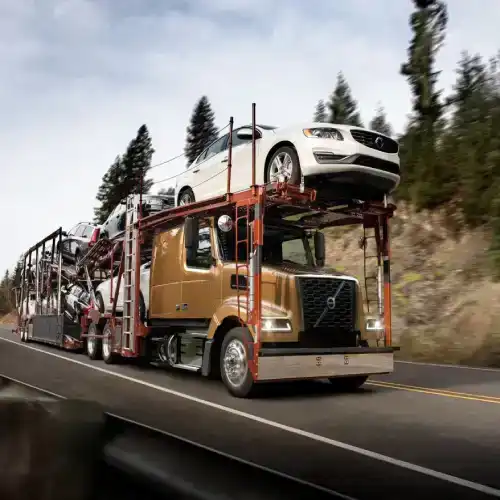
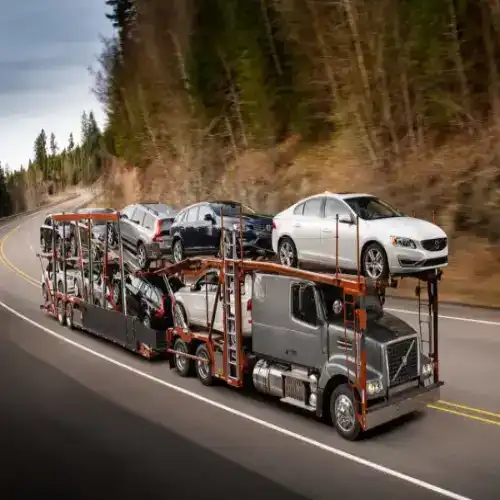
- Seven to Ten Car “Stinger” Trailers: These are the classic semi-truck car carriers you see delivering to dealerships – think of the ones carrying new cars. A “stinger-steered” car carrier is a trailer attached to a semi-truck via a lower mounting (hitch below the rear axle of the tractor). These can haul 7, 9, even 10 vehicles depending on the mix of car sizes. They often have built-in hydraulic decks that move up and down, allowing cars to be stacked at angles. These trailers are the most expensive and typically require a seasoned Class A CDL driver due to their length and weight (federal law allows stinger-steered auto transporters up to 80 feet long plus front/rear overhang allowances to fit all those vehicles).
- Straps, Chains and Ramps: In addition to the trailer itself, you’ll need proper tie-down equipment. Most car haulers use either nylon straps or chains with ratchet binders to secure vehicles. Straps are softer on the car and often used for newer vehicles (often over-the-tire straps that cradle each wheel). Chains are more common for heavier vehicles or older cars with robust frames. Make sure your trailer has built-in winches or ratchet points for straps, and invest in rubber tire bonnets, axle straps, or wheel straps as needed. Also, ensure your trailer has good loading ramps (or built-in flip-out ramps) and maybe even a winch for loading inoperable vehicles. Proper equipment makes loading safer and faster – a critical factor in this business.
- Renting vs Buying: If you’re brand new, one smart car hauler tip worth considering is renting a trailer initially. Trailer rentals for car hauling can let you start earning without the full upfront cost, and they give you flexibility as you scale your business. Renting can also reduce maintenance worries, since the rental provider usually handles upkeep. Many successful haulers say starting out by renting saved them from costly mistakes – it’s one of those car hauler tips worth considering early in your business.
Bottom line: match your equipment to the kind of car hauling you plan to do. If you’re focusing on local dealer moves or inoperable auction cars, a 2–3 car flatbed or wedge might do. If you aim to haul full loads of auction cars cross-country, you may eventually want the capacity of a 7-10 car stinger trailer. Start with what you can manage (financially and skill-wise) and scale up as your experience grows.
Loading and Securement: Keeping Cars (and You) Safe
Loading vehicles onto a trailer and securing them properly is at the heart of car hauling. Do this wrong, and you risk damaged cars, DOT fines, or catastrophic accidents. Here are some car hauler tips on safe loading and securement:
- Even Weight Distribution: Always load the heaviest vehicles on the bottom deck (if you have two levels) and toward the front of the trailer. This keeps your center of gravity low and prevents swaying. Distribute weight so you’re not overloading any single axle. Remember that fuel in the truck and extra gear count toward weight too. A good practice is to know the weight of each vehicle and do a rough calculation as you arrange them. Too much weight on the trailer nose can overload your truck’s drive axles; too much at the back can make the rig unstable. Aim for a balanced load within legal axle limits.
- Proper Securement: Each car must be secured at minimum two points (front and back) per FMCSA securement regulations. In practice, most car haulers use four points (one strap/chain at each corner or each wheel) for extra safety. Use designated tie-down spots on the vehicle if available (many cars have specific slots or loops for transport). If using wheel straps, ensure they’re snug over the tires and won’t slip off if a tire deflates slightly. Chains should attach to the vehicle’s frame or solid suspension components, not to delicate parts. After securing, shake each vehicle by hand – it should be rock solid on the trailer. Check all angles: the car shouldn’t be able to move forward, backward, sideways, or bounce vertically. (In fact, FMCSA securement regulations require at least two tie-downs per vehicle: one front and one rear.)
- Protect the Cargo: Cars are valuable, often with nice paint jobs that you don’t want to scratch. Use soft tie-down sleeves or axle straps to avoid metal-on-metal contact when using chains. If two cars are close together on your trailer, double-check that no parts (like a low bumper or spoiler) will rub on a tire or on another vehicle during transit. Consider padding any spot where a strap might press against a car’s body or frame. An enclosed trailer (basically a car-hauling dry van) offers the best protection from weather and road debris, but most new owner-ops start with open trailers due to cost. So just take extra care in securing and spacing.
- Loading Technique: Always double-check that your trailer is secure (set the trailer brakes, use wheel chocks if needed) before driving a car up the ramps. Loading a car can be nerve-wracking the first few times – go slow and steady. Use a spotter if possible, especially when reversing a car onto an upper deck. Watch your clearances – it’s easy to forget about antennas, roof racks, or low front bumpers. Many a newbie has cracked a bumper by driving up too steep an angle; using wood planks to extend the ramps can lessen the incline for low-ground-clearance cars. Pro tip: If a car is inoperable, you may need a winch to pull it on. Carry a come-along or have a trailer-mounted winch for these scenarios (and know how to rig it safely).
- Safety Checks: Safety is paramount in car hauling. Every time you load up, think of it like an airline pilot doing a pre-flight check. A few minutes spent double-checking securement and balance can save your life (and others on the road) later. In fact, one of the best car hauler tips is to always take those extra minutes to ensure everything is properly secured and balanced before you roll out. After driving 50-100 miles, pull over and recheck your straps/chains – they often settle or stretch, so retighten everything to be safe. And remember to lock or secure the parking brake on each vehicle if possible (put automatics in Park, manuals in gear) to add an extra layer of security against movement.
(If you want a deeper dive into tie-down techniques, see our dispatcher’s guide to load securement on the blog.)
Car Hauler Dispatch: Finding Loads and Planning Routes
For car haulers, a golden rule is to minimize downtime and keep your trailer loaded at all times (a car hauler tips mantra you’ll hear often). One of the hardest parts of being an owner-operator is keeping your truck loaded with good-paying cars consistently. This is where car hauler dispatch comes into play. Dispatching, in the context of car hauling, means finding loads, booking them, and coordinating the pickups and deliveries so you spend more time driving (loaded) and less time waiting around.
Here are some key points about car hauler dispatchand load planning:
- Load Boards and Brokers: Much of the auto transport industry runs on brokered loads. Popular car haul load boards like Central Dispatch, CarsArrive, and others list thousands of available vehicle shipments posted by brokers and customers. By subscribing to these services, you can search for cars that need shipping on your routes. However, competition is stiff – hundreds of other carriers might see the same load offer. You’ll need to be quick to call or claim the load, and savvy in negotiating rates. Car hauler dispatching often involves juggling multiple load sources and broker relationships simultaneously. Many successful car haulers develop direct contacts with brokers who specialize in dealership or auction loads. Building a good reputation (on-time deliveries, no damage, great communication) will get you repeat business and “first call” on desirable loads.
- Dispatching Yourself vs. Hiring a Dispatcher: While you can find and book loads on your own, doing so while driving or dealing with deliveries is tough. It’s dangerous and inefficient to try negotiating loads from behind the wheel. Some owner-operators have a spouse or family member help with dispatch from home, but this can lead to stress and missed opportunities (and strained relationships). An alternative is using a professional dispatch service (like a dedicated team at Dispatch Republic). A good dispatcher works on your behalf (essentially becoming your car hauler dispatch team) to keep your schedule full. They monitor load boards, make calls, handle paperwork and emails, and plan routes while you focus on driving safely. Yes, you’ll pay a dispatch fee (often a percentage of your load revenue or a flat weekly rate), but a skilled dispatcher can secure higher-paying loads and efficient multi-car routes that more than cover their cost. They also help solve problems – like when a broker falls through or a customer reschedules – so you’re not alone out there. In short, a great dispatcher can quickly pay for themselves through better rates and less downtime.
- Route Planning and Timing: Car hauling often involves multi-stop trips. For example, you might pick up three cars from an auction, then two more from a dealership, all going to different customers in the same region. Efficient route planning is key. You have to factor in the order of pickups and drops so you’re not stuck rearranging cars mid-trip (always load the last drop at the front/top of the trailer, etc.). Use mapping tools and get input from your dispatcher to cluster pickups and deliveries by location. Aim to minimize deadhead (empty miles) by finding a return load near your last drop-off. Sometimes that means working with multiple brokers for a single trip. It’s a puzzle that a dedicated car hauler dispatch service can help solve, ensuring you’re almost always hauling a full load and not zigzagging empty. Also, be mindful of appointments: auctions and dealerships often have set hours. Missing a 4 PM closing time at a dealership might mean an overnight wait. Good dispatching means scheduling realistic transit times and building in a cushion for traffic or delays. It’s better to under-promise and over-deliver: tell a customer you’ll deliver Thursday and then impress them by arriving Wednesday, rather than the opposite. Clear communication is crucial – your dispatcher can update brokers or customers if you’re running late and reschedule as needed. This protects your reputation and keeps everyone informed.
Car hauler dispatch really is the engine that keeps your business profitable. In summary, mastering car hauler dispatch – either on your own or with a service – is fundamental to keeping your car hauling operation successful. The best equipment and driving skills won’t matter if you can’t find the next load and spend half the week sitting empty. The most successful car haulers either become masters at load hunting (spending hours each day on the phone/computer) or team up with a car hauler dispatch service that specializes in their niche. Time is money – every hour you’re not hauling a vehicle is revenue lost, so efficient dispatch is worth its weight in gold. (Interested in getting professional help? Our hotshot dispatch service covers car haulers and other trailers, taking the load-finding burden off your shoulders so you can focus on safe driving. We coordinate everything from negotiating rates to filling out broker packets – essentially acting as your personal logistics partner.)
Expert Car Hauler Tips for New Owner-Operators
As a new car carrier, learning from others’ experience can save you from costly mistakes. Here are some car hauler tips and best practices seasoned operators swear by:
1. Document Everything (Inspections): Here’s one of the critical car hauler tips: when you pick up each vehicle, do a thorough inspection and take photos. Note any existing scratches, dents, or other damage on the bill of lading (BOL) or electronic inspection app. Why? Because when you deliver, if the customer points out a scratch or dent, you have proof it was already there. This documentation is your defense against unjust damage claims. It also forces you to pay attention to each car’s condition – if something is very fragile (say, a loose bumper or low-hanging spoiler), you can load it extra carefully or place it on the top deck where it’s safer. This car hauler tip alone can save you thousands by preventing disputes.
2. Strategic Route Planning and Logistics: Being a top performer means knowing the fastest, safest, and most fuel-efficient routes. One of the smart car hauler tips is to plan fuel stops and alternate routes in advance to avoid surprises on the road. Watch the weather and traffic reports, especially in winter or around big cities. If you know a storm or rush hour lies ahead, you might reschedule a pickup or take a longer but open route. Good route planning also means planning where you’ll park overnight (especially with a loaded trailer – stick to safe truck stops or well-lit areas). Efficient routing saves time, fuel, and stress.
3. Vehicle Maintenance and Technical Know-How: Your rig is your livelihood. Understanding basic mechanics and performing routine maintenance can save you from costly breakdowns and delays. One car hauler tip that cannot be overstated: know exactly how tall your loaded rig is. (Many accidents happen because a driver didn’t realize their height with cars on top and hit an overpass.) Do thorough pre-trip inspections on your truck and trailer every day – check tire pressures, wheel bearings, lights, brakes, and securement gear. Fix small issues before they become big problems on the road. Carry essential tools and spare parts (belts, hoses, bulbs, fuses, fluids, etc.). The better you maintain your equipment, the less downtime and expense you’ll incur in the long run.
4. Load Securement and Weight Distribution: There’s an art to ensuring every vehicle you haul is properly secured. Mastering load securement not only prevents damage but also keeps you compliant with safety regulations. For example, one of the key car hauler tips is to recheck your tie-downs after the first 50 miles to ensure nothing has loosened. Always position vehicles to maintain proper tongue weight and axle balance – too much weight on one side or one end of the trailer can affect handling. Use wheel straps or axle straps on appropriate points (avoid fragile components), and never skimp on tiedowns – if a car has an awkward weight distribution, throw an extra strap on it. Proper weight distribution (heaviest cars on bottom/front) and securement is critical for safe travels.
5. Regulatory Compliance and Legal Awareness: The world of car hauling isn’t just about the open road. Car hauler tip: Keep an organized binder or digital folder of all required documents (driver’s license, registration, insurance, ELD logs, inspection forms) so you’re always ready for a DOT inspection. You’ll need to stay on top of Hours of Service rules (using an ELD if required), plus regulations like annual DOT truck inspections and trailer brake inspections. If you haul across state lines, ensure your IFTA stickers and IRP registration are current. Know the rules about oversize permits if you ever haul especially large vehicles or if your stinger setup exceeds certain lengths with overhang. Being compliant isn’t just about avoiding fines – it also keeps you safer and your business reputation clean.
6. Time Management and Organizational Skills: When deadlines loom and routes stretch for miles, effective time management becomes your best friend. Among time-management car hauler tips, one suggestion is to set reminders for pickup and delivery appointments to stay on schedule and avoid late fees. Plan your day each morning (or the night before): know which stops you have and in what order, and roughly how long each will take. Build in buffer time for traffic, loading, or the unexpected. Use a digital calendar or an app to track appointments, and keep a checklist for each load (pickup times, gate pass codes, customer contacts, etc.). The more organized you are, the less likely you are to miss something important.
7. Communication Skills on the Road: A successful owner-operator is never an island. Clear communication with dispatchers, brokers, and customers is crucial. One of the often-overlooked car hauler tips is to communicate promptly and professionally. Confirm appointments ahead of time, call ahead if you’re running late, and be polite yet firm when negotiating rates or discussing issues. If a customer sees you care about their schedule and vehicle, they’re more likely to trust you (and possibly use you again or recommend you). Also, don’t hesitate to ask questions if details are unclear – it’s better to clarify than to assume and have a problem later. Strong people skills can set you apart in this industry.
8. Financial Management and Budgeting: Your business thrives on every dollar saved and every expense accounted for. One of the financial car hauler tips is to calculate your cost per mile regularly, so you know which loads and lanes are most profitable. Keep a close record of all expenses – fuel, maintenance, insurance, load board fees, dispatch fees, tolls, etc. This will help in setting your rates (you’ll know your break-even point). Consider using a simple accounting software or even a spreadsheet to track income and expenses weekly. Also, be smart about fuel – use fuel card programs or apps to find the cheapest diesel on your route. Idling less, maintaining correct tire pressure, and driving at moderate speeds can significantly improve your MPG. In short, treat your trucking like the business it is: budget for repairs, plan for slow weeks, and save for taxes.
9. Customer Service and Negotiation: In an industry built on trust, your reputation is everything. Car hauler tip: deliver a great customer experience. That means being on time (or communicating if there’s a delay), being courteous, and handling vehicles as if they were your own. Little touches like using seat covers and floor mats when you move a car, or cleaning your trailer before loading a customer’s classic car, can leave a big impression. Happy customers and brokers lead to repeat business and referrals. On the negotiation side, know your worth – use data (like average rates per mile for similar loads) when negotiating with brokers. It’s okay to say no to cheap freight; often, holding out for a better load is the smarter move. Over time, as you build a reputation, you’ll find you have more leverage to get the rates you want.
10. Problem Solving and Adaptability: The open road is unpredictable. Car hauler tip: always have a backup plan (alternate routes, extra tools, emergency funds) so you can adapt when things go sideways. From sudden weather changes to unexpected mechanical issues, being adaptable and resourceful is key. If a tire blows on your trailer, do you have roadside assistance or the tools to change it? If a customer cancels a load last-minute, do you know how to quickly find a replacement load? Experienced car haulers often say their success comes from 10% driving skill and 90% problem-solving skill. Always learn from each trip – every mistake or challenge is an opportunity to improve your systems and prevent it next time.
By following these car hauler tips, you’ll greatly reduce the risk of mishaps and set yourself up for success. Starting your car hauling career can be challenging, but with the right mindset and continuous improvement, you can thrive in this business. These car hauler tips for loading and securement are essential knowledge for every new hauler.
Hitting the Road with Confidence
Car hauling offers an exciting path for owner-operators willing to master its nuances. You get to deliver prized vehicles, solve logistical puzzles, and potentially earn a very good living doing so. Like any business, success doesn’t come overnight. It takes planning, persistence, and continuous learning. By applying these car hauler tips and leveraging the right support, you can navigate any challenge. As a leading car hauler dispatch service, Dispatch Republic is here to help owner-operators like you find the best loads, negotiate top rates, and manage the details so you can drive stress-free. We understand the car hauling niche inside out and are passionate about helping carriers succeed. Reach out to us today to see how our team can keep your trailer loaded and your business growing. Keep those wheels turning, keep these car hauler tips in mind, and here’s to your success on the open road!
Ready to make the most of your trucking business? 🚚💨 Reach out to Dispatch Republic and let our experts help maximize your earnings with tailored hotshot dispatch service and car hauler dispatch service solutions. We’ll handle the logistics while you keep on truckin’. Contact us today to get started on the road to greater profits and less hassle!
For more detailed guides, check Dispatch Republic’s resources on dispatching and the trucking business. Read Hotshot vs Flatbed: Which is Better for Your Business? if you’re weighing career paths, and How to Become a Truck Dispatcher to understand the dispatch side of the business.
If you’re an owner-operator juggling multiple responsibilities, consider partnering with a professional truck dispatch service to take the load off your shoulders—literally. At Dispatch Republic, we specialize in helping carriers run smarter and earn more by expertly managing load boards, negotiating top rates, and handling paperwork for dry vans, reefers, flatbeds, box trucks, step decks, and even hotshots. Our team monitors multiple premium load boards around the clock, ensuring your truck stays loaded with the right freight, at the right rate, on the right lane. Whether you’re scaling up or just getting started, having a dedicated dispatch team in your corner means fewer empty miles, less stress, and more time to focus on driving and growing your business.
Frequently Asked Questions
Car hauling is the business of transporting vehicles (cars, trucks, etc.) on a specialized trailer from one location to another. For an owner-operator, it works similar to other trucking jobs: you find a load (in this case, vehicles that need shipping), pick them up with your car hauler rig, secure them properly, then deliver them to the destination. The key differences from general freight are the equipment and processes involved. You’ll use a car carrier trailer (open or enclosed) instead of a dry van, and you often handle multiple pickup and delivery points because you might haul several cars for different customers on one trip. Owner-operators in car hauling typically either work with brokers or dispatch services to find loads, or they use load boards to book vehicles that need transport. It’s a bit like a puzzle – you have to coordinate timing and routing for all the cars you’ve loaded. Many drivers enjoy car hauling because it keeps them on their toes and can pay well. For an owner-operator starting out, learning some car hauler tips about efficient loading, dispatching, and business management makes the job smoother and more profitable.
To start car hauling, you need a suitable truck and trailer designed for carrying vehicles. The common setups are:
Hotshot setup: A one-ton pickup truck (dually) with a 2-3 car gooseneck wedge trailer. This is a lighter-duty setup and can sometimes be operated without a CDL if kept under 26,000 lbs combined weight. It’s popular for beginners due to lower cost.
Seven or eight-car trailer with semi-truck: A Class 8 tractor (semi-truck) paired with a high-mount car carrier or stinger-steered car hauling trailer. This is the kind you see delivering many new cars at once. It requires a Class A CDL and a bigger investment, but hauls the most vehicles.
Mid-size options: Some use a medium-duty truck with a 4-5 car trailer, which is a middle ground.
In addition to the truck and trailer, you’ll need tie-down equipment: typically wheel straps, ratchets, chains, and binders. You’ll also want loading ramps (most trailers have built-in ramps or hydraulic decks) and possibly a winch for loading non-running vehicles. Other gear includes safety equipment (reflective vest, cones), basic tools, spare tires, and a tire pressure gauge. Essentially, be prepared to handle vehicles of various sizes – that means a trailer with adjustable decks or ramps and plenty of straps and chains to secure different types of cars. Starting with a reliable truck and trailer and the right accessories sets the foundation for a successful car hauling business.
In most cases, yes, a CDL (Commercial Driver’s License) is required to haul cars commercially. Specifically, a Class A CDL is needed if your truck and trailer’s gross combination weight rating (GCWR) is over 26,000 pounds. Since even a three-car hotshot setup can approach that weight, many car haulers end up needing a CDL A. There are some “non-CDL” hotshot car haulers who use lighter trucks and trailers to stay under 26k, but they are still subject to nearly all other DOT regulations. That means even if you don’t need a CDL, you do need a USDOT number for your trucking business, you must follow Hours of Service rules (and use an ELD to log driving hours if required), and your equipment must pass DOT inspections. Additionally, you’ll need to carry the proper insurance and, if crossing state lines, have operating authority (MC number). For everyone hauling cars, there are specific cargo securement rules: each automobile must be secured front and rear with at least two tiedowns (and heavier vehicles over 10,000 lbs require four tiedowns). You also have to stop at weigh stations and comply with state laws on length, width, and sometimes even overhang (those rules on how far a car can hang off the trailer). In short, plan on getting your Class A CDL – it will give you more flexibility in the loads you can haul and ensure you’re on the right side of the law when running a car hauling business.
Finding cars to haul is one of the biggest challenges and is where car hauler dispatch comes in. Here are a few ways to get loads:
Load Boards: The primary load board for auto transport is Central Dispatch, where brokers post thousands of car shipments. There are also others like Super Dispatch, Carvana’s board (if you work with them), and even general boards like DAT sometimes have car loads. You can subscribe to these boards, search for loads along your route, and contact the brokers or customers who posted them.
Brokers: Establish relationships with auto transport brokers. Brokers find freight from dealerships, auctions, or individual customers and then rely on carriers to move it. Once you prove yourself reliable, certain brokers might call you directly with offers. Popular brokers include those who handle a lot of dealership or auction moves. Don’t hesitate to introduce yourself and let brokers know which lanes you like to run.
Direct Customers: Some owner-operators network with local car dealerships, rental car companies, or moving companies that often need cars moved. For example, a local dealership might pay you to swap inventory with a dealership in another city. Building a direct client base takes time, but it can be very profitable (no middleman broker fee).
Dispatch Service: If this sounds like a lot of work, it is – which is why some drivers use a car hauler dispatch service. A dispatch service will handle searching load boards, calling brokers, and booking your loads for a fee. They essentially act as your back-office load planner. This can be especially helpful when you’re new or too busy driving to spend hours looking for loads. A good car hauler dispatch service can be the key to keeping you loaded and profitable.
In all cases, communication and responsiveness are important. If a broker calls or emails with a question, answer them quickly to secure the load. Also, be sure to maintain a good rating or reviews in whatever platform you use – reliability and professionalism will keep the loads coming your way.
Safety in loading is critical for car haulers. Key tips include: (1)Even weight distribution – always put heavier vehicles on the bottom deck and towards the front (tongue) of the trailer. This keeps the trailer stable and prevents sway. (2)Use proper tiedowns – secure each car at a minimum of two points (front and rear), but ideally use four straps or chains (one at each corner) to prevent any shifting. Attach straps or chains only to sturdy, designated points on the vehicle (frame, suspension, or manufacturer-provided tie-down holes). (3)Protect the vehicle – use soft straps or sleeved chains to avoid scratching paint or bending parts. If using chains, consider wheel bonnets or axle straps to attach without touching the body. (4)Double-check clearance – watch the height of your load (know your loaded height exactly) and check that cars on the top deck won’t hit overpasses. Also ensure no car on your trailer will hit another (e.g. an SUV on the bottom isn’t tall enough to contact a car above it). (5)Periodic checks – after you’ve driven 50 miles or so, pull over and inspect all tiedowns. Straps can settle or stretch, and tire pressures on the hauled cars can change – retighten as needed. By following these car hauler tips, you’ll greatly reduce the chance of damage or an accident. Delivering vehicles in the same condition you picked them up in – and doing so safely – is the hallmark of a professional car hauler.
Car hauling can be quite profitable for owner-operators if managed correctly. The income you can make depends on factors like how many cars you haul at once, how far you haul them, and your operating costs. Generally, car haulers charge per vehicle or per mile. For instance, a common rate might be $0.50 to $0.75 per mile, per car on an open carrier. If you haul 3 cars at once at $0.60 per mile each, that’s $1.80 per mile gross. Enclosed carriers (for exotic or classic cars) can charge more, often 50-100% higher rates than open trailers. Many owner-operator car haulers report gross earnings in the range of $5,000 to $8,000 a week when running full-time, but remember out of that comes your expenses (fuel, insurance, maintenance, etc.). The profitability comes down to keeping your trailer loaded as much as possible and minimizing deadhead miles (empty returns). Seasonality plays a role too – for example, there’s a lot of demand (and good pay) moving snowbirds’ cars to Florida in the fall and back north in the spring. On the other hand, holidays can be slower. Car hauling rates are often influenced by supply and demand: when there are more cars needing transport than carriers available, prices go up, and vice versa. In summary, car hauling can be very profitable if you manage it well – following smart car hauler tips (like minimizing deadhead, negotiating for extra services like expedited delivery fees, and tightly controlling your costs) will help ensure you maximize your take-home earnings.
Car hauler dispatch refers to the process of finding, organizing, and managing loads for a car carrier. This includes searching load boards, talking to brokers or customers to book vehicle shipments, handling all the necessary paperwork (contracts, insurance certificates, bills of lading, etc.), and planning the route for pickups and deliveries. Many owner-operators do this themselves (especially once they have some experience and contacts), but it can be very time-consuming. This is where a dispatch service comes in. A professional car hauler dispatch service specializes in keeping your truck loaded with minimal effort on your part. They will find suitable car loads that fit your route and preferences, negotiate rates on your behalf, and even assist with things like credit checks on brokers or handling load paperwork. In exchange, they charge a fee (commonly around 5-10% of the load revenue). Do you need a dispatch service? That depends on your situation. If you’re new to the industry, a dispatch service can be extremely helpful in jump-starting your business and teaching you the ropes of load sourcing. If you’re too busy driving to spend hours on load boards, a dispatcher is practically a necessity. On the other hand, if you have a knack for networking and don’t mind the administrative work, you could save the fee and dispatch yourself. Many successful car haulers start out with a dispatch service and then gradually take over once they establish regular lanes and customers. The bottom line: a good car hauler dispatch service can reduce your stress and downtime significantly, acting like a business partner who keeps you earning, while you focus on safe driving. If you prefer to have an expert in your corner or you want to scale your operation, investing in a car hauler dispatch service is definitely worth considering.
Absolutely – beyond the specifics we discussed, remember these fundamental car hauler tips for long-term success:
Stay organized: Keep all your paperwork (licenses, BOLs, insurance, etc.) and schedules in order. Good organization prevents mistakes and delays – a fundamental car hauler tips principle.
Leverage technology: Use routing apps, load board alerts, and even dash cams. Embracing tech is a modern car hauler tips strategy that can improve efficiency and safety (for example, an app that alerts you to low bridges can be a lifesaver).
Keep learning: The trucking industry changes often (new regulations, market shifts). Staying informed is a crucial car hauler tips strategy via trucking news or forums so you can adapt quickly. Don’t assume what worked last year will work next year; always be ready to learn something new.
Take care of yourself: Healthy drivers make better decisions. Don’t overlook rest, nutrition, and exercise – a well-rested driver can better execute all the other car hauler tips we’ve mentioned! Fatigue and poor health can lead to mistakes on the road, so taking care of your well-being is as important as taking care of your truck.
By applying these car hauler tips daily, you’ll set yourself up for a safer, more profitable car hauling business. All in all, these car hauler tips may sound simple, but following them consistently is what separates struggling carriers from successful ones in the long run.
Car hauler tips are essentially the accumulated wisdom and best practices of experienced drivers and car hauler dispatch specialists in the auto transport field. They are important because they help you avoid common mistakes, operate more safely, and run your business more efficiently. Instead of learning everything the hard way through trial and error, you can save time and money by following proven car hauler tips. These tips cover all aspects of car hauling – from how to load and secure vehicles without damage, to how to plan routes and manage your time and fuel. By heeding car hauler tips, even a new owner-operator can perform more like a seasoned pro, making fewer errors and achieving greater success in a shorter time. In short, car hauler tips give you a shortcut to knowledge that would otherwise take years of experience (and costly mistakes) to acquire.
If you decide to use a professional car hauler dispatch service, look for a company that has experience specifically with car hauling (not just general freight). The right dispatch service will have knowledgeable dispatchers who understand the timing of auctions and dealership deliveries, and who know how to find high-paying vehicle loads that fit your equipment. Make sure the service is transparent about their fees and offers the kind of support you need – whether it’s simply finding loads or also handling paperwork and appointments. Ideally, you want a car hauler dispatch service that acts like a partner in your business, keeping your best interests in mind (good rates, efficient routes, avoiding problem brokers, etc.). It’s also wise to read reviews or get recommendations from other car haulers. A great dispatch service can significantly reduce your stress and downtime. For many drivers, the right car hauler dispatch service becomes the backbone of their business, directly boosting profitability by ensuring you stay loaded and can focus on safe driving.
Ready to Take Your Trucking Career to the Next Level?
Whether you’re an owner-operator, a company driver, or a carrier company in need of truck dispatch services, Dispatch Republic is here to help. Our teamof experienced truck dispatchers offers affordable, professional truck dispatch solutions designed to save you time, increase your earnings, and make your business more efficient.
Thinking about outsourcing your truck dispatching? Contact Dispatch Republictoday and move smarter, not harder.
Found our Blog useful? Spread the word:
Check our latest posts:
[latest_posts_grid]
Contact us today to see how our team can support your trucking business.