
Table of contents
It’s January 2026. You’re an owner-operator looking ahead to the year, but the rules of the road are already changing. Headlines are buzzing about thousands of truckers losing their CDLs overnight due to FMCSA action. California is in a showdown with the feds over 17,000 licenses, and dispatchers are scrambling to adjust. What’s going on? In short: a major federal crackdown on non domiciled CDL holders is underway, and it’s poised to shake up trucking in the new year. In this post, we break down what these non domiciled CDL cancellations mean for owner-operators and small fleets, how it might affect trucking rates winter and beyond, and how a smart truck dispatch strategy can help you navigate the turbulence. Get ready – 2026 is bringing big changes, but with the right game plan, you can stay ahead of the curve.
Why Thousands of CDLs Are Getting Canceled in 2026
What is a “non domiciled CDL”? It’s a type of commercial driver’s license issued to someone who is not a U.S. citizen or permanent resident, often a foreign driver authorized to work here. These licenses allowed drivers to qualify in a state even if they weren’t domiciled (resident) there. The system was intended to fill workforce gaps, but it spiraled out of control. A 2025 federal audit uncovered tens of thousands of CDLs that were improperly issued – for example, licenses valid years beyond a driver’s lawful visa status or given without proper work permits. In California alone, over 17,000 non domiciled CDL holders were found to have licenses that should not have been issued under federal rules. Nationwide, the audit revealed systemic non-compliance in at least 19 states’ licensing agencies. The FMCSA (Federal Motor Carrier Safety Administration) deemed it a safety risk and a failure of oversight.

FMCSA’s Crackdown: In late 2025, FMCSA issued an emergency rule to halt new non domiciled CDLs and ordered states to cancel invalid ones. They basically told states: fix this now, or face penalties. Many states scrambled to comply. Texas, for example, immediately canceled all suspect licenses. California, on the other hand, tried to delay – its DMV sent 60-day cancellation notices pushing the date to March 6, 2026, arguing they needed more time to sort things out. FMCSA’s response? No dice. In early January, U.S. Transportation Secretary Sean Duffy announced $160 million in federal highway funds would be withheld from California for missing the January 5 deadline to revoke those 17,000 licenses (the penalty could double next year if California doesn’t comply) . In short, the feds put their foot down hard. By 2026, non domiciled CDL cancellations are rolling out across multiple states, effectively sidelining thousands of foreign drivers.
Why the sudden urgency? FMCSA cites safety and legality. The agency found cases of drivers with expired visas still holding valid CDLs, and even some fatal crashes involving non domiciled drivers were spotlighted (though data on whether these drivers are less safe is debated). Officials say it’s about enforcing existing law – only drivers with lawful, up-to-date immigration status should hold a CDL. There’s also a political angle: the current administration framed it as stopping “dangerous foreign drivers” and closing loopholes that supposedly let unqualified drivers undercut the system. Some industry voices, like OOIDA (Owner-Operator Independent Drivers Association), openly support the move – OOIDA’s president remarked that “the days of exploiting cheap labor on the basis of false ‘driver shortage’ claims are over”, applauding regulators for finally acting on a long-standing issue. Many owner operators feel that certain carriers were using lower-paid foreign drivers to depress rates, so removing those drivers could level the playing field in their favor.
Of course, not everyone agrees. This crackdown has faced legal pushback and controversy. A group of carriers and drivers (including an association of international truckers) sued FMCSA, and for a time a court put the emergency rule on hold. But importantly, even with legal challenges in play, FMCSA has continued using its audit findings to pressure states individually. By January 2026, 18 states had received non-compliance letters and a 19th was added within days – essentially a nationwide purge of invalid licenses . The writing is on the wall: non domiciled CDL holders are being pushed out of the U.S. trucking workforce, one way or another.
For an owner-operator, especially if you are a non-U.S. citizen driver, this is a seismic change. It means you must verify your CDL status immediately. If you hold a non domiciled CDL, check with your state DMV and immigration attorney on whether you are still eligible. Some states are outright canceling these licenses; others might reissue you a downgraded license (or none at all) if you don’t meet the new stringent visa requirements. We’ve heard of drivers receiving letters out of the blue saying their CDL will be voided in 60 days. It’s a frightening scenario: your livelihood could be yanked away. If you’re in this boat, proactive steps are crucial – for example, updating your immigration status if possible (only certain work visas now qualify for a CDL) or transitioning to another role until you can regain a valid license. Don’t assume you can fly under the radar; every state is under the microscope. And carriers (your motor carrier or your own authority) are being told by lawyers to audit their driver roster pronto for any non domiciled licenses .
Impact on Truck Capacity and Freight Rates in 2026
What does this purge mean for the freight market and your earnings? One word: capacity. By forcing potentially tens of thousands of drivers off the road, the FMCSA is effectively shrinking the pool of available trucks. Fewer trucks available usually means tighter capacity for freight. And when capacity tightens, freight rates go up. In fact, industry analysts have been predicting a “capacity crunch” as a result of these rules. Seasonal freight rates normally fluctuate (we’ll get to that next), but this regulatory shock is a new factor in the mix for 2026.
Think about it: over the past few years, an influx of non domiciled drivers added a huge number of trucks to the road. FreightWaves reported that since 2019, over 200,000 non domiciled CDLs were issued, correlating with a massive surge of new trucking capacity that contributed to the recent freight recession . In plain terms, an oversupply of trucks led to lower spot rates in 2023–2024. Now, with those drivers being shown the door, the pendulum is swinging back. One carrier survey by Overdrive found that 70% of truck drivers believe removing non domiciled drivers will boost rates, and even a significant chunk of the affected foreign drivers agreed the crackdown would tighten the market. Essentially, trucking rates winter 2026 and onward may get a lift not because there’s more freight, but because there are fewer drivers to haul it .
Let’s talk specifics: winter freight season is usually a mixed bag. Early winter (December) often sees a holiday peak with high demand, then the deep winter months (January–February) bring a lull. These are normal seasonal freight rates patterns – for instance, December spot rates often jump due to Christmas retail freight and weather disruptions, then January cools off sharply. In a typical year, many owner-operators brace for a slow first quarter with softer rates. But 2026 might buck that trend. With thousands of drivers forced out of service just as we enter Q1, the usual post-holiday rate slump could be less severe than usual, at least on certain lanes. We might even see pockets of rate spikes in what is normally a quiet season. If, say, West Coast ports or produce regions suddenly have 10-15% fewer trucks because a lot of those non domiciled drivers operated there, the trucking rates winter 2026 in those areas could stay elevated or even climb. Early reports already indicate some brokers scrambling to cover loads in California and Texas due to driver availability issues – a direct result of the license cancellations in those states.
To put it in perspective, industry experts estimate up to 8% of the national driver workforce could be removed by the time this policy is fully enforced. Eight percent might not sound huge, but in trucking that’s a massive shift. Imagine if overnight one out of every twelve trucks vanished – that’s essentially what could happen over the coming months. Already, spot market rates have shown upticks in late 2025 as uncertainty around these rules grew. Freight brokers have started pricing in risk premiums for certain routes, anticipating that fewer trucks will be around. As one freight analyst succinctly put it, “The bottom line: rates are going up not because there’s more freight, but because there are fewer drivers available to hit the road.” In other words, the supply-demand balance is changing.
Owner-Operator Angle – Good or Bad? For independent owner-operators who keep their authority and CDL in good standing, a tighter market can be a silver lining. You might find better negotiating power on spot loads and possibly improved contract rates as 2026 progresses. If you’ve survived the low rates of the recent freight recession, a supply squeeze could finally put more money per mile in your pocket. Some small carriers are already reporting that after non domiciled drivers were taken off their lanes, brokers called back with higher offers to get the freight moved. This kind of upward rate pressure is something we haven’t seen in a while in many segments.
However, a capacity crunch isn’t all rosy. It can also mean operational chaos in the short term. If you’re a fleet owner, you might have trucks sitting because a driver got disqualified. You may need to turn down loads if you suddenly lose team members. And for shippers and brokers, there’s concern that supply lines could be disrupted, especially if a lot of capacity leaves quickly. In fact, a coalition of state DMV officials warned that yanking these licenses so fast could “cripple supply lines and raise costs” for goods – essentially, a price hike for transportation that could trickle down to consumers. As an owner-operator, that means you should be prepared for potential volatility. High rates are great, but not if freight volumes drop or become inconsistent. We could see unusual patterns: certain routes might pay a fortune if they’re short on trucks, while others could still lag if those foreign drivers weren’t a factor there.
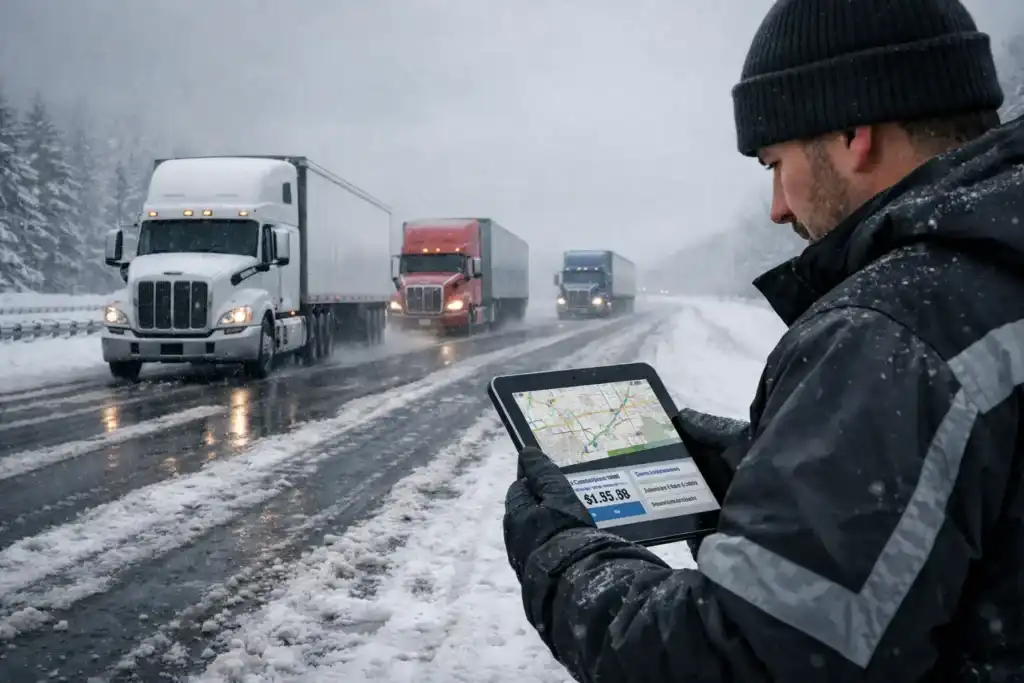
Seasonal Freight Rates Meets Regulatory Shake-Up: Normally, by late January, trucking enters its slow season – the holidays are over, winter storms occasionally interrupt but overall freight volume is down. Many drivers use this time for maintenance or time off. But this year, keep an eye on the market data. If enough drivers are forced off the road by February (which is likely the case as states like Colorado, New York, North Carolina, Minnesota, and others purge licenses), we could see spot rate firmness even in mid-winter. Come spring and summer 2026, when freight historically picks up, the effect might be even more pronounced: produce season + fewer trucks = potentially a hot market for those running. In other words, the seasonal freight rates cycle might be amplified – lower capacity could make the highs higher (and perhaps the lows shorter).
For those still out there driving, it’s wise to adjust your strategy to capitalize on this. Which brings us to our next point: how to adapt, and how a truck dispatch strategy from a good dispatcher can make all the difference.
How a Smart Truck Dispatch Strategy Can Help You Adapt
When regulations and market conditions are in flux, a strong truck dispatch strategy becomes your secret weapon. As a truck dispatch company, we’ve seen firsthand how proactive planning and support can turn potential crises into mere speed bumps. Here are concrete ways a dispatch service like ours can support owner-operators and small fleets amid the non domiciled CDL shake-up:
- Load Re-Booking and Schedule Flexibility: Suppose one of your drivers (or you, if you’re an independent O/O) suddenly loses their CDL privileges or is put out of service during a trip. This is a nightmare scenario – freight is on the trailer and the driver can’t legally move it. A quality dispatch service springs into action here. We can quickly contact brokers and shippers to inform them of the issue and, more importantly, re-book the load onto another truck if possible. Because a dispatch team often works with a network of carriers and drivers, we might help arrange a swap or recovery driver to complete the haul. If you’re an owner-op with your own authority, we’ll coordinate with the broker to perhaps get the load accepted by another carrier you partner with, so your customer is taken care of. This kind of quick thinking preserves relationships and keeps that revenue from evaporating. Basically, we act fast so that a license crisis doesn’t result in a broken contract or a stranded load.
- Adjusting Routes and Plans Proactively: A truck dispatch service constantly monitors what’s happening on the ground – weather, traffic, and yes, regulatory enforcement. During this non domiciled CDL purge, there may be hotspots of enforcement (e.g. California scale houses might be extra keen on checking licenses in early 2026). We adjust routes to minimize risk and delays. For example, if roadside inspectors are doing targeted checks in one state, your dispatcher may route you through an alternate corridor to avoid lengthy inspections (always while staying compliant with HOS and safety, of course). Similarly, if a driver shortage in one region is causing long load times or backlog, we might pivot your truck to a different freight market where things are moving smoothly. A dynamic dispatch strategy helps you avoid dead-ends – both literal and figurative – and keeps your wheels turning profitably.
- Handling Communications and Paperwork: When new rules cause confusion, paperwork and communications can become a full-time job. That’s what you pay a dispatcher for. We handle the calls and emails so you don’t have to. Did your truck get held up at a shipper because the previous driver never showed (possibly due to a non domiciled issue)? We’ll be on the phone with the broker immediately, updating them and negotiating any layover or detention pay for your wait. We’ll send out revised rate confirmations if a load gets re-assigned, and ensure all parties sign off. If your non domiciled CDL team driver has to hop out and you want to keep running solo, we’ll update the load arrangements with the customer accordingly. All those tedious logistics and documents – a professional dispatch service takes that off your plate. During regulatory delays or compliance hiccups, having someone dot i’s and cross t’s means you get paid for your time and don’t burn bridges with clients.
- Safe Parking and Emergency Support: Imagine you’re out in a winter storm – or worse, put out of service at a weigh station because of some paperwork issue or an “English proficiency” roadside test (yes, that’s a thing now: inspectors can OOS a driver if they deem their English isn’t good enough). Now you’re stuck. This is where a dispatcher proves their worth beyond just finding loads. We’ll help locate the nearest safe parking – whether it’s a truck stop, rest area, or a secure lot – and guide you there if you had to leave the inspection site. We can also coordinate roadside assistance or even a relief driver if one needs to come get the truck/trailer. While you focus on staying safe and legal, your dispatch team is in the back office arranging tow services, calling the shipper to explain the delay (“the load will be late due to unforeseen compliance issues, we’re on it”), and finding a solution to get you moving again as soon as possible. We essentially become your 24/7 support crew so you’re never stranded alone facing a problem.
- Compliance Guidance and Documentation: During times like these, compliance is king. A dispatch service can play a role in keeping you compliant. How? We stay updated on the latest FMCSA announcements and state DMV actions. We’ll remind you of any filings needed (for example, if you did somehow need to transition from a non domiciled CDL to a regular one by obtaining residency, we’d help point you toward the process or connect you with someone who can). We also help maintain accurate driver qualification files for our fleet clients – ensuring copies of CDLs, medical cards, etc., are up to date. If an insurance company or broker suddenly requires proof that none of your drivers hold non domiciled licenses (this is happening – some brokers now screen carriers for this factor), we’ll assist in pulling reports and providing whatever verification is needed. It’s not glamorous, but these details can make or break whether you can haul certain loads. With a dispatcher’s help, you won’t miss an important compliance step while you’re busy driving.
In short, a truck dispatch strategy in 2026 needs to be extra adaptive. It’s not just about finding the highest-paying load on the board; it’s about steering through regulatory storms. The value of having a dispatch partner is that we think three steps ahead on your behalf. If thousands of drivers are getting sidelined, we’re strategizing how to exploit the resulting niche opportunities for you (e.g., maybe a certain lane is now underserved – we’ll get you in there at a premium). If new rules cause slowdowns at ports or warehouses, we’ll buffer your schedules and find alternative loads to avoid dead time. We’re essentially your eyes and ears in the chaotic freight landscape. As an owner-operator wearing many hats, having that dedicated support can be the difference between thriving amid change or getting blindsided by it.
Other FMCSA Rule Changes to Watch in 2026
While the non domiciled CDL crackdown is stealing the spotlight, it’s not the only regulatory change in the new year. Owner-operators should keep a few other FMCSA initiatives on their radar:
- Electronic Logging Devices (ELD) Updates: In late 2025, FMCSA removed several ELD models from its approved devices list for not meeting technical standards. If you happen to use one of those now-banned ELDs, you’ll need to replace it promptly. Running afoul of ELD compliance can put you out of service. A dispatch service can help identify a reliable ELD and ensure your logs stay compliant. (Pro tip: Always have a backup logging method for a short period when transitioning ELDs, in case of any glitches.)
- Drug Testing and Clearinghouse: The FMCSA Drug & Alcohol Clearinghouse rules are firmly entrenched, but 2026 could see new testing methods inch closer. There’s talk that hair follicle drug testing guidelines may finally advance. Also, fentanyl was flagged to potentially be added to the DOT drug testing panel. These changes aren’t finalized yet, but stay informed – if implemented, even a one-time experiment that was undetectable before could suddenly become a career-ender. As an owner-op, make sure you’re enrolled in a consortium for random tests (mandatory if you have your own authority). And of course, dispatch services often assist fleet clients in managing compliance calendars for testing. We can remind you about annual queries or if any new testing requirement kicks in.
- Speed Limiter Rule (Possible): A highly controversial proposal to mandate speed limiters on trucks is floating around FMCSA’s agenda. If a rule is finalized in 2026, it could require trucks to have speed governors set to a certain max (possibly 65 mph, though nothing confirmed). Owner-operators would have a phase-in period to equip their trucks if they aren’t already. This isn’t law yet, but keep an ear out. It’s a reminder that being adaptable isn’t just about market rates but also about your equipment and how you operate. Should this rule move forward, a dispatcher can help adjust your trip planning (longer transit times if capped at lower speeds, different appointment scheduling, etc.).
- Unified Registration System (URS) Changes: Starting January 2026, the final stages of the URS are in effect. FMCSA has been streamlining carrier registration – for example, MC numbers are going away, and only the USDOT number will matter for identification. If you’re running under your own authority, ensure your registration info is up to date. You might need to update your truck door signage to display your USDOT prominently if you haven’t already. This is more of an administrative change, but failing to comply could lead to fines. We mention it because it’s one more thing on your plate. (If you work with truck dispatch services like ours, we can assist or at least remind you when your biennial update or any URS-related task is due, so you stay in good standing.)
All told, 2026 is shaping up to be a year where regulatory compliance is as important as your driving skills. The motto for owner-operators should be: stay informed, stay prepared. By aligning with a dispatch partner who watches these developments closely, you won’t be caught off guard. We make it our job to not only find you freight but also to keep you ahead of rule changes that impact your business.
The Bottom Line: Turning Challenges into Opportunities
Change in trucking is constant – sometimes it creeps in (like gradually tightening emissions rules), and sometimes it hits like a ton of bricks (like this non domiciled CDL purge). As an owner-operator or small fleet, you can’t control what the regulators do, but you can control how you respond. The purge of non domiciled drivers is a challenge for those directly affected and a shake-up for the industry at large. But in every challenge lies opportunity:
- If you’re directly affected (a non domiciled CDL holder): This is obviously a critical juncture. Use every resource at your disposal – legal counsel, immigration experts, your dispatcher, industry associations – to explore a path forward. You may need to pause operations and resolve your status, or perhaps partner with another carrier in the interim (some drivers are opting to run team with a fully licensed partner or become a company driver for fleets that can sponsor work authorization). Don’t isolate; communicate. Let brokers or carriers you work with know what’s happening – many value your service and might help you find a solution (like intra-state work that might be possible with a regular license, etc.). Most importantly, stay safe and lawful; running under the radar without a valid CDL is not worth the risk to you or others.
- If you’re an owner-op who is not directly affected: you might actually see business improve. Be ready to seize the moment. Higher spot rates mean it’s time to optimize: negotiate those rates hard (know your worth in a tightening market), maybe dust off lanes that weren’t paying last year but could pay now, and consider expanding your operation if you’ve been on the fence (a lot of parked trucks might be up for sale cheap – and if you can find qualified drivers, 2026 could be a profitable year to grow). That said, maintain professionalism – shippers and brokers will remember who delivered reliably during the chaos. If others drop loads because of driver issues, step in and save the day. That’s how small carriers build a reputation (and command premium rates long-term).
- Lean on your dispatch support: There’s no trophy for going it alone through a regulatory storm. Truck dispatch services exist to make your life easier and your business stronger. From finding you those high-paying emergency loads when capacity is tight, to handling the tedious compliance and communication tasks, a dispatch partner is like mission control for your one-truck or ten-truck operation. We’ve got your back. As rules shift, we adjust your loads and strategy in real-time. Our goal is the same as yours: keep your truck moving and making money, no matter what external challenges arise.
At Dispatch Republic, we pride ourselves on being more than just a load-finder – we’re a full-scale support system for owner-operators. The new FMCSA rules in 2026 are challenging, but you don’t have to face them alone. If you want to stay compliant, profitable, and stress-free, our truck dispatch service is here to help you navigate every turn. Reach out to us today to learn how we can tailor a truck dispatch strategy for your business, handle the busy-work, and let you focus on what you do best: driving and earning. New year, new rules? No problem – with the right dispatch team in your corner, you can turn these hurdles into stepping stones for a successful year on the road.
If you’re an owner-operator hauling specialized freight, don’t go it alone. Explore Dispatch Republic’s box truck dispatch services and car hauler dispatch services to access top-paying loads and compliance support. Check out our car hauling dispatch services and blog for more tips. Our dispatchers are experts in car hauling loads, flatbed loads, and reefer loads – we can match your truck to the best freight and handle the paperwork. Let us help you keep your rig loaded, safe, and legal.
For a deeper dive into the hotshot hauling business, read our Box Truck vs. Dry Van: Which Is Better for Your Business? and Step Deck vs. Flatbed: Which Is Right for Your Fleet?
Ready to make the most of your trucking business? 🚚💨 Reach out to Dispatch Republic and let our experts help maximize your earnings with tailored reefer dispatch service and dry van dispatch service solutions. We’ll handle the logistics while you keep on truckin’. Contact our truck dispatch service to get started on the road to greater profits and less hassle!
For more detailed guides, check Dispatch Republic’s resources on dispatching and the trucking business. Recent FMCSA Rule Changes for Immigrant CDL Holders if you’re weighing career paths, and Hotshot Dispatch and Compliance: Key Regulations Every Dispatcher Should Know to understand the dispatch side of the business.
If you’re an owner-operator juggling multiple responsibilities, consider partnering with a professional truck dispatch service to take the load off your shoulders—literally. At Dispatch Republic, we specialize in helping carriers run smarter and earn more by expertly managing load boards, negotiating top rates, and handling paperwork for dry vans, reefers, flatbeds, box trucks, step decks, and even hotshots. Our team monitors multiple premium load boards around the clock, ensuring your truck stays loaded with the right freight, at the right rate, on the right lane. Whether you’re scaling up or just getting started, having a dedicated dispatch team in your corner means fewer empty miles, less stress, and more time to focus on driving and growing your business.
Frequently Asked Questions
A non domiciled CDL is a commercial driver’s license issued to someone who is not a U.S. resident or citizen (for example, foreign drivers working in the U.S. on temporary visas). In 2025, the FMCSA discovered widespread issues with how these licenses were granted – thousands were issued improperly (like to drivers whose legal status had expired). As a result, FMCSA ordered states to cancel or not renew any non domiciled CDLs that don’t meet strict new immigration and documentation requirements. In 2026, states are actively canceling those CDLs, which means many foreign national truck drivers are losing their legal ability to drive commercial vehicles. The cancellations aim to enforce existing federal rules that say you must have lawful, up-to-date immigration status (and certain work visas) to hold a CDL. For owner-operators, this means if you have a non domiciled CDL, you need to check its status immediately. And even if you don’t, you’ll feel the effects as those drivers come off the road (through tighter capacity and possibly higher freight rates).
Pulling thousands of drivers out of the trucking workforce will reduce capacity, which tends to drive freight rates up. Think of it like this: the pie (number of loads) stays the same, but there are fewer trucks available to haul them – so shippers and brokers may bid higher to secure a truck. In practical terms, many expect spot market rates to rise in 2026 due to this driver purge. We’re already seeing early signs of strengthening rates in some regions. It might not happen overnight everywhere, but as the cancellations ripple through (especially in states like California, Texas, New York, etc.), certain lanes will have a capacity crunch. Owner-operators who are still running with valid CDLs could find they have more negotiating power and better-paying loads. Seasonal freight rates patterns will still apply (e.g. spring produce season will surge, mid-summer might dip, etc.), but those peaks could be higher than usual and the valleys not as low, because overall driver supply is down. In short, 2026 is likely to tilt toward a carrier-favorable market – good news for truckers’ rates, as long as freight demand holds steady.
We anticipate trucking rates winter 2026 will show the impact of the CDL cancellations. Normally, winter (especially January-February) is the slow season with lower rates. But with so many drivers being removed from service right at the start of 2026, the usual winter downturn may be milder. In certain markets – say, freight coming out of California’s produce warehouses or the ports – rates this winter could stay unseasonably firm because capacity suddenly tightened. It’s a bit of a tug-of-war: winter weather and post-holiday slowdowns push rates down, but the driver shortage caused by the rule could push rates up. Early January might still see a dip (as always after Christmas), but pay attention to late January and February: if shippers struggle to find trucks, they’ll up the pay. Some industry surveys even indicated many carriers expected a rate boost in winter 2026 compared to recent years, specifically due to the non domiciled driver phase-out. So yes, while winter is usually a cooler market, this year those trucking rates winter trend lines might surprise to the upside in certain regions or segments.
If you are an owner-operator with a non domiciled CDL (meaning you’re a foreign national driver here on a visa or similar), you need to act quickly. First, verify if your CDL is still valid or flagged for cancellation. Contact your state’s DMV or licensing agency – many have lists or have sent letters to affected drivers. Second, look into your immigration status and work authorization: under the new rules, only specific work visas (mostly employment-based, temporary visas like certain H-2B visas) allow a non domiciled CDL, and even then, the license expiry must align with your visa’s expiry (with yearly in-person renewals). If you fall outside those categories, you may not be eligible at all. This might mean you need to pause driving until/unless you can obtain a proper status. Consider consulting an immigration attorney to see if there’s a path to adjust your status that would let you legally drive again. In the meantime, you could explore working under someone else’s authority in a different role (perhaps as a team driver with a fully licensed partner, or in dispatch/office roles) just to stay afloat. Importantly, communicate with your brokers or carrier customers – let them know you’re addressing the issue. If you work with a truck dispatch service, loop them in; a good dispatcher can help find temporary solutions (maybe local loads that don’t require interstate authority or advising you on compliance) while you sort things out. It’s a tough spot, no doubt. But the worst thing you could do is try to fly under the radar – driving on a canceled or invalid CDL can lead to hefty fines and even criminal charges. Facing it head-on and seeking a legal resolution is the best (and really only) course.
We’re seeing brokers and insurers take a much harder line on carriers who have non domiciled CDL drivers. From the insurance side, some major trucking insurers have hinted (and some have already implemented) policies where they won’t cover any driver who doesn’t have a domicile in the U.S. or a permanent lawful status. Their fear is that if there’s an accident involving a non domiciled driver, it could lead to massive legal liabilities (plaintiff attorneys might argue the carrier was negligent hiring an “unqualified” driver, for example). So insurance agents are reviewing fleets and asking “Do you employ any non domiciled CDL holders?” and if the answer is yes, those fleets might face higher premiums or outright non-renewal of coverage. Likewise, many freight brokers are proactively screening carriers for this. In fact, some freight tech solutions (like carrier onboarding platforms) introduced features to flag carriers with non domiciled drivers so brokers can avoid them. The concern for brokers is twofold: service failure (if a driver’s license gets yanked mid-load) and liability (brokers have been sued in accidents, and if they knowingly used a carrier with illegal drivers, it looks bad). So don’t be surprised if brokers you’ve worked with reach out to confirm your drivers are all properly licensed or even ask for copies of CDLs. If you’re a one-man operation, this might not come up, but small fleets certainly are getting this scrutiny. The bottom line is, the industry’s “gatekeepers” (insurance and brokers) are aligning with the FMCSA’s push. As an owner-operator, if you’re all legit, there’s no issue – just another item to verify occasionally. And if you do have questionable driver status in your fleet, expect limited options until that’s resolved. This reaction ultimately reinforces the intent of the rule: it’s pressuring everyone to phase out non domiciled drivers quickly.
A truck dispatch company can be immensely helpful during times of change like this. Firstly, your dispatcher can keep you informed. We stay on top of industry news, so we’ll alert you if there’s something like “State X just canceled 5,000 CDLs” or “Broker Y now requires a certification of driver domicile.” That heads-up allows you to prepare rather than be caught off guard. Secondly, as described earlier, a dispatch service helps with all the adjustments: finding new loads if others fall through, re-routing you around trouble spots, negotiating extras like detention or layover if regulatory delays occur, and so on. Think of it like having an operations manager in your corner – you’re not just a lone truck out there; you have a team making calls and plans for you in the background. For example, if the truck driver shortage gets worse because of these rules, shippers might start offering longer-term or dedicated lanes to secure capacity – your dispatcher will sniff those opportunities out and present them to you (“Hey, lane from A to B is paying great consistently, shall we lock it in for a month?”). Also, during any period where you might be transitioning (say you had to take a week off to renew paperwork or you lost a co-driver), a dispatcher works to fill your schedule as soon as you’re back and maximize your revenue to make up for lost time. In short, a dispatch company becomes your partner in navigating both the big picture strategy and the day-to-day grind. Especially in a chaotic environment like early 2026, having that steady hand can reduce your stress and help turn potential problems into profitable pivots. If you don’t have a dispatcher and are feeling overwhelmed by all these new developments, it might be a good time to consider getting one – even if just to help with the heavy lifting until things stabilize.
Ready to Take Your Trucking Career to the Next Level?
Whether you’re an owner-operator, a company driver, or a carrier company in need of truck dispatch services, Dispatch Republic is here to help. Our teamof experienced truck dispatchers offers affordable, professional truck dispatch solutions designed to save you time, increase your earnings, and make your business more efficient.
Thinking about outsourcing your truck dispatching? Contact Dispatch Republictoday and move smarter, not harder.
Found our Blog useful? Spread the word:
Check our latest posts:
[latest_posts_grid]
Contact us today to see how our team can support your trucking business.
Table of contents
Picture this: It’s mid-December and a blizzard is sweeping across the Midwest. Shipments that usually pay $2.00 per mile are suddenly commanding $3.00 or more as trucks detour or idle. Just weeks later, in early January, those same lanes might drop below $2.00 once the holidays pass and skies clear. Winter freight rates can swing wildly – rising during storms and holiday peaks, then slumping in the post-holiday calm. These shifts aren’t random. They happen every year due to a perfect storm of seasonal freight rates dynamics: surging winter demand, fewer drivers on the road, and weather disruptions that tighten capacity. If you’re a trucker or fleet manager, understanding trucking rates winter patterns is key to staying profitable when the temperature drops. In this in-depth guide, we’ll break down exactly why freight pricing changes in cold weather and how a smart truck dispatch strategy can help you navigate the winter freight season.
How Winter Changes Demand and Capacity
Winter in the trucking industry is feast then famine. It starts with a holiday shipping surge and ends with a deep January slowdown. These seasonal swings in demand and capacity drive major changes in winter freight rates every year.
- Year-End Holiday Rush: From late November through December, freight volumes spike. Retailers, e-commerce warehouses, and distributors scramble to move goods before Christmas. This surge of loads naturally pushes up seasonal freight rates in winter’s peak season. More freight + limited trucks = higher prices. In fact, industry data shows that December freight demand consistently jumps, tightening capacity and driving up spot prices. Shippers often pay premiums to secure trucks for on-time delivery before holidays. As one December 2025 analysis noted, “spot rates are climbing… contrary to earlier forecasts,” driven by seasonal demand and even regulatory capacity cuts. The result? Carriers who work during the holidays can often command higher winter freight rates per mile, especially on last-minute and priority loads.
- Drivers Taking Time Off: The holidays also mean many drivers take vacation or home time. Trucking isn’t 9-to-5 work, so Christmas and New Year’s week see a significant drop in available trucks. Large fleets may grant time off, and owner-operators often pause to be with family. This reduced driver availability shrinks capacity exactly when demand peaks, creating a freight capacity shortage on the spot market. With fewer trucks running, trucking rates winter season often spike because shippers compete for any available rig. Industry reports confirm this pattern: capacity tightens each December as drivers go on break, pushing more loads to the spot market and boosting rates. In short, winter brings fewer trucks for more loads, and prices respond accordingly.
- Post-Holiday Lull: After the New Year, demand falls off a cliff. Late January and February are historically the slowest freight months. Retail inventory is stocked, consumers are spending less after holidays, and construction/agriculture are in off-season. This seasonal slump means far fewer loads on the boards. Truck capacity frees up as drivers return to work, but there aren’t enough shipments to keep everyone busy. The imbalance swings the other way – now more trucks than loads, so winter freight rates drop in many lanes. Carriers that thrived in December face leaner options in Q1. It’s common to see spot rates pull back to “floor” levels once the holiday rush abates. For example, after a peak into late December, national average van rates often fall heading through January, returning to pre-holiday levels. This seasonal downturn can be challenging for owner-operators who must cover expenses even when freight is slow. The key is to plan for the winter slump by saving some of the holiday gains or diversifying freight (more on strategy later).
- Seasonal Industries: Winter also shifts what kind of freight is moving. Certain industry cycles amplify the rate swings. For instance, flatbed freight tends to slow down in winter because construction projects pause and building materials demand dips. As a result, flatbed capacity may exceed flatbed loads in cold months, causing flatbed rates to stagnate or drop until spring. (Flatbed is known for seasonal swings – spring and summer are busier, while winter can be slower due to construction off-season.) On the other hand, reefer freight can see pockets of higher demand in winter for food distribution and temperature-sensitive goods. Reefers may also command premiums to prevent freezing of certain products. Overall, winter is a mixed bag: seasonal freight rates will depend on what you haul. Dry van and parcel surge for holidays, reefer hauls steady volumes of groceries even in blizzards, and flatbeds wait for the thaw when construction resumes. A savvy carrier adjusts to these seasonal freight patterns – for example, a flatbed owner might take some power-only dry van loads over the winter to keep earning, or a reefer driver might target produce coming from warmer regions.
Weather Delays = Tighter Capacity & Higher Rates
Beyond holidays, Mother Nature plays a huge role in trucking rates winter trends. Snow, ice, and frigid temperatures can turn a routine haul into a slow, risky trek – and that disruption in turn affects freight pricing. Here’s how harsh winter weather drives winter freight rates higher (and why sometimes lanes simply shut down):
- Storms Disrupting Schedules: Blizzards, heavy snow, and ice storms often slow or halt deliveries across entire regions. Highways close or traffic crawls at a snail’s pace. When a winter storm hits, transit times blow out – a trip normally 1 day can take 2–3 days. Each truck ends up tied up longer on a load, effectively reducing available capacity. Shippers and brokers anticipate this, and many are willing to pay more to get freight moving ahead of or around a storm. A sudden snowstorm can create “urgent shipments” that command premium spot rates because so few trucks are willing (or able) to run. Industry experts note that when weather disrupts deliveries, carriers build extra time and risk into their pricing, causing rates to rise on affected lanes. In other words, if you must move freight through a blizzard zone, expect to pay a winter weather premium – higher rates compensate drivers for the delay and danger.
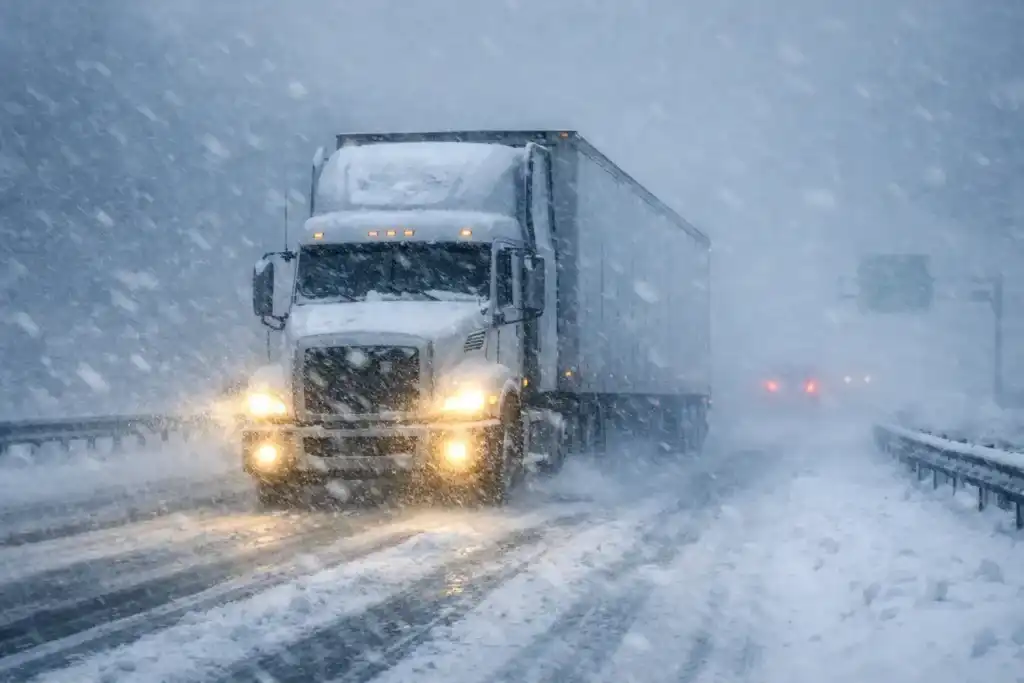
- Safety and Speed Constraints: Even when roads remain open, truckers must slow down for safety in snow or icy conditions. Running 65 mph might be impossible; trucks might go 45 mph with chains on tires in mountain passes. Hours-of-service rules don’t relax much for weather (aside from a possible 2-hour extension in adverse conditions), so slower speeds mean some loads miss tight delivery windows. Drivers being careful (as they should) means freight moves more slowly through the logistics pipeline in winter. These longer transit times effectively tighten capacity – fewer loads get delivered per week by each truck. With supply (truck hours) squeezed, winter freight rates tend to increase, especially for time-sensitive loads. As one trucking firm put it, “lack of sunlight, extreme cold, unpredictable weather, and challenging road conditions all play a role in delaying shipments and raising freight costs”. Shippers often agree to higher pay or fuel surcharges in winter to account for the inevitable slowdowns from weather.
- Certain Regions Become No-Go: When it’s 0°F and blizzarding in the Northern Plains or New England, many carriers simply avoid those areas. Driver willingness to take loads into storm-prone or frigid regions drops. For example, if the forecast calls for feet of snow in upstate Minnesota, a lot of owner-operators will decline loads heading there – unless the rate is high enough to justify the risk. This creates regional capacity crunches. Loads into snow-bound states start paying a premium to attract trucks. In effect, the market adds “hazard pay” to lanes hit by winter storms. Analysts observe that it’s a “safe bet to plan for the price of moving freight into and around the northern and eastern U.S. to rise in winter”. Carriers need extra compensation for the increased fuel usage (idling, rerouting), possible equipment issues (frozen brakes, gelled fuel), and simply the willingness to brave dangerous conditions. If you’ve ever wondered why a load from Texas to North Dakota in January pays so much, it’s because trucking rates winter routes have to entice drivers to go into the icy north. The farther into the snow belt a load goes, generally the higher the rate due to these risk factors.
- Weather Emergencies and Capacity Crunch: In extreme cases, weather can knock a significant chunk of capacity out of service temporarily. Think about a multi-day blizzard that shuts down interstates from Wyoming to Illinois – thousands of trucks sit idle waiting it out. This sudden drop in active trucks nationwide can spike spot rates even outside the storm zone. A real-world example: In December 2025, a series of three winter storms early in the month sent spot rates up ~10% compared to the prior year. Analysts noted this surge was “primarily reduced capacity” caused by severe weather combined with solid holiday demand. However, they also predicted the jump would be temporary, because “weather will warm and consumption will fall again after the holidays”. Indeed, once those storms passed, some pent-up deliveries were made and rates settled back down. The takeaway: winter weather can create short-term rate spikes – but when the snow melts, those high spot prices often retreat. A carrier’s goal should be to capitalize on the spikes (if it’s safe to run) and then be prepared for normalization afterward.
- Special Services Cost More: Winter conditions also trigger accessorial charges and special requirements that raise overall freight cost. For example, freeze protection services – using reefers or heaters to keep freight from freezing – are often needed for liquids, paints, or beverages moving through cold regions. Shippers pay extra for this service, which effectively increases the seasonal freight rates for certain loads. Likewise, tarping a flatbed load to protect it from snow/salt, or chaining up in mountain passes, all involve extra labor and time. Many shippers will offer additional pay for tarping or hazard conditions in winter. These costs get baked into freight rates. A tarp or chain-up fee might only be $50–$150, but it reflects the broader fact that moving freight in winter is more demanding. As one logistics expert bluntly put it, “there’s a cost to doing business when Mother Nature is waging a wintery war”. Whether through accessorials or higher line-haul rates, shippers must incentivize carriers to take on winter routes.
In short, nasty weather reduces effective capacity and increases risk – which inevitably pushes winter freight rates higher (at least temporarily) on impacted lanes. For drivers, it’s crucial to balance safety with opportunity. Don’t feel pressured to drive in unsafe conditions for a high paying load. Do take advantage of higher rates when you safely can, and make sure those rates truly account for the delays and challenges you’ll face. Often, working with a good dispatcher can help negotiate those winter premiums on your behalf.
Spot Market vs. Contract Rates in Winter
You might be wondering: do contracted freight rates also jump in winter, or is it just the spot market? The answer: spot rates are far more volatile with seasons, while contract rates stay steadier – but even contracts feel some winter effects.
- Spot Rates Spike and Dip: The spot market is like the wild west of freight pricing, especially in winter. Spot loads – those posted on load boards for any carrier to grab – reflect immediate supply and demand. So when a holiday rush or storm hits, spot freight rates can surge within days or even hours. For example, just before Thanksgiving 2025, spot van rates in the U.S. were under $1.75 per mile; by mid-December they neared $2.00. Such jumps happen because shippers who suddenly need a truck (or get their contract loads rejected) must bid up prices to secure one. Historical data shows “spot rates climb in the final weeks of December because shippers compete for limited capacity”. Conversely, in January, spot rates often slide back down sharply once the pressure eases – a seasonal pattern noted in freight indices each year. It’s not uncommon for January spot rates to be significantly lower than December’s. As a carrier, if you rely on spot loads, you’ll feel every bump: booming rates during winter peaks, then leaner spot rates in winter’s off-weeks. Budget accordingly for those ups and downs.
- Contract Rates More Stable: Contract rates are negotiated in advance (often as annual or multi-month agreements between shippers and carriers). These rates don’t change on a dime with weather or week-to-week demand. So while your contract loads in winter might pay the same per mile as they did in autumn, the spot market around you could be much higher (or lower). In tight winters, carriers with contracts might actually earn less than they could on the spot market – which leads to some rejecting contracted loads in favor of chasing spot freight. Industry metrics like the Tender Reject Index measure this: in late December 2024, van tender rejections were ~8%, up over 60% from the prior year, indicating carriers were turning down contract freight to go spot. In a soft winter, the opposite happens: carriers hold onto their contract freight because spot isn’t paying enough. Trucking rates winter comparisons often show contract rates as a smooth line, with spot rates swinging above or below depending on market tightness. For instance, during most of 2023’s freight recession, spot stayed well below contract; but by late 2025, spot rates had closed the gap to within ~$0.40 of contract rates as capacity tightened. Bottom line: contract rates provide stability (good for shippers, and for carriers’ consistency), while spot rates provide opportunity in boom times and pain in slow times.
- Fuel Surcharges & Extras: One area where contract freight does fluctuate in winter is fuel surcharge and accessorials. Most contracts include a diesel fuel surcharge pegged to DOE fuel indices. If winter storms or refinery issues drive up diesel prices, that surcharge climbs, giving carriers extra pay per mile to cover fuel. Likewise, contracts might have clauses for detention pay, layover, or special services that kick in more often during winter (e.g. if a truck is stuck waiting out weather, a layover rate might apply). While these aren’t “rate per mile” changes, they affect total revenue. Smart carriers will ensure they claim all such compensations in winter – for instance, if a receiver shuts down due to snow and you sit an extra day, invoke that layover pay. A good truck dispatch strategy includes tracking these contract terms so you don’t leave money on the table when winter disruptions occur.
- Mini-Bids and Rate Resets: In prolonged or extreme situations, even contract rates can be adjusted. If winter weather or seasonal trends cause a sustained capacity crunch, shippers sometimes initiate “mini-bids” – short-term contract rate increases to secure trucks. For example, if late January unexpectedly stays busy (perhaps due to backlogged cargo or an early produce harvest in the south), a shipper might offer carriers a temporary rate uptick to ensure coverage. Conversely, if the market crashes after New Year, some shippers may push for lower contract rates in Q1 or Q2. However, most of the time, contract rates lag behind spot market movement. They might only be renegotiated after a season passes. So, consider contracts as the winter coat: providing insulation from sudden temperature swings, but eventually adjusting to the climate if things stay changed. Spot is more like your thermometer, spiking or plummeting quickly with the front-line weather.
Key insight: If you’re an owner-operator primarily on spot loads, winter will be a rollercoaster – plan your truck dispatch strategy to make the most of December and cushion for January. If you’re running mostly contract freight, you’ll have more consistency, but be aware that if spot pays way more, your dispatch might advise you to accept some spot loads (or if you’re a small carrier, you might quietly take a few high-paying spot loads) – just be careful not to burn bridges with contracted customers. Successful carriers often balance both: locking in contracts for baseline revenue and dipping into spot for upside during seasonal freight rates surges.
Dispatch Strategies to Navigate Winter Freight Rates
Winter doesn’t have to catch you off-guard. The right truck dispatch strategy can help drivers and carriers weather the season’s ups and downs while staying safe and profitable. Here are some expert dispatch tips for winter:
1. Plan Around Seasonal Peaks and Slumps
A proactive dispatch strategy will anticipate the seasonal freight rates calendar. Mark the holiday peak weeks (typically late November through Christmas) and plan to run hard during those if you can – that’s when winter freight rates are highest. Come January, plan for reduced loads: you might reposition trucks to regions that still have demand (e.g. Pacific Northwest for late winter produce, or southern states) to chase available freight. Financially, set aside some of the holiday earnings to cover the slower weeks that follow. A dispatcher can help identify which customers or lanes dry up in winter and find alternative loads to fill gaps. For example, if you normally haul lawn equipment (dead in winter), a good dispatch service might switch you to hauling retail or food products in January to keep you moving. Diversify freight and lanes as needed – this flexibility is key to surviving the winter slump.
2. Monitor Weather and Be Ready to Reroute
Stay glued to weather forecasts in winter – this is where a dispatcher really proves their worth. A dedicated dispatch team will track storms along your route and advise on alternate paths or adjusted timing. If a major snowstorm is expected in Pennsylvania on Friday, a dispatcher might help you leave a day early or take a southern route to avoid closures. Rerouting early can save you from sitting in a 20-mile traffic standstill later. Modern dispatch systems even integrate weather alerts. As a driver, you should also have weather apps and communicate with your dispatcher; together you can decide when to push through and when to park it. Carriers and dispatchers who quickly re-route around snowbound areas can keep freight moving while others are stuck. This agility not only avoids delays but can let you grab extra loads that canceled on less-prepared competitors. In short, constant communication and route flexibility are core to a winter dispatch game plan.
3. Adjust Scheduling and Transit Times
In winter, everything takes longer – and your load schedules must reflect that. A smart truck dispatch strategy builds in buffer time for each trip. That means setting realistic pickup and delivery windows that account for potential weather slowdowns. Dispatchers should negotiate with shippers and receivers to allow extra hours or even an extra day when routing through known snow belts. It’s better to under-promise and over-deliver: tell a customer the load will arrive Wednesday instead of Tuesday, because if a blizzard hits, Wednesday might be realistic. If it doesn’t, you arrive “early.” This cushions you against late penalties or service failures. Also, dispatchers often stagger loads differently in winter – maybe one less load per week than a driver would do in summer, to avoid cutting it too close. Carriers who communicate upfront about slower winter transit are seen as reliable, not late. Remember, freight brokers know winter delays happen and often build them into plans; as long as you keep everyone informed (which is a dispatcher’s job), you won’t ruin relationships by running a bit late for safety. Being honest and proactive with scheduling is part of winter freight professionalism.
4. Leverage Spot Opportunities (Wisely)
As discussed, winter freight rates on the spot market can be very high at times. A good dispatcher will keep an eye on load boards and market conditions daily. If an opportunity pops up – say, a last-minute load paying $5/mile because a shipper’s regular carrier fell through – they’ll alert you and help secure it. Winter is prime time to score such “bonus” loads, especially when capacity is tight. However, you must balance chasing high spot pay with your commitments. Don’t abandon a contracted load for a flashy spot load without serious thought (or permission, if you’re leased on somewhere). Dispatchers can sometimes cover your regular load with another truck so you can go after a hot-paying one – this is where having a dispatch service with a network helps. The strategy should be: capitalize on high rates when available, but don’t burn bridges or violate agreements. Additionally, when spot rates crater in January, your dispatcher might shift you to more contract or dedicated lanes temporarily for stability. The overall goal is to maximize revenue in peaks and protect revenue in valleys.
5. Prioritize Safety and Compliance
No load – no matter how high the rate – is worth your life or equipment. A cornerstone of winter dispatch planning is safety first. This means scheduling plenty of rest time around storms, advising drivers to shut down if roads are too dangerous, and ensuring HOS compliance even when delays hit. Dispatchers can assist by finding safe parking for you if you have to stop (they often know truck stops or open facilities along the route). They also handle the communication with brokers/shippers if you’re delayed – getting appointments rescheduled, explaining the situation, so you can focus on driving safely. Another part of compliance is using the FMCSA adverse driving conditions exception wisely. Dispatch might plan for you to use that extra 2 hours if absolutely needed to reach a safe haven when weather causes unexpected stoppage. But they’ll also ensure it’s annotated properly so you don’t get dinged in an audit. Basically, a dispatch service acts as a co-pilot here: constantly checking that you’re not running over hours due to a snow jam, adjusting your dispatch if you need a 34-hour reset after being stuck, etc. By keeping drivers safe and legal, dispatchers prevent small problems (late deliveries, HOS violations) from snowballing into bigger ones.
6. Communicate, Communicate, Communicate
Winter demands constant communication across the board. As a driver, keep your dispatcher updated on road conditions, any accidents or closures you encounter, and whether you feel safe to continue. As a dispatcher (or carrier), keep the customer informed – shippers and brokers hate surprises. If you know a delivery will be late due to an icy highway closure, notify them early. Often they can adjust their schedule or find a work-around, and they’ll appreciate the honesty. Dispatchers should also communicate internally: if one truck in your fleet reports a bad ice storm, the team can warn other drivers heading that way. The more everyone shares info, the better you all can adapt. Effective communication is actually a competitive advantage in winter – carriers that keep shippers updated are more likely to get leniency or even higher rates (shippers might pay a premium to reliable partners who brave winter for them and stay in touch). On the flip side, silence can kill a relationship. Thus, a winter dispatch checklist might include scheduled call-ins or check-ins multiple times per day during storms. Use all channels: ELD messages, phone, email, even social media groups for drivers discussing route conditions. The more real-time info, the better decisions your truck dispatch strategy can make.
How Dispatch Services Support Drivers in Winter
Winter is when having a professional dispatch partner truly pays off. A dispatch company (like Dispatch Republic) acts as your back-office support team, tackling the hassles caused by winter so you can keep your wheels turning. Here are concrete ways a truck dispatch service can help you during the cold season:
- 🔄 Re-Booking Loads During Delays: If bad weather forces you to miss a pickup or delivery, it can be a nightmare to sort out. Dispatch services step in to re-book and reschedule loads on your behalf. For example, if a receiver is snowed in and won’t unload you until tomorrow, your dispatcher will contact them and secure a new appointment (and often negotiate detention pay or layover pay for your wait). If a load gets canceled due to a storm, your dispatch team will quickly hunt down an alternative load so your day (or week) isn’t wasted. This agility keeps you earning despite winter hiccups.
- 📍 Route Adjustments and Guidance: Dispatchers live on the radar and road reports in winter. They will proactively suggest route changes if there’s a safer or faster way around a storm. Say you’re headed from Chicago to Denver and I-80 in Iowa closes – a dispatcher might guide you down I-70 or find a southern detour, sending you turn-by-turn updates. They also consider chain laws and mountain passes (e.g. routing you around Colorado’s highest elevations if a blizzard is coming). By adjusting routes on the fly, dispatchers help avoid hours of sitting in traffic or dangerous stretches. They essentially navigate for you, using their resources and experience to keep you on the most efficient and safe path.
- 📞 Handling Broker/Shipper Communications: In winter chaos, the last thing a tired driver wants is to be on the phone with brokers explaining a delay. A dispatch service takes that load off your shoulders. They’ll inform the broker if you’re stuck behind a wreck on an icy highway, negotiate any necessary rate changes or convince the receiver’s warehouse to stay open an extra hour for you. Dispatchers speak the lingo and have established relationships, so they can often smooth things over quickly. They’ll also coordinate any added services – for example, if a receiver will only accept delivery after the storm, your dispatcher can arrange overnight parking or find a nearby drop yard if needed. All the paperwork and calls are handled for you. This allows drivers to focus on driving, not on hold with a shipper. Effective communication through dispatch keeps freight moving and relationships strong even when plans change.
- 📝 Paperwork & Compliance Support: Winter disruptions can trigger a lot of extra paperwork – logs need annotations for weather delays, perhaps state emergency waivers need to be carried (if there’s a state of emergency declaration waiving certain rules), and accessorial forms for detention/layover must be submitted. A dispatch company makes sure all that is done correctly. They’ll remind you to mark your ELD with the “adverse driving” exception when appropriate, and ensure you don’t accidentally violate HOS. They also keep copies of any emergency declarations (like if FMCSA issues a regional HOS exemption for heating fuel deliveries during a cold snap). Should your truck get rerouted, they update any permits or insurance certificates required for new routes. In short, dispatchers handle the bureaucratic side, so winter’s curveballs don’t turn into compliance violations or missed payments.
- 🛑 Safety and Parking Assistance: One underrated help is finding safe parking or shelter during winter storms. If you need to shut down, a dispatcher can quickly look up truck stops, rest areas, or even friendly shippers along your route where you can park safely. They might know which truck stops fill up by 5 PM and direct you to an alternative. During blizzards, they’ll check which states have declared emergencies (important because sometimes enforcement is relaxed or routes are prioritized for plows). Also, dispatchers often network with other drivers – they might direct two of their drivers to team up or park at the same location so you’re not alone in a storm. Advice on things like where to wait out a closure or how to time a dash between weather fronts can be lifesaving. Essentially, your dispatcher is an extra set of eyes looking out for your well-being.
- 💡 Winter Expertise and Coaching: A knowledgeable dispatch service brings years of winter experience to the table. They can advise newer drivers on winter driving tactics, from reminding you about chain-up rules to suggesting you fuel up with winter blend diesel in northern states. For instance, at Dispatch Republic, our dispatchers routinely hold seasonal briefings with our carriers, sharing tips on avoiding snow & ice freight risks and preparing trucks for deep cold (antigel additives, engine heaters, etc.). We know that ignoring winter risks can shut down entire fleets during a storm. So we work closely with drivers to plan safe dispatch & HOS strategies – including using those HOS exceptions properly, finding heated reload facilities for reefers, and more. Having a seasoned dispatch team is like having a winter operations coach: we’ve seen the patterns and pitfalls, and we guide you through them so you keep earning safely.
In summary, winter freight season is challenging, but it also offers opportunities for those who are prepared. Higher winter freight rates can boost your income if you plan wisely and work with a supportive dispatch partner. The cold-weather market rewards carriers who stay flexible, informed, and safety-conscious. Whether it’s grabbing a great-paying load before a snowstorm or patiently waiting out a closure (with your dispatcher already re-booking your appointments), success in winter comes down to strategy and support. If you’re navigating these seasonal swings alone and feeling the stress, consider teaming up with professionals who specialize in this.
At Dispatch Republic, we’re here to help drivers thrive year-round – even when the mercury plunges. From negotiating top seasonal freight rates on your behalf to guiding you through reroutes and regulatory nuances, our team’s got your back through every blizzard and holiday rush. Don’t let winter weather stall your earning potential. Contact Dispatch Republic today to discover how our expert dispatchers can keep you moving and profitable in every season. Stay warm, stay safe, and let’s conquer the winter freight market together!
If you’re an owner-operator hauling specialized freight, don’t go it alone. Explore Dispatch Republic’s box truck dispatch services and car hauler dispatch services to access top-paying loads and compliance support. Check out our car hauling dispatch services and blog for more tips. Our dispatchers are experts in car hauling loads, flatbed loads, and reefer loads – we can match your truck to the best freight and handle the paperwork. Let us help you keep your rig loaded, safe, and legal.
For a deeper dive into the hotshot hauling business, read our Box Truck vs. Dry Van: Which Is Better for Your Business? and Step Deck vs. Flatbed: Which Is Right for Your Fleet?
Ready to make the most of your trucking business? 🚚💨 Reach out to Dispatch Republic and let our experts help maximize your earnings with tailored reefer dispatch service and dry van dispatch service solutions. We’ll handle the logistics while you keep on truckin’. Contact our truck dispatch service to get started on the road to greater profits and less hassle!
For more detailed guides, check Dispatch Republic’s resources on dispatching and the trucking business. Recent FMCSA Rule Changes for Immigrant CDL Holders if you’re weighing career paths, and Hotshot Dispatch and Compliance: Key Regulations Every Dispatcher Should Know to understand the dispatch side of the business.
If you’re an owner-operator juggling multiple responsibilities, consider partnering with a professional truck dispatch service to take the load off your shoulders—literally. At Dispatch Republic, we specialize in helping carriers run smarter and earn more by expertly managing load boards, negotiating top rates, and handling paperwork for dry vans, reefers, flatbeds, box trucks, step decks, and even hotshots. Our team monitors multiple premium load boards around the clock, ensuring your truck stays loaded with the right freight, at the right rate, on the right lane. Whether you’re scaling up or just getting started, having a dedicated dispatch team in your corner means fewer empty miles, less stress, and more time to focus on driving and growing your business.
Frequently Asked Questions
Winter brings a perfect storm of high demand and low capacity. In the holiday season, retailers and shippers push out a surge of freight (think Christmas inventory and rush orders) while many drivers take time off. This creates a capacity crunch – more loads chasing fewer trucks – which drives winter freight rates up sharply. Add in winter weather delays slowing everything down, and shippers are willing to pay a premium to ensure delivery. Essentially, December is a peak month when seasonal freight rates hit their highs due to festive demand and fewer available trucks.
Seasonal freight rates mean that freight prices fluctuate throughout the year, impacting when truckers earn more or less. For example, many van and reefer drivers see high rates in late summer and Q4 (holiday season), then face lower rates in mid-winter (Jan/Feb) when freight volumes drop. A savvy owner-operator will budget knowing spring and summer may bring different opportunities (produce season, construction materials) than winter. Planning your truck dispatch strategy around seasonal peaks – like running hard during high-rate periods and scheduling maintenance or home time during slow periods – can stabilize your annual income. By anticipating the swings in trucking rates winter vs. other seasons, you won’t be caught off guard when rates change.
It depends on the freight sector, but generally winter has two extremes: a high around the holidays and a low in deep winter. Summer often has steady volumes (produce harvests, construction, etc.) which keep rates fairly strong, especially for flatbeds and reefers. In winter, dry van trucking rates can actually peak in December due to holiday retail shipments, then fall in January. Flatbeds usually see lower demand in winter (construction off-season), so flatbed rates are typically lower in winter than summer. Reefers might stay busy with food, but after holiday stocks are filled, even reefer rates can dip until spring produce. So, apart from the holiday spike, many lanes have softer trucking rates winter compared to summer. It’s crucial to know your lane and cargo – for instance, fuel tankers might have higher demand in winter (heating oil deliveries), whereas auto haulers might slow down after year-end. Your dispatcher can help identify seasonal trends for your niche.
The best strategy is planning and flexibility. First, capitalize on high-rate periods (like late-year holidays) – position your trucks in areas of high demand ahead of time, and be ready to work if you’re willing. Next, communicate with shippers/ brokers about realistic transit times; use your dispatcher to build extra days into schedules so you’re not rushed in bad weather. Diversify your freight mix if needed: if one commodity’s rates drop in winter, haul something else for a while (e.g. a truck dispatch strategy might shift a driver from flatbed to dry van power-only loads in January). Always monitor the spot market – a good dispatcher will jump on sudden spikes to get you a great load, and steer you to consistent contract freight when spot is weak. Finally, safety and reliability are part of the strategy: taking care of your equipment (preventive maintenance before winter) and being a carrier that shippers can trust to deliver even in winter will score you better opportunities. In short, plan for the ups and downs, stay flexible on loads and lanes, and use dispatch expertise to guide your decisions during the volatile winter months.
A dispatch service is like a support team that works to keep you running despite winter challenges. During winter slowdowns, they can find freight in alternative regions or negotiate dedicated hauls to keep your truck busy when the spot market is quiet. They also handle all the time-consuming calls and planning: checking weather along your route, finding alternate loads if one cancels, and informing customers about delays so you maintain a good reputation. In a storm, a dispatcher will reroute you around road closures, locate safe parking if you need to stop, and even help arrange things like tow services or roadside assistance if you get in a bind. They also make sure you’re getting compensated (layover, detention, etc.) for any holdups. Essentially, dispatch services take on the logistical headaches caused by winter – rescheduling deliveries, filling out extra paperwork, hunting for good-paying loads – while you focus on driving safely. This support can be the difference between sitting idle (or stressed) and still making money when winter freight rates are in flux.
Ready to Take Your Trucking Career to the Next Level?
Whether you’re an owner-operator, a company driver, or a carrier company in need of truck dispatch services, Dispatch Republic is here to help. Our teamof experienced truck dispatchers offers affordable, professional truck dispatch solutions designed to save you time, increase your earnings, and make your business more efficient.
Thinking about outsourcing your truck dispatching? Contact Dispatch Republictoday and move smarter, not harder.
Found our Blog useful? Spread the word:
Check our latest posts:
[latest_posts_grid]
Contact us today to see how our team can support your trucking business.
Table of contents
- The 2025 Freight Slump: Why It’s Hard to Find Good Loads
- Load Board Optimization: Finding Profitable Loads in a Soft Market
- Dispatch Strategy: Smart Tactics to Maximize Every Mile
- Beyond Booking Loads: How Dispatch Services Add Value (Safety, Compliance & Flexibility)
- Key Owner-Operator Trucking Tips to Stay Profitable
- Frequently Asked Questions
Picture this: It’s a Wednesday afternoon and you’ve just delivered a load. You pull up your favorite load board, hoping to find a decent next haul – but all you see are cheap offers paying barely enough to cover fuel. Sound familiar? Welcome to the slow freight market of 2025. Freight volumes have slumped (national truck tonnage is down about 7% year-over-year) and spot load postings have dropped by 15% compared to last year. In this climate, small carriers are feeling the squeeze – bankruptcies among owner-operators have jumped roughly 30%. It’s a tough scene: too many trucks chasing too few loads, and rates are scraping the bottom. But not all hope is lost. The right combination of load board optimization, smart dispatch strategy, and creative thinking can keep you profitable even when freight is slow. In this guide, we’ll share actionable owner operator trucking tips and dispatch insights to help you survive and thrive in a soft market. From avoiding high-risk trucking regions to squeezing every dollar out of each run, we’ve got you covered. Let’s dive in and get those wheels turning profitably again!
The 2025 Freight Slump: Why It’s Hard to Find Good Loads
Before jumping into load board optimization tactics, it helps to understand why the load board looks so bleak lately. The freight downturn (some call it the “freight recession”) has been brewing for a few years and really hit full force by 2025. Here are the big factors behind the slow freight market:
- Excess Capacity: In the boom times of 2021, carriers bought new trucks and expanded fleets. Now there are too many trucks and not enough loads to go around. With excess capacity on the road, shippers can offer rock-bottom rates knowing desperate trucks will bite. This oversupply of trucks forces fierce competition on every lane – a race to the bottom on pricing. It’s why load board optimization and choosing loads carefully is more critical than ever.
- Weak Demand & Economic Cool-Down: High interest rates and inflation have cooled the economy. Consumers are buying fewer goods (especially big items like appliances or furniture), which means fewer loads moving. Sectors like retail, housing, and manufacturing are all sluggish. Even e-commerce growth has leveled off. When demand drops, so do freight volumes – so the spot market is flooded with trucks chasing limited freight.
- Shippers Hold the Cards: With lots of available trucks, shippers have the upper hand and can push freight rates down. Many contract rates got renegotiated lower this year, and spot market rates are at their lowest since 2019. Brokers know they can post cheap loads on boards and still find a carrier willing to haul. It’s an unfortunate reality: reliable small carriers who run legally and safely are being undercut by those willing to haul for peanuts(see more). This broken market dynamic punishes the carriers who try to “do things right.”
- Operating Costs Still High: While rates fell, costs like fuel, equipment, and insurance didn’t drop in tandem. If you’re an owner-operator, you know maintenance, insurance, and fuel bills are as high as ever. Thin (or negative) margins are forcing tough choices. Every dollar counts, so both cost control and revenue optimization are vital parts of your dispatch strategy in a slow freight market.
The bottom line? It’s a dog-eat-dog market. But you can navigate it. The carriers who survive are adapting fast – cutting costs, diversifying freight, and saying “no” to loads that don’t make sense. As one industry expert put it, hauling freight at a loss doesn’t keep you in business, it just delays bankruptcyf. So let’s look at how you can find profitable loads and not fall into the cheap freight trap.
Load Board Optimization: Finding Profitable Loads in a Soft Market
When freight is abundant, you can afford to be picky or even a bit casual in how you use load boards. In a slow market, load board optimization becomes a critical skill. It’s all about using the boards smarter than the next guy. Here are concrete strategies to optimize load boards and snag the best loads before someone else does:
- Use Multiple Load Boards: Don’t rely on a single source. The top carriers and dispatchers use all the tools at their disposal– DAT, Truckstop, broker portals, etc.. Each board may have unique listings, so casting a wider net increases your chances of finding a good load. Big boards like DAT One and Truckstop have hundreds of thousands of postings daily. If one board looks dry, another might have something. This kind of load board optimization ensures you’re not missing out on freight. Many truck dispatch service teams subscribe to multiple boards on your behalf, so a dispatch service can greatly expand your reach.
- Set Up Alerts and Filters: Time is money when good loads vanish within minutes. Use load board features like alerts (email or push notifications) for your preferred lanes, and filter searches by rate, mileage, and weight. For example, you can filter out loads paying under a certain $$ per mile to avoid wasting time on low-ball offers. On DAT, savvy dispatchers even use the TriHaul tool (which suggests triangular routes) as part of their dispatch strategy to find two-load combos that beat a direct one-way haul. Good load board optimization means the best loads come to you – you’ll get a ping the moment a high-paying load is posted, so you can call immediately. Speed matters in a slow market!
- Prioritize Quality Brokers and Shippers: In a tight market, not all loads are equal. An important part of load board optimization is vetting who you work with. Use the board’s broker credit scores and reviews to avoid problematic loads. A cheap load from a shady broker that doesn’t pay is worse than no load at all. Stick to brokers with solid reputations (many boards like DAT and Truckstop display broker credit info and days-to-pay). This minimizes your risk of payment issues when cash is already tight. Also, focus on loads from direct shippers or large brokerages that might be slightly higher-paying or more reliable. Even in a slow freight market, quality relationships matter – a good broker might call you first with a decent load before posting it publicly if you’ve built rapport.
- Negotiate, Negotiate, Negotiate: In better times, you might just accept a posted rate. In a slow market, every extra cent counts. Many brokers expect carriers to negotiate (and some intentionally post low, assuming you’ll counter). If a load barely meets your cost per mile, push back for more money. Use data to your advantage: for instance, if you know the average lane rate from Chicago to Dallas is $2.00/mi this week, don’t hesitate to counter a $1.60 offer with $1.90 and justify it. Show that you know the market. A confident, data-backed negotiation is part of any strong dispatch strategy. Good dispatchers do this all day long – negotiating better rates is a core skill of a dispatch service. In fact, experienced dispatchers often secure rates 15–20% above what many owner-operators would get on their own, thanks to constant negotiation and lane knowledge. Pro tip: if the load has some undesirable aspect (e.g. picks up in a remote area or delivers in a high-risk trucking region with weak outbound freight), use that as leverage to ask for a rate premium.
- Choose Loads Strategically (Not Just First Come, First Served): It’s tempting to grab the first “okay” load you see when freight is scarce. But load board optimization means evaluating the bigger picture. Ask yourself: Where does this load leave me for my next load? Sometimes a moderately paying load that takes you into a freight desert (like a remote area or a city notorious for no outbound freight) is not worth it once you factor the deadhead out. You might be better off taking a slightly lower-paying load that keeps you in a strong region or moving along a busy corridor. This is where dispatch strategy and load board use intersect – a good dispatcher will prioritize lanes that keep you in the green and avoid bait loads that send you into a black hole. In short, don’t just consider the load in isolation; consider the next load too. An optimized load board strategy always thinks one step ahead.
- Post Your Truck (and Be Visible): Many load boards allow carriers to post their truck availability. This can be a useful passive tactic. For example, you can post “53’ Dry Van available near Charlotte, NC on Oct 15, going to Midwest or Southeast” along with your contact. Some brokers scan these postings (especially if they have a last-minute load and don’t want to sift through calls). It’s not a magic bullet, but it can occasionally bring a decent offer directly to you. It also signals to brokers that you’re out there looking. In a slow market, every extra line in the water helps. Part of load board optimization is using all the board’s features – not just searching, but also posting and networking.
In practice, load board optimization comes down to working smarter, not harder. In a slow freight market, the highest-paying loads often disappear within seconds and the lowest-paying ones linger on the board. By being quick to respond, using data tools, and targeting the right opportunities, you can still find those “needle in a haystack” loads that keep you profitable. A professional truck dispatch service excels at this – they often have multiple people and software tools scouring load boards 24/7, which is hard for a single driver to match while on the road. It might be worth considering if you’re struggling to cover all the boards and negotiate while also driving safely.
Dispatch Strategy: Smart Tactics to Maximize Every Mile
Finding loads is only half the battle – what you do with them is the other half. This is where a clever dispatch strategy can make a mediocre week into a good one. Dispatch strategy means planning and executing your trips in a way that minimizes empty miles, reduces downtime, and squeezes the most revenue out of your hours. Here are some proven dispatch strategy tips (the kind of owner operator trucking tips that seasoned pros swear by) for a slow freight market:
- Avoid Deadhead into Dead Zones: In normal times, you might deadhead 200 miles on faith that a good load awaits. In a slow market, minimize deadhead miles like your business depends on it – because it does. A key dispatch strategy is planning backhauls and reloads in advance so you’re not running empty longer than necessary. For example, if you deliver in Denver (which can be a tough market for outbound loads), start looking for the next load before you even arrive. A skilled dispatcher will be actively searching for a reload as you’re finishing the current trip. If nothing decent is available in that region, you might decide to deadhead to a slightly better nearby market (say, deadhead 100 miles from Denver to Kansas) if that opens up more load options. The goal is to never be caught idle for long. Every empty mile or hour is lost money, so a proactive dispatch strategy seeks to fill gaps with paying freight whenever possible. As one dispatch expert said: “Every deadhead mile lost is profit left behind.”
- Combine and Conquer (Multi-Stop Loads & Partials): When full-truckload freight is slow, consider partials or LTL loads to boost earnings. This is a classic owner-operator trucking tip that really pays off in a slow market. Instead of hauling one load and then searching again, you (or your dispatcher) can plan a route that strings together multiple smaller loads. For instance, a single LTL load might only pay $1.20 per mile. But if you can book two or three partial loads that stack along a route, your combined revenue per mile can double. Real-world example: A dispatcher might book a partial from Atlanta to Charlotte and another from Charlotte to DC, all in one trip. By the end, the truck has, say, 3 pickups and 2 deliveries lined up in a sequence. It’s more planning work, but the total earnings might work out to $2.40 per mile instead of $1.20. One Dispatch Republic driver’s week of carefully planned multi-stop routes grossed over $8,000 – far above what single point-to-point runs would have paid. This dispatch strategy of combining partials and multi-stop loads can be a game-changer in a slow freight market. It’s true load board optimization in practice: you’re optimizing your entire week’s schedule, not just one load at a time. Of course, multi-stop runs require communication and good scheduling (and you must be mindful of Hours of Service so you don’t violate any rules when adding stops). But many dispatch services specialize in this, especially for equipment types like box trucks or flatbeds where partials are common. Even for dry vans, consider taking on a “partial mindset” if one big load isn’t available – maybe you can carry two smaller loads for different customers on the same trailer, if they’re compatible. It means more calls and coordination, but it boosts your total revenue significantly.
- Target Better Regions (and Avoid High-Risk Trucking Regions): Not all states or cities are equal when freight is slow. A savvy dispatch strategy involves choosing your battles – targeting lanes that pay well and regions where loads are more plentiful, while avoiding high-risk trucking regions that can sink your profits. High-risk regions, in this context, are places that either have low outbound freight (so you risk getting stuck or taking a cheap load out) or have known issues like heavy congestion, extreme weather, or high cargo theft that could disrupt your trip. For example, Florida is infamous as a high-risk trucking region for outbound loads, especially if it’s not produce season – you might get a great rate going in, but then find nothing but $0.90/mi loads (or 500-mile deadheads) coming out. Similarly, the Pacific Northwest or parts of the Northeast can be challenging freight markets at certain times. A good dispatch strategy will price in that risk or avoid it altogether. That might mean saying no to a pretty-looking $3.00/mi load into a dead zone if it means you’ll burn days getting out. Instead, you might take a $2.30/mi load into a busy area like Texas or Georgia where you can reload quickly at a decent rate. Dispatchers actively analyze trends – for instance, in late 2025, Texas and the Southeast were doing better (more freight, infrastructure projects, port activity) while the Midwest and Northeast were slower. Armed with such info, you or your dispatcher can steer toward the freight. Avoiding high-risk trucking regions isn’t just about freight volumes either; it’s also about safety and regulations. Some states (like California) can be considered “high-risk” for trucking due to strict regulations, CARB rules, higher chance of inspections, etc. If you run there, ensure your compliance is airtight and factor in extra costs. Other areas might pose safety risks – e.g. parking in certain high-crime metro areas. In those cases, part of your dispatch strategy might be planning to stop outside the city at a secure truck stop and deliver in the morning, rather than parking overnight in an unsafe zone. All in all, know your map. If you’re not sure which areas are hot or cold, a truck dispatch service can provide guidance, since they monitor national freight patterns daily.
- Be Flexible with Hauls and Schedules: In a slow freight market, the more available and flexible you are, the more load opportunities you can accept. Flexibility is a core owner operator trucking tip that often gets overlooked. This can mean running at night or on weekends if needed, or being open to different types of freight. For example, maybe you usually run strictly Monday–Friday, 9-to-5. But in a down market, a lot of freight moves odd hours or requires overnight runs (since shippers are squeezing schedules). If you can adjust and drive a night shift or deliver on a Saturday, you might grab loads that others pass up. One strategy some owner-ops use is to treat one week per month as a “max hours” week – take every reasonable load and run hard (legally, of course) to bank as much as possible, then have a lighter week after. Also, consider expanding the types of loads you haul: if you normally avoid certain freight (hazmat, tanker, etc.), maybe invest in an endorsement or training to handle them. Hauling specialized or niche freight can open up a less crowded corner of the market. For instance, adding a tanker endorsement or a TWIC card (for port access) could let you haul fuel or port containers that other dry van folks can’t, giving you an edge. Similarly, if you have a refrigerated trailer (reefer), you can tap into food and medical loads which tend to remain steadier even in slow markets (people still need groceries and meds!). The more versatile your operation, the better your dispatch strategy can adapt to find revenue.
- Plan Around HOS and Maintenance: Nothing is worse than having to turn down a good load because you’re out of driving hours or your truck is in the shop. In a slow market, every opportunity is precious. Make sure your dispatch strategy includes smart HOS (Hours of Service) management and maintenance planning. For HOS, try to align your resets and breaks so that you’re available when the freight is busiest. For example, if you notice most loads in your lane get picked on Mondays, don’t start a 34-hour reset on Monday morning! Instead, aim to reset on a weekend so you’re fresh for Monday. Communicate with your dispatcher about your hours – a good dispatcher can schedule loads that fit your 70-hour clock and even help remind you when you’re coming up on a break. For maintenance, do the preventive stuff during the slow days. If freight is generally slower on Tuesdays, that might be a good day for that oil change or tire rotation, rather than doing it Friday when a hot load might pop up. Some owner-operators intentionally schedule maintenance in historically slow months (e.g., January) as part of their dispatch strategy, to minimize lost opportunities. Keeping your rig well-maintained also prevents breakdowns which can completely derail a week’s profits. As the saying goes, “a breakdown kills revenue” – so don’t skimp on truck care, especially when margins are thin.
In essence, dispatch strategy is about playing chess, not checkers. You’re looking ahead, anticipating issues, and making moves that keep your truck loaded and productive as much as possible. The best dispatchers treat each truck like a mini-business, constantly asking: How can we maximize this asset’s earning potential today, this week, this month? They plan, execute, and adjust on the fly. If you’re dispatching yourself, start thinking like a dispatcher: every decision (taking a load, routing, timing, etc.) should be aimed at improving your revenue or efficiency. This strategic mindset can really set you apart in a slow freight market, where the margin between profit and loss is razor-thin.
Beyond Booking Loads: How Dispatch Services Add Value (Safety, Compliance & Flexibility)
When people think of dispatchers, they often think “load finders.” Yes, finding loads is the core function of a dispatcher – but a great dispatch service does a whole lot more, especially in a challenging market. In fact, when freight is slow and unpredictable, having a dispatch team in your corner can be a lifesaver in ways you might not expect. Let’s explore the value-added services a quality dispatcher or truck dispatch service provides beyond just filling your load board, and how these things help you stay profitable and sane.
- Constant Load Monitoring & Re-Booking: In a volatile market, loads can cancel or plans can change in a heartbeat. Maybe a broker double-booked a truck, or the shipper canceled the order last minute. If you’re on your own, a canceled load might mean half a day scrambling for a replacement. A dispatch service, however, will often know about the cancellation before you even finish your last delivery (brokers notify dispatchers quickly) and can immediately start re-booking a new load. This quick reaction can save your day or week. Dispatchers can also juggle multiple options – for instance, they might book a backup load in case your primary one falls through. That way, you’re never sitting empty for long. In a slow freight market, having someone constantly working to keep you moving (even when plans go wrong) is extremely valuable. Think of a dispatcher as an air-traffic controller for your business: if one lane closes, they’ll route you to another without delay.
- Route Planning and Adjustments: A good dispatcher isn’t just plopping you on any load; they’re planning routes thoughtfully. If there’s a big storm coming or a known traffic snarl (e.g. major road construction or an accident closing an interstate), your dispatcher can route you around it. They stay on top of weather alerts, road conditions, and news that could affect your trip. For example, if you’re headed into the Rockies and a blizzard is forecast, a proactive dispatcher might advise holding off or taking a more southern route – whatever keeps you safe and on schedule. They’ll also help adjust your dispatch strategy mid-trip if needed. Let’s say you deliver and your next load’s pickup is delayed by a day; a dispatcher might find a short local run to fill that gap or direct you to an area with truck parking and amenities to wait it out comfortably. This kind of on-the-fly flexibility is hard to manage solo when you’re busy driving and resting. The dispatcher essentially acts as your eyes and ears in the office, making real-time adjustments to keep your wheels turning efficiently.
- Handling Communications and Paperwork: One of the hidden drains on an owner-operator’s time is all the phone calls and paperwork that surround each load. Booking a load involves back-and-forth calls or emails with brokers, signing rate confirmations, setting up carrier packets for new brokers, sending insurance certs, checking in for pickups and deliveries, you name it. In a slow market, this administrative load doesn’t ease up – in fact, it can get worse if you’re doing more short loads or working with unfamiliar brokers. A dispatch service takes this burden off you. They’ll do the broker phone tag and email dance while you focus on driving. Need to check in for a 2 AM pickup? The dispatcher can handle that call or at least remind you and follow up. Lumper fee reimbursement form? They’ve got it covered. When a delay happens at a receiver, the dispatcher communicates with the broker or shipper to inform them and negotiate detention pay if applicable. Essentially, your dispatcher is your back-office support. They fill out any necessary docs, scan and send BOLs, handle invoicing or billing paperwork if that’s part of the service, and make sure nothing falls through the cracks. This administrative support is not just a convenience – it’s money in your pocket. Time you’re not spending faxing paperwork or sitting on hold is time you can either drive more miles or get some needed rest. In a slow freight market, efficiency matters, and having a dispatcher manage the clerical side makes your operation leaner.
- Compliance and Safety Guidance:Safety and compliance are huge in trucking. Nothing will ruin your profitability faster than out-of-service orders or fines. Dispatch services often help keep you compliant in subtle ways. For example, a good dispatcher will only book loads that fit legally on your trailer and within your weight limits (avoiding overweight citations). They’ll double-check that you have the necessary endorsements or permits for special loads. Some dispatch companies will even assist with maintaining compliance paperwork – reminding you of expiring CDL, med card, truck registration, insurance, IFTA filings, etc. While compliance is ultimately the driver’s responsibility, having a team backing you up means fewer things slip by. Also, dispatchers care about your safety because a safe driver is an available driver. They might warn you about high-risk trucking regions from a safety perspective – for instance, if a certain truck stop or neighborhood has a history of cargo theft, they’ll advise you to park somewhere safer. Or if you’re about to run through a notorious mountain pass in winter, they may double-check that you’re comfortable and equipped (chains, etc.), or help find a safer timing for that route. Safety and flexibility go hand in hand; a dispatcher can be the voice of reason that says “You know what? It’s okay to delay this pickup by a few hours to wait out the ice storm,” and communicate that with the broker. In a one-man operation, you might feel pressure to take risks or bend rules to grab a load – but with a dispatcher’s support, you have someone reinforcing the right decisions. This is a huge value-add beyond just load booking. Staying safe and compliant keeps you on the road and profitable; a service that helps you do that is worth its weight in gold.
- Problem Solving and 24/7 Support: Ever been trying to sleep in your sleeper when a broker blows up your phone about a reschedule? With a dispatch service, they call them, not you. Middle of the night issue? Many dispatch companies offer 24/7 coverage, meaning if your rig breaks down at 2 AM or your load gets pushed to next morning, you can actually rest while they sort things out. For example, if you have a flat tire on the road, a dispatcher could help locate a nearby road service or at least inform the receiver and try to reschedule delivery. If a load is running late due to unforeseen delays, the dispatcher contacts the parties to smooth things over. Essentially, they are your support team for surprises. As an owner-operator, you know surprises happen – it’s trucking! But dealing with them alone adds stress and can lead to poor decisions. A dispatcher can talk you through options or just handle the issue entirely. The peace of mind this brings is hard to quantify. Knowing that “someone’s got your back” allows you to focus on the task at hand (driving safely) rather than a million logistical details. Many drivers report that using a dispatcher reduces their stress significantly – and a less stressed driver is often a safer and more efficient driver.
To sum up, a dispatch service is far more than a load-finding middleman in a slow market. They become your partner in profitability, wearing multiple hats: load planner, secretary, negotiator, navigator, and even coach. A great dispatcher will advocate for you – for better rates, for detention pay, for fair treatment – and help you make the right calls in tough situations. They add a layer of professionalism to your business, which can translate into more consistent loads (brokers love dealing with organized dispatchers), higher earnings (through skillful negotiation and planning), and lower headaches for you. In these times when every advantage helps, partnering with a reputable truck dispatch service can provide the safety net and leverage you need to stay profitable in a slow freight market.
Remember: You’re not alone out there. Whether you use a dispatcher or not, adopting some of these dispatch-minded practices – from paperwork to planning to safety – will improve your operation. And if you ever feel overwhelmed trying to juggle it all in this tough market, know that Dispatch Republic (and services like us) are here to help shoulder the load. We’ve helped many owner-operators navigate downturns by handling the gritty details while you focus on the road ahead. In the next section, we’ll wrap up with key takeaways and a quick call to action for those who want expert help.
Key Owner-Operator Trucking Tips to Stay Profitable
Let’s recap some owner operator trucking tips and strategies we’ve covered, distilled into a quick-hit list. These are actionable steps you can take right now to improve your fortunes in a slow freight market:
- Know Your Costs and Don’t Haul for Less: Calculate your operating cost per mile (include fuel, maintenance, insurance, etc.). This is your baseline for rates. Refuse loads that don’t cover your costs – as hard as it is to say no, hauling cheap freight will only bleed you dry. As we mentioned, hauling at a loss just delays bankruptcy. A key trucking tip is to value your service and stick to your guns on rates when you can. Your dispatch strategy should include a minimum rate threshold.
- Optimize Every Load (or Stack of Loads): Practice load board optimization every day. Use multiple load boards, set alerts for good loads, and plan ahead for reloads. If a single load won’t pay the bills this week, see if you can combine partials or add stops to boost revenue. Think creatively – maybe you can haul a small LTL on your trailer along with a regular load if it fits. Always be asking, “How can I make this trip more profitable?” Sometimes the answer is an extra pickup or a slight route deviation that adds a paying stop.
- Avoid High-Risk Trucking Regions (or Plan for Them): Be strategic about where you send your truck. If an area is notorious for poor outbound freight (high-risk for your wallet), avoid it or charge a premium to go there. Similarly, if a region poses safety or compliance risks, make sure you’re prepared or just steer clear. For example, if you do take a load into a high-risk trucking region like a freight “dead zone,” try to secure a round-trip rate (get the broker to pay you for the return empty miles as part of the load price) – it never hurts to ask, and you’d be surprised how often shippers will pay a bit more if capacity into that area is tight. The overarching tip is: be deliberate with your dispatch – every lane should have a purpose and an exit plan.
- Work Your Broker and Shipper Relationships: In lean times, relationships can save you. If you’ve previously hauled for a broker and did a good job, call them directly to ask if they have anything before you refresh the load board for the 100th time. Many brokers will happily give a load to a known reliable carrier for a fair rate rather than post it to the wild wild west of the boards. The same goes for any direct shippers you know: drop them a line. You’d be surprised – sometimes they have something and were going to use a broker, but if you reach out at the right time, you might score a direct load. Building a good name and staying in touch is an owner-operator tip that can yield loads when others are empty. Even within load boards, mark favorite brokers and check their postings first – patterns matter. And of course, a dispatch service can leverage its network of contacts to find you freight beyond just the public listings (Dispatch Republic, for example, often taps into preferred broker networks and internal load lists that aren’t visible on boards).
- Take Care of Yourself and Your Equipment: Survival isn’t just about strategy – it’s also about stamina. Downturns can be stressful and may tempt drivers to push themselves too hard (chasing one more load, skipping sleep, etc.). But that often backfires with accidents or breakdowns. Prioritize rest, health, and maintenance. A well-rested driver will think more clearly and perform more efficiently. A well-maintained truck will avoid costly downtime. These “soft” tips absolutely affect the bottom line. If you’re exhausted, you might miss an alert for a great load or make a mistake that causes a late delivery. Treat yourself like the valuable asset you are. Also, in negotiation, present yourself professionally – even if times are tough, keep communication polite and prompt. Brokers remember the professionals and will favor calling you again. It all ties together: professionalism, safety, and reliability are the intangible trucking tips that lead to consistent work and thus profitability.
Staying profitable in a slow freight market is no easy feat, but by applying these tips and strategies, you put yourself in the best possible position to succeed. Remember that every small advantage counts – whether it’s shaving 50 empty miles off your route, getting an extra $50 on a load, or avoiding a costly fine because you stayed compliant. All these little wins add up to surviving and even thriving while others fall by the wayside.
And you don’t have to go it alone. Many successful owner-operators will tell you that their secret weapon is a trusted dispatch partner who works tirelessly on their behalf. At Dispatch Republic, this is exactly what we do. We’ve been helping drivers navigate the ups and downs of the market with tailored dispatch strategy, relentless load board optimization, and dedicated support that goes beyond the call of duty. If you’re feeling the strain of the slow freight market and want to explore how a professional truck dispatch service could boost your bottom line, don’t hesitate to reach out. Our team is U.S.-based, experienced in these tough conditions, and available 24/7 to keep you moving.
Ready to take the guesswork out of finding good loads and focus on driving? Reach out to Dispatch Republic’s team today for a no-obligation chat. Let’s craft a dispatch plan to keep you profitable – even when the freight market is slumped. We’re here to help owner-operators like you weather the storm and come out stronger. Remember, the market may be slow, but with the right strategy (and a bit of backup), you can still shift your business into high gear. Stay safe out there, and keep on trucking!
If you’re an owner-operator hauling specialized freight, don’t go it alone. Explore Dispatch Republic’s box truck dispatch services and car hauler dispatch services to access top-paying loads and compliance support. Check out our car hauling dispatch services and blog for more tips. Our dispatchers are experts in car hauling loads, flatbed loads, and reefer loads – we can match your truck to the best freight and handle the paperwork. Let us help you keep your rig loaded, safe, and legal.
For a deeper dive into the hotshot hauling business, read our Box Truck vs. Dry Van: Which Is Better for Your Business? and Step Deck vs. Flatbed: Which Is Right for Your Fleet?
Ready to make the most of your trucking business? 🚚💨 Reach out to Dispatch Republic and let our experts help maximize your earnings with tailored reefer dispatch service and dry van dispatch service solutions. We’ll handle the logistics while you keep on truckin’. Contact our truck dispatch service to get started on the road to greater profits and less hassle!
For more detailed guides, check Dispatch Republic’s resources on dispatching and the trucking business. Recent FMCSA Rule Changes for Immigrant CDL Holders if you’re weighing career paths, and Hotshot Dispatch and Compliance: Key Regulations Every Dispatcher Should Know to understand the dispatch side of the business.
If you’re an owner-operator juggling multiple responsibilities, consider partnering with a professional truck dispatch service to take the load off your shoulders—literally. At Dispatch Republic, we specialize in helping carriers run smarter and earn more by expertly managing load boards, negotiating top rates, and handling paperwork for dry vans, reefers, flatbeds, box trucks, step decks, and even hotshots. Our team monitors multiple premium load boards around the clock, ensuring your truck stays loaded with the right freight, at the right rate, on the right lane. Whether you’re scaling up or just getting started, having a dedicated dispatch team in your corner means fewer empty miles, less stress, and more time to focus on driving and growing your business.
Frequently Asked Questions
Load board optimization means using load boards in the smartest possible way to get good loads quickly. In a slow freight market, it involves tactics like setting up instant load alerts, filtering out low-paying freight, using multiple load board platforms, and even planning multi-leg routes using tools (like DAT’s TriHaul). Optimizing load board usage helps you find the highest-paying loads before they get snapped up. It’s essentially working smarter – you tailor your searches and alerts to your equipment and desired lanes, and you respond fast when a good opportunity appears. Effective load board optimization is crucial when loads are scarce, because it ensures you’re not wasting time on endless scrolling or chasing poor freight. Instead, you let technology bring the right loads to you and you act on them. Many dispatchers are experts at load board optimization – they can significantly improve the quality of loads you haul by leveraging these techniques day in and day out.
A well-planned dispatch strategy is like having a game plan for every week. In a weak market, a strong dispatch strategy focuses on minimizing empty miles, planning ahead for reloads, and choosing freight lanes wisely. For example, strategy means you don’t haul into an area where you’ll sit for days – or if you do, you charged enough on the inbound load to cover the risk. It also means clustering loads (multi-stop or partials) to boost your total revenue per trip. Additionally, a dispatch strategy covers how you use your hours – scheduling driving and rest to be available when the good loads pop up. By being strategic (instead of just reactive), you can consistently eke out profits even when others struggle. Dispatch services excel at this: they continuously monitor the market and adjust your loads and routes to keep you in the money. Essentially, a solid dispatch strategy keeps your truck moving with paying freight as much as possible, which is exactly what you need in a slow market to stay in the black.
High-risk trucking regions refer to areas that pose higher risks either to your profitability or safety (or both). In terms of profitability, these are often regions with very low outbound freight volume or notoriously cheap loads – taking a load into these areas can be risky because you might struggle to find a good load out (think places like Florida during off-season, or remote parts of the Northwest). During a slow freight period, it’s wise to be extra cautious with these regions. If you do go, have a plan (line up a return load in advance or ensure the pay going in justifies a possible empty return). In terms of safety, high-risk regions could mean areas with a lot of cargo theft, unsafe truck parking, extreme weather, or heavy regulation. Examples might include border areas known for theft or states with very strict enforcement that could sideline you for minor issues. You shouldn’t necessarily never go to high-risk regions – but you should mitigate the risk. Plan your fuel stops and parking in safer areas, keep communication with your dispatcher, and make sure you’re compliant with all laws if it’s a strict state. Ultimately, avoiding or carefully managing high-risk trucking regions is part of a good dispatch strategy when freight is slow. You want to eliminate unnecessary risks that could lead to lost time or money.
There are several key owner-operator trucking tips that can help you get through a freight recession (slow market). First, know your expenses and break-even point – this tip cannot be overstated. If you know the minimum rate you need, you can make informed decisions and avoid running for losses. Second, focus on building relationships – work closely with reliable brokers or dispatch services who can feed you loads consistently. Sometimes who you know can keep you moving even when boards are dry. Third, stay flexible and versatile – be willing to haul different types of loads or run different regions if your usual niche is slow. An owner-operator who can adapt (say, switch from dry van to reefer, or add hazmat loads, etc.) will have more opportunities. Fourth, maintain your equipment and stay compliant – a freight recession is not the time to get put out of service for preventable issues. Keep your truck in top shape to avoid breakdowns (which are extra devastating when profit margins are thin), and make sure all your paperwork (CDL, medical, ELD, etc.) is in order to avoid fines or shutdowns. Fifth, consider partnering with a dispatch service if you’re spending too many hours hunting loads or if negotiation isn’t your strong suit. A good dispatcher can uplift your revenue (through better rates and well-planned loads) and free your time. Lastly, save where you can – fuel cards, group discounts, strategic fueling (buy in cheaper states) – every penny saved on costs is a penny earned. Surviving a freight recession is about running lean, smart, and strategic. It may also be about weathering the storm; if you can at least break even or keep small profits during the worst times, you’ll be positioned to flourish when the market picks up again.
This is a great question that many owner-operators wrestle with. In a slow market, every dollar counts, so the idea of paying a dispatch fee (typically around 5-10% of the load) might seem counterintuitive. However, consider what you get in return. A good dispatch service can often secure you a significantly higher rate per load – often more than enough to cover their fee and then some. They also save you time. Time is money: the hours you would spend searching load boards and making calls can instead be used driving and earning. Dispatchers also tend to have industry contacts and access to information that can uncover loads you might miss. During a slow freight market, those advantages can mean the difference between your truck sitting idle or not. Additionally, as covered above, dispatchers handle paperwork, negotiations, and problem-solving. If one load cancels, they’re working on Plan B immediately. Think of a dispatch service’s fee as an investment: if they can consistently keep you at a higher utilization (fewer empty days) and get, say, 15% better pay on each load, you’re coming out ahead despite the fee. Of course, this assumes you have a good dispatcher. It’s important to choose a reputable dispatch service with experience in tough markets (check reviews, ask other drivers). There’s also a hybrid approach: you could continue searching for loads on your own, but also let a dispatcher work for you simultaneously – sometimes they might find something better or faster. Many owner-operators who try a dispatch service during downturns find that the value-add (financial and personal stress relief) is well worth the cost. In short, if you pick the right partner, using a dispatch service in a slow market can actually increase your net earnings and certainly reduce a lot of headache. It allows you to focus on driving while someone else hustles for your next load. That said, if you have plenty of direct contacts and feel confident navigating a slow market solo, you might save a bit on fees – just be realistic about the time and effort required. The market is brutal right now, so having an expert ally in your corner is something to seriously consider.
Ready to Take Your Trucking Career to the Next Level?
Whether you’re an owner-operator, a company driver, or a carrier company in need of truck dispatch services, Dispatch Republic is here to help. Our teamof experienced truck dispatchers offers affordable, professional truck dispatch solutions designed to save you time, increase your earnings, and make your business more efficient.
Thinking about outsourcing your truck dispatching? Contact Dispatch Republictoday and move smarter, not harder.
Found our Blog useful? Spread the word:
Check our latest posts:
[latest_posts_grid]
Contact us today to see how our team can support your trucking business.
Table of contents
- Weather Hazards in Trucking: A High-Stakes Challenge
- Proactive Monitoring: Your Eyes on the Sky 24/7
- Smart Re-Routing Around Storms
- Constant Communication with Brokers and Shippers
- Ensuring Compliance and Safety During Delays
- More Than Booking Loads: A Partner in Tough Times
- The Dispatch Republic Difference: Always Here to Help
- Frequently Asked Questions
You’re hauling a load over a mountain pass when an abrupt blizzard hits, or a sudden downpour turns highways into rivers. Weather is one of the biggest wildcards in trucking, capable of upending even the best-laid plans. In fact, severe weather causes roughly 23% of trucking delays and costs the industry almost $3.5 billion each year. For owner-operators and small fleets, a major storm or road closure can spell lost revenue, missed deliveries, and serious safety risks. So how do smart truckers keep rolling when Mother Nature throws a punch? The answer for many is trucking dispatch support. A dedicated dispatch service acts as your back-office weather navigator, helping you adapt on the fly and stay safe. This post will explore exactly how dispatch services provide critical driver support services during weather-related disruptions – from re-routing around storms to re-booking loads and handling all the frantic phone calls – so you can keep moving forward even when the skies turn against you.
Weather Hazards in Trucking: A High-Stakes Challenge
Every trucker knows that the weather can be a make-or-break factor on any trip. The United States is a vast country with diverse climates, and high-risk trucking regions are scattered coast to coast. In winter, the Northern states and mountain corridors become high-risk trucking regions with blizzards and ice storms that shut down interstates. For example, Colorado’s high elevations and passes on I-70 often see sudden heavy snow, while Wyoming’s I-80 is notorious for whiteouts and gale-force winds. In the Southeast and Gulf Coast, hurricane season can bring torrential rain and flooding that wash out roads. The Great Plains are prone to severe thunderstorms, tornadoes, and high winds that make handling a tall trailer extremely dangerous. Even a typical summer downpour in the Midwest can slick the roads enough to cause accidents. Weather-related disruptions come in many forms:
- Road Closures and Delays: Authorities may close major highways due to blizzard conditions, black ice, fog, or hurricane damage. Detours can add hundreds of miles. If you’re on a tight schedule, a storm can easily make you late. Every year, truckers lose over 32 billion vehicle-hours stuck in weather-related traffic or shutdowns.
- Accidents and Safety Risks: Slippery roads and low visibility greatly increase crash risk. A patch of black ice or sudden crosswind can put a rig in a jackknife. Driver safety becomes a huge concern when nature turns the road treacherous. Seasoned drivers often share owner operator trucking tips about slowing down and keeping extra distance in bad weather – but even caution has its limits when conditions get extreme.
- Schedule Chaos: Weather doesn’t just slow drivers; it disrupts the whole supply chain. Shippers and receivers might shut down (think of warehouses losing power in an ice storm), appointments get missed, and reload plans fall apart. Loads can be rejected or delayed simply because a receiver closed early for a storm. All this uncertainty means constant coordination is needed to adjust plans.
- Compliance Pressures: Delays bump up against Hours of Service limits. If you’re stranded in a snowed-in traffic jam, your 14-hour clock doesn’t care – you could easily time out. The FMCSA does have an “adverse driving conditions” exception that lets drivers extend drive time by up to 2 hours to reach a safe stop. But this rule only applies if the bad weather was unforeseen before dispatch. In other words, if a storm was forecast and the load was dispatched anyway, you technically can’t use the extension. Navigating such fine print while you’re stressed on the road is tough.
- Stress and Fatigue: Perhaps the biggest impact is on the driver’s nerves. Driving through heavy rain or snow for hours is exhausting. Worrying about whether you’ll make a delivery or where to find a safe parking spot when truck stops are overflowing can add enormous mental strain.
Clearly, weather is an adversary that truckers can’t fight alone. This is where a quality dispatch service becomes worth its weight in gold. Trucking dispatch support personnel are like air-traffic controllers for drivers – constantly watching conditions, communicating, and making real-time decisions to steer you out of harm’s way. Let’s break down how these driver support services work in practice when bad weather strikes.
Proactive Monitoring: Your Eyes on the Sky 24/7
One of the greatest advantages of having dispatch support is advanced weather monitoring. A lone driver can’t constantly check forecasts while driving, but a dispatcher can. Professional dispatch services use weather alerts, radar, and route-planning tools to keep tabs on Mother Nature hour by hour.
How does this help? It means you often get a heads-up before you even hit the road. For instance, if a dispatcher sees a winter storm warning for Wyoming two days ahead, they might adjust your route or departure time to skirt the worst of it. Many dispatchers subscribe to detailed forecasting services and traffic cameras along freight corridors. They’ll monitor NOAA advisories, state DOT alerts, and live weather maps covering all high-risk trucking regions on your route.
If a sudden change pops up – say a flash flood warning on your planned highway – your dispatcher will notify you immediately. This kind of trucking dispatch support ensures you’re never the last to know about a looming hazard. It’s like having a personal meteorologist who also understands trucking. Instead of you checking weather apps every hour and worrying, the dispatcher filters that info and gives you actionable updates.
Real-world example: During a fierce 2024 snowstorm in the Sierra Nevada, hundreds of truckers got stranded when I-80 closed near Truckee, CA. One owner-operator later noted that he avoided being stuck simply because he watched weather apps and adjusted his plans ahead of the storm. Now imagine having a dispatcher doing that watching for you – you’d likely have been routed away from the closure well in advance.
Bottom line: Dispatch services keep a vigilant eye on weather so you don’t have to. Early warnings mean you can make smarter decisions – whether that’s to reroute, delay a trip, or get off the road early before conditions turn ugly. This proactive monitoring is a core driver support service that boosts both safety and on-time performance.
Smart Re-Routing Around Storms
When bad weather makes your original route impossible or dangerous, a dispatcher steps in with Plan B (and C, D, and E if needed). Rerouting a truck on the fly isn’t as simple as clicking “avoid” on Google Maps – you need to account for things like low bridges, weight limits, and where you can get fuel or rest on the new path. Dispatchers excel at this kind of dynamic route optimization.
Here’s what happens: As soon as a dispatcher learns of a closure or severe hazard ahead, they’ll start looking for alternate roads that can accommodate your rig and load. They use mapping software, knowledge of freight lanes, and often their own network of intel from other drivers. For example, if an ice storm shuts down I-40 in the Texas Panhandle, your dispatcher might guide you down to I-20 or another safer corridor to bypass the worst hit area. They’ll also check if certain states have issued emergency declarations (sometimes states lift trucking restrictions during crises). By having someone off-road to do this legwork, you can keep focus on driving while trucking dispatch support identifies the safest, most efficient detour.
Crucially, dispatch can communicate these changes to all parties. If you must divert hundreds of miles, the dispatch service will update the broker or customer about the new ETA. They may suggest meeting points or swap locations if needed. All this coordination in the background means that as a driver, you aren’t left frantically searching a map or making 10 phone calls from the side of the road. Your dispatcher essentially charts the new course and feeds you the turn-by-turn details.
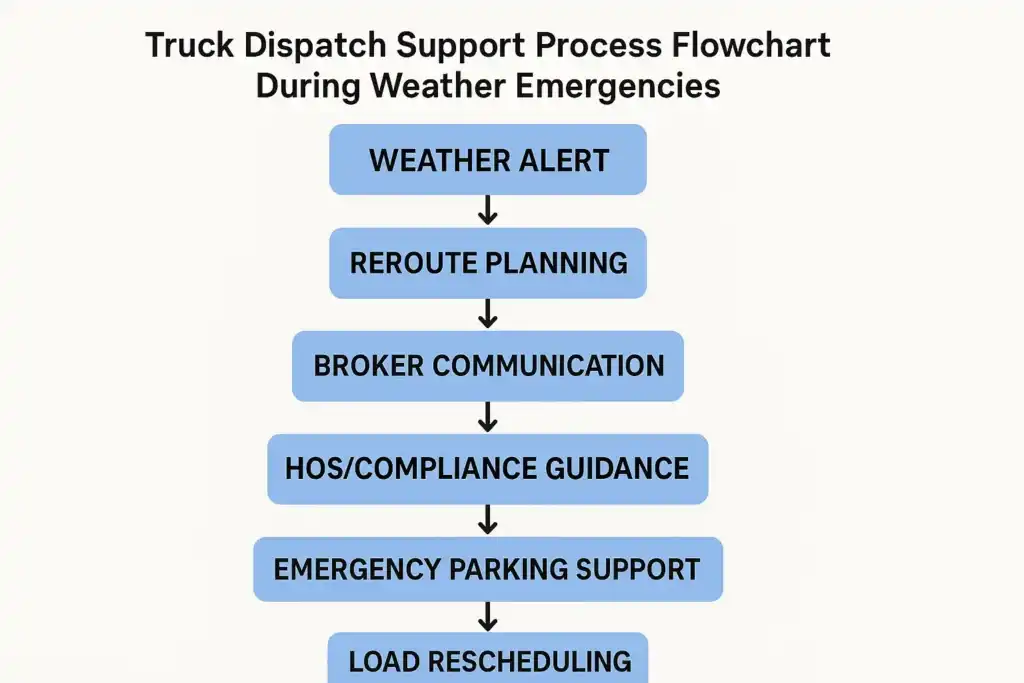
Of course, not every weather problem has a handy detour. In truly extreme conditions (like a blizzard closing every route through the Rockies), the best decision might be to pause. Here too, dispatch is key – helping you find a safe haven and plan when to resume. They might direct you to a trusted truck stop, an open rest area, or even a friendly warehouse lot to park until the roads reopen. Knowing where to park a 75-foot rig in a snowstorm on short notice isn’t easy; dispatchers maintain directories of truck stops and often have contacts at facilities across the country. Driver support services mean you’re not alone in finding a refuge when you need to get off the road for safety.
Key point: Whether it’s identifying an alternate highway around a flooded zone or guiding you to a safe parking spot during a tornado warning, dispatchers provide real-time navigation support that keeps you out of danger. This flexibility and problem-solving is a huge part of trucking through high-risk trucking regions and unpredictable weather. As one industry guide put it, truck dispatchers help fleets navigate weather delays by taking charge of rerouting and scheduling adjustments – they handle the chaos so you can keep your hands on the wheel.
Constant Communication with Brokers and Shippers
When weather derails a schedule, communication is everything. Someone needs to inform the shipper, receiver, or broker about what’s happening – and ideally negotiate a solution that avoids a financial hit for the driver. Dispatch services shine in this role as the chief communicator and advocate for the driver during disruptions.
Consider this scenario: You’re running behind because a sudden downpour caused a multi-car accident ahead, and traffic ground to a halt. You know you won’t make the receiver’s 5 PM delivery appointment. Rather than you trying to explain things while driving (unsafe and often futile), your dispatcher can immediately call the broker/receiver. They will explain that you’re delayed due to an unforeseen weather incident – a situation out of your control – and work on rescheduling the delivery or securing a late unload without penalties.
Dispatchers often have established relationships with brokers and load planners. They can negotiate in a professional way, leveraging those relationships to maintain trust. In many cases, a good dispatcher can get fees like late penalties waived by documenting that a delay was caused by weather (which is generally considered force majeure, or an “act of God”). They’ll note the incident in emails or the load tracking system so there’s a record. This not only protects you from unfair blame but also keeps the customer informed, which they appreciate.
Additionally, dispatch will keep you updated on any changes. If the receiver decides to close early because of a coming hurricane, a dispatcher will likely hear about it through industry channels or directly from the broker. They can relay that info to you pronto: “Warehouse is closing at noon for the storm – divert to X yard and we’ll deliver after it passes.” This saves you from driving into a closed facility or wasting hours. It’s a prime example of driver support services that go beyond finding loads – they handle the on-the-fly logistics so you don’t have to.
Effective communication also matters for return loads and re-bookings. Let’s say a snowstorm caused your original load to cancel; a proactive dispatch service will already be looking for replacement freight in nearby areas that are less affected. They might quickly re-book you on a different load once the roads clear, minimizing your downtime. Without dispatch, an owner-operator stuck in a truck stop during a storm might lose days of productivity. With dispatch, as soon as the weather breaks, they could have a new load lined up or be first in queue when freight starts moving again. This agility keeps your wheels turning and income flowing even around weather-related disruptions.
In summary, dispatch services act as the liaison between you and the rest of the supply chain when bad weather strikes. They make the calls, send the emails, and update the load boards while you concentrate on driving safely. This professional representation is a huge value-add. It’s far easier for a dispatcher in an office to negotiate a new plan than for a driver dealing with highway hazards to do so. When you have trucking dispatch support, you essentially gain a personal operations manager who’s always looking out for your schedule and bottom line, especially in tough situations.
Ensuring Compliance and Safety During Delays
Getting stuck in weather isn’t just a schedule issue – it can create legal and safety dilemmas too. That’s why a knowledgeable dispatch service focuses on compliance support as part of their trucking dispatch support duties during weather disruptions. They help make sure that drivers stay within regulations (and stay safe) even when plans go awry.
Hours of Service (HOS) Management: As mentioned earlier, the FMCSA allows an Adverse Driving Conditions exception – up to 2 extra hours to complete a run if something like unexpected weather hits. But there are conditions on using it: the conditions must be unforeseen and it can’t be used just because you or the carrier ignored a known forecast. A good dispatcher will know these rules cold. They’ll advise you when it’s appropriate to use that extra time and ensure you annotate your ELD properly to stay legal. If you’ve been sitting in traffic for hours due to an accident in a surprise blizzard, your dispatcher might say, “Go ahead and use the adverse condition exception – note the snowstorm delay in your log.” On the flip side, if the weather was known, they won’t push you to drive over hours because that could invite violations or liability.
Dispatchers also keep track of your hours as the delay unfolds. They might rearrange your loads or appointment times so that you can take a 10-hour break when needed and not violate your 14-hour clock. For example, if a highway closure means you’ll be parked for 5 hours waiting, your dispatcher could coordinate with the receiver to deliver first thing next morning instead, letting you log an overnight break and reset your clock. This kind of driver support service in compliance can save you from accidental log breaches and fines. It’s like having a personal logbook assistant who’s adapting your plan to fit the rules while you deal with the road.
Safety and Recovery: Compliance aside, dispatchers care about your well-being. If conditions get truly hazardous, a quality dispatch service will advise you to shut down. Far from pressuring drivers, reputable dispatchers put safety first. They may say, “Find the next safe parking and pull in – we’ll reschedule as needed. No load is worth your life.” This moral support is huge, especially for newer owner-operators who might feel pressure to keep going. Knowing your dispatcher “has your back” if you decide to park until daylight or until winds die down encourages better safety decisions. Veteran truckers will tell you one of the smartest owner operator trucking tips is knowing when to get off the road; a good dispatcher reinforces that wisdom rather than punishing you for it.
Furthermore, after a weather incident, dispatch can assist with any paperwork or reports needed. If you were delayed by a declared emergency (say a hurricane emergency zone), there might be HOS waivers or special permits – dispatchers keep tabs on those FMCSA emergency declarations and can guide you on what’s allowed. They also can document delays for your records. For instance, should a broker dispute a delay charge, your dispatch can provide proof like weather service bulletins or state DOT incident reports to validate that it was an uncontrollable event. This level of detailed backup can protect you from unjustified costs or hits to your reputation.
In short, trucking dispatch support extends into the realm of compliance and safety by giving you expert guidance. They help navigate the rulebook during abnormal situations and always prioritize that you operate legally and safely. As the old saying goes, “logs and loads can be fixed, a lost life cannot.” Dispatch services make sure that neither loads, logs, nor lives are lost by poor decisions in chaotic weather.
More Than Booking Loads: A Partner in Tough Times
It should be clear by now that a dispatch service does far more than find freight. When you’re facing weather adversity, your dispatcher becomes a lifeline and problem-solver. This is a huge value-add, transforming the dispatcher from a simple load-finder into a true partner in your business. Let’s highlight a few additional ways dispatch services prove their worth during weather disruptions:
- Strategic Planning and Flexibility: Experienced dispatchers plan buffer time into your schedules during risky seasons. They might arrange shorter runs or extra days on loads in winter, knowing that snow delays are likely. They can also quickly adjust your trip plan if you need to leave a day early to beat a storm, or lay over a day to let a hurricane pass before you enter a region. This flexibility keeps you profitable and safe. Flexibility is exactly what independent drivers need – and it’s built into good dispatch service operations.
- Resource Connections: Dispatchers often maintain lists of resources and contacts useful in a pinch. For example, if you need roadside assistance because your fuel gelled in a deep freeze, your dispatcher can help connect you to a nearby mechanic or driver support services like roadside tire repair. If you’re stuck in a blizzard, they might know which truck stops haven’t filled up yet or have available motel rooms nearby. Some dispatch companies even have relationships with warehouses if emergency storage is needed for a load. You have an entire support network behind you, instead of being solo in a crisis.
- Moral Support and Experience: There’s a psychological benefit too. Trucking can be a lonely job; that’s amplified during stressful events like weather emergencies. Having a dispatcher on the line providing calm guidance can be a huge relief. They might remind you of basic owner operator trucking tips for the situation (“remember to keep your fuel tanks full to prevent icing” or “this is a good time to throw on iron chains if you haven’t already”). Many dispatchers are former drivers or highly experienced in the industry – their advice comes from real-world knowledge. That mentorship aspect often gets overlooked, but in dire moments it can boost a driver’s confidence and decision-making.
Ultimately, dispatch services bring safety, compliance, and flexibility to the table, on top of their usual role in finding loads. This comprehensive support is something even highly experienced truckers find valuable. It’s like having an insurance policy not just for loads, but for situations. You hope you won’t hit a terrible storm – but if you do, you’ll be infinitely grateful to have an expert dispatcher in your corner.
The Dispatch Republic Difference: Always Here to Help
As a truck dispatch company operating across the U.S., Dispatch Republic understands what it takes to keep drivers moving in all conditions. We’ve guided carriers through blizzards in the Rockies, rerouted flatbeds around Gulf Coast hurricanes, and hustled to re-book loads when flash floods canceled original plans. Our approach to trucking dispatch support is built on being proactive, communicative, and safety-focused. When you partner with Dispatch Republic, you’re not just getting load booking – you’re getting round-the-clock driver support services that truly have your back when it counts.
Don’t weather the storms alone. Whether you’re an owner-operator or run a small fleet, consider how a professional dispatch team can make a difference. From advising on safe parking during a tornado warning to handling all the broker calls in a blizzard, we take pride in keeping our clients safe, legal, and profitable no matter the forecast. Get in touch with Dispatch Republic – let our experts help plan your routes, manage weather disruptions, and keep your wheels turning through rain, snow, or shine. With our dispatch specialists watching out for you, you can drive with confidence that no storm will stop your business. Stay safe and successful on the road – and let us handle the rest!
If you’re an owner-operator hauling specialized freight, don’t go it alone. Explore Dispatch Republic’s box truck dispatch services and car hauler dispatch services to access top-paying loads and compliance support. Check out our car hauling dispatch services and blog for more tips. Our dispatchers are experts in car hauling loads, flatbed loads, and reefer loads – we can match your truck to the best freight and handle the paperwork. Let us help you keep your rig loaded, safe, and legal.
For a deeper dive into the hotshot hauling business, read our Box Truck vs. Dry Van: Which Is Better for Your Business? and Step Deck vs. Flatbed: Which Is Right for Your Fleet?
Ready to make the most of your trucking business? 🚚💨 Reach out to Dispatch Republic and let our experts help maximize your earnings with tailored reefer dispatch service and dry van dispatch service solutions. We’ll handle the logistics while you keep on truckin’. Contact our truck dispatch service to get started on the road to greater profits and less hassle!
For more detailed guides, check Dispatch Republic’s resources on dispatching and the trucking business. Recent FMCSA Rule Changes for Immigrant CDL Holders if you’re weighing career paths, and Hotshot Dispatch and Compliance: Key Regulations Every Dispatcher Should Know to understand the dispatch side of the business.
If you’re an owner-operator juggling multiple responsibilities, consider partnering with a professional truck dispatch service to take the load off your shoulders—literally. At Dispatch Republic, we specialize in helping carriers run smarter and earn more by expertly managing load boards, negotiating top rates, and handling paperwork for dry vans, reefers, flatbeds, box trucks, step decks, and even hotshots. Our team monitors multiple premium load boards around the clock, ensuring your truck stays loaded with the right freight, at the right rate, on the right lane. Whether you’re scaling up or just getting started, having a dedicated dispatch team in your corner means fewer empty miles, less stress, and more time to focus on driving and growing your business.
Frequently Asked Questions
During winter storms, a dispatch service provides real-time support by monitoring weather and road closures and guiding the driver accordingly. They’ll suggest safe alternate routes or advise you to pause travel if conditions are too dangerous. Dispatchers also communicate with shippers and receivers about delays, so you’re less likely to face late fees or unhappy customers due to a blizzard. In short, trucking dispatch support keeps you informed, safe, and on track as much as possible when snow and ice disrupt your schedule.
Dispatchers offer a range of driver support services to help truckers through bad weather. These services include constant weather monitoring and alerts, route planning around storms, finding safe parking locations, and handling all necessary calls (to brokers, shippers, receivers) to update plans. They also assist with compliance – for example, advising on using the adverse driving conditions HOS exception – and provide moral support by checking in on drivers’ well-being. Essentially, dispatch services handle the logistics and planning in the background so the driver can focus on driving safely.
High-risk trucking regions are areas known for severe weather that can impact trucking. In the U.S., examples include mountain passes (risk of heavy snow and ice), the Upper Midwest and Northeast (harsh winters), the Great Plains (blizzards and high winds, plus tornadoes in spring), and the Southeast/Gulf Coast (hurricanes and flooding). Dispatchers plan for these regions by building in extra travel time and closely watching regional forecasts. For instance, when sending a truck through Colorado’s Rockies in January, a dispatcher will ensure the driver has chains and might schedule a lighter workload to allow flexibility. In hurricane-prone regions, dispatchers will have alternate routes ready and may avoid dispatching into an area if a tropical storm is on the horizon. Their planning and local weather knowledge help minimize risks in all these high-risk areas.
Key owner operator trucking tips for weather delays include always being prepared and staying flexible. First, plan ahead: check forecasts before trips and communicate with your dispatcher about any concerns. Carry emergency supplies – food, water, warm clothing, blankets, and if it’s winter, items like tire chains and anti-gel fuel additive. Second, slow down and drive cautiously when weather hits; no load is worth an accident. Third, stay in communication – update your dispatcher as soon as you encounter trouble so they can start problem-solving (rerouting or rescheduling) immediately. Finally, don’t be afraid to park and wait it out if conditions become unsafe. Expert owner-operators say it’s better to deliver late than not at all. With good planning, the right equipment, and a supportive dispatch service, you can ride out most weather delays safely.
Yes, one big advantage of having dispatch support is their ability to re-book loads quickly if yours falls through. If a receiver closes for a hurricane or a shipper cancels loading because of an ice storm, a dispatch service will immediately tap into load boards and their broker network to find a replacement load so you don’t sit idle. They often have access to many freight opportunities and can prioritize finding you a load in a safer region or schedule it for after the storm. This keeps your revenue stream going. On your own, you might struggle to spend hours searching for new freight while also dealing with the weather chaos, but a dispatcher handles that hustle for you.
Absolutely. Dispatchers are well-versed in regulations and will help ensure you remain compliant even if delayed. For example, they might remind you to use the FMCSA adverse driving conditions exception to extend your hours (when applicable)eroad.com, and they’ll instruct you on properly annotating your electronic log about the delay. If a state or federal emergency waiver is issued (for instance, suspending certain HOS rules due to a disaster), your dispatcher will know and inform you so you can legally take advantage of it. They also rearrange schedules to fit legal driving windows – like finding you a safe stopping point to take a required 10-hour break if you’re running out of hours in a storm. This compliance guidance is a key part of driver support services that dispatch companies provide during weather disruptions.
Ready to Take Your Trucking Career to the Next Level?
Whether you’re an owner-operator, a company driver, or a carrier company in need of truck dispatch services, Dispatch Republic is here to help. Our teamof experienced truck dispatchers offers affordable, professional truck dispatch solutions designed to save you time, increase your earnings, and make your business more efficient.
Thinking about outsourcing your truck dispatching? Contact Dispatch Republictoday and move smarter, not harder.
Found our Blog useful? Spread the word:
Check our latest posts:
[latest_posts_grid]
Contact us today to see how our team can support your trucking business.
Table of contents
Winter weather can change quickly and drastically. For winter 2025–2026, truckers and fleet managers across the U.S. should prepare for colder, wetter conditions in many regions and plan for hazards like blizzards, ice storms, and freezing rain. According to NOAA’s latest seasonal outlook, certain areas in the Northern Plains may see wetter-than-normal conditions (meaning more snow or ice) this winterweather.gov. That could lead to heavy roadside snow and slick highways. For drivers, staying vigilant and prepared is the best defense. Simple precautions can make a big difference in avoiding winter accidents, and are key to winter trucking safety. As one example, every dispatcher in snowy regions keeps winter trucking safety at the top of the agenda.
Key Winter Trucking Safety Risks
Heavy snow, black ice, sleet and freezing rain can all turn roads treacherous. Black ice is especially dangerous because it is hard to see. Other risks include high winds that create drifts and blow snow across highways (leading to poor visibility and unexpected lane blockages), as well as blizzard conditions and cold fog. Long winter nights and shaded areas keep roads icy longer. In short:
- Black Ice: Invisible patches of ice may form on bridges, overpasses and shaded highways. A truck hitting black ice even at normal speed can jackknife or skid.
- Blizzards and Heavy Snow: Rapid snowfall or drifting snow can bury lanes and hide road markings. Large snowbanks and drifting make it easy to lose control or get stuck.
- Freezing Rain or Sleet: Ice storms can coat pavement and truck surfaces with glaze ice. Sleet makes roads bumpy, so it is hard to steer or brake.
- High Winds: Wind-driven snow can reduce visibility to near zero, and gusts can buffet high-profile rigs, especially on open terrain.
- Poor Visibility: Storms or fog dramatically reduce sight distance. Truckers may suddenly encounter stopped traffic or hazards ahead.
Overall, winter trucking safety hinges on recognizing these conditions and driving accordingly. Safety authorities advise avoiding unnecessary driving in major storms and being extra cautious on snow or ice. For all carriers, ensuring winter trucking safety means training drivers about these hazards. Wise dispatchers hold seasonal safety briefings or winter driving workshops to reinforce key procedures. The best defense is to assume every winter road could be slick, and stay alert. Drivers often repeat mantras like “Prepare for icy roads trucking now, so you don’t learn the hard way later.”
Icy Roads Trucking Protocols
When the pavement turns icy or snowy, follow proven protocols to stay safe:
- Reduce Speed: Snow and ice cut tire traction. Slow down significantly (even 50% of normal highway speeds) so you can stop in time.
- Increase Following Distance: On icy roads, keep extra space ahead. A loaded truck that stops in 4 seconds on dry pavement might need 10+ seconds on ice. FMCSA notes that large trucks need much longer stopping distances in ice or snow. Driving slower and maintaining a large gap ahead is critical to avoid rear-end crashes.
- Gentle Braking: Brake early and gently to avoid locking wheels. If your truck has an engine brake (Jake Brake), use it to slow gradually on long downgrades. If wheels start to slide, ease off the brake – don’t stomp on it.
- No Cruise Control: Always keep manual control. Cruise control on snow or ice can prevent proper throttle management.
- Smooth Steering: Make all turns and lane changes slowly and smoothly. Avoid sudden steering inputs.
- Use Low Beams: In falling snow or fog, use low-beam headlights and hazard lights for visibility to others.
- Pre-Chain: If snow or ice is expected, stop and fit chains safely before climbing icy roads trucking sections.
- Plan Ahead: Scan far ahead for hazards. If traffic is slowing or you see conditions worsening, downshift early and slow down gradually.
In short, treat every bridge, on-ramp or shaded spot as if it could be iced over. As FMCSA advises, drivers should “maintain a slower speed” and increase following distances in hazardous weather. By driving smoothly and cautiously, truckers greatly reduce crash risk in icy conditions.
A lone truck makes its way along a snow-lined highway under falling snow. The driver uses extreme caution in these icy roads trucking conditions, keeping speed low and following distance long. This image illustrates the importance of smooth control and planning in winter driving.
Training for icy roads trucking conditions often includes practicing turns and stops in a safe area. Drivers may even rehearse chaining up and slowly driving a loaded trailer on ice to understand how slippery conditions affect handling. This hands-on practice improves confidence and technique in icy weather. Veteran drivers say, “Better to practice icy roads trucking in an empty lot than risk a crash in real life.” Consistent review of cold-weather trucking tips is like an annual winter driving license renewal: it keeps skills fresh. Dispatchers often warn that ignoring snow & ice freight risks can shut down entire fleets during a storm.
Cold-Weather Trucking Tips
Preparing your equipment and yourself is vital for extreme cold:
- Stay Updated: Learn regional winter driving rules and review annual cold-weather trucking tips before winter starts.
- Pre-Trip Inspection: Before each run, thoroughly check your truck. Verify good tread depth and inflation on all tires. Ensure lights and wipers work. Check coolant/antifreeze levels. Inspect belts, hoses and steering components for any wear. Top off fuel (in cold, condensation in an empty tank can cause issues).
- Engine and Batteries: Cold thickens oil and weakens batteries. Make sure batteries are fully charged and battery terminals are clean. Consider using an engine block heater or parking inside when possible to aid startup.
- DEF and Fluids: Diesel Exhaust Fluid (DEF) can thicken in freezing temperatures. Keep your DEF tank at least half-full, and use anti-gel products if needed. Carry an extra bottle of winter-grade engine oil and enough washer fluid rated for freezing temps.
- Tire Chains and Traction Devices: Before snow hits, keep your tire chains or traction aids (AutoSocks) handy. Learn how to install them quickly. Know the chain laws and conditions in your route states. (For example, Colorado now requires CMVs to carry chains from September 1 through May 31.) Chains can make a huge difference on steep grades or slick sections.
- Warm Clothing: Stock extra coats, hats, gloves, and thermal boots in the cab. If you get stranded, these can keep you from freezing while help arrives.
- Fuel Additives: Diesel can gel in the cold. Use anti-gel additives or winter-blend fuel to prevent clogged filters. Keep your fuel topped off and use a fuel-heater if equipped.
- Emergency Gear: Keep a mini shovel, ice scraper, kitty litter or sand for traction under wheels, and reflective triangles in the cab for breakdowns. These tools help if you get stuck.
- Practice: Regularly review these cold-weather trucking tips and emergency drills before winter arrives.
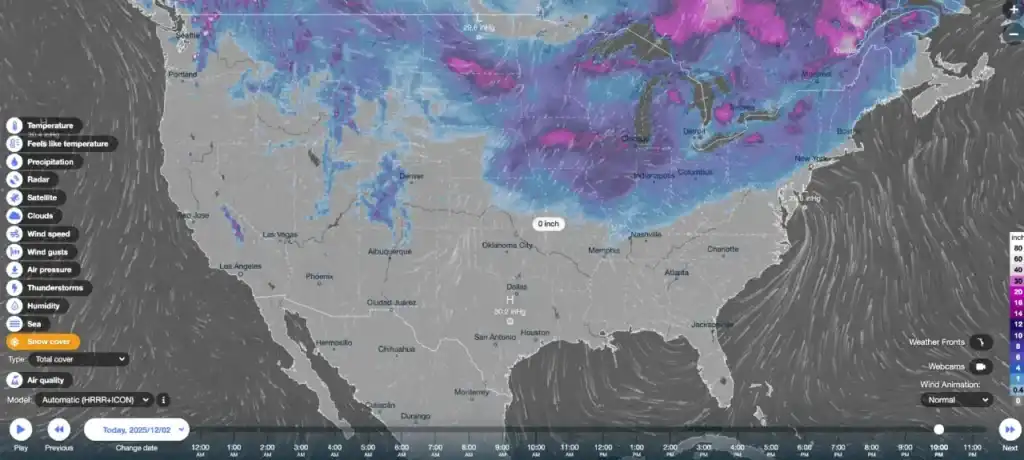
These cold-weather trucking tips can prevent breakdowns. Many drivers also carry extra flashlights, a portable radio, and fast-burning foods. By winterizing your truck and stocking supplies early, you reduce the chance of a stall or emergency in frigid conditions. Experienced drivers recommend repeating these tips until they become habit. For example, one mentor said: “Consistent review of cold-weather trucking tips is like an annual winter driving license renewal.”
Snow & Ice Freight Risks
Winter weather not only makes driving harder, it can disrupt freight operations and logistics:
- Transport Delays: Blizzards and ice storms often slow or halt deliveries. Roads may close, or speeds drop to crawl. If you have tight appointments, expect some runs to take much longer. Freight brokers know this: many shipments are scheduled with winter delays in mind.
- Load Rejections: Some receivers will delay unloading or even reject a load if bad weather hits. This causes wasted time (and fuel) and forces you to re-divert or re-consign loads. It’s wise to confirm delivery windows before bad weather arrives.
- Cargo Damage: Even if driving safely, snow and ice can affect cargo. Frozen ground can damage heavy equipment shipments. Moisture or salt can harm sensitive goods. Refrigerated freight is especially at risk: a stalled reefer or power loss could freeze goods or ruin loads.
- Dispatch & Scheduling Headaches: Carriers and dispatchers must quickly re-route drivers around snowbound areas or adjust plans. Dispatch Republic’s services (like our Reefer Dispatch Service) include options for handling time-sensitive freight with temperature needs safely in winter.
- HOS and ELD Challenges: Winter delays can bump against your Hours-of-Service. FMCSA’s rules allow up to 2 extra driving hours in adverse conditions, but you must annotate this on your ELD. (If a traffic jam caused by snow prevents movement, the extra hours may help cover the finish. But misuse can lead to violations.) Always log delays properly and use rest breaks if stuck.
- Power and Communication Outages: Storms can knock out cell towers or rest-stop power. GPS devices and phone-based ELDs may fail. Keep a backup (paper logs, physical permits) and a portable battery charger.
- Extra Time: Always add buffer days to schedules. Giving yourself an extra day or two can eliminate most snow & ice freight risks by preventing HOS issues if delays occur.
- Communicate Often: During winter trips, call dispatch and receivers regularly. This helps avoid snow & ice freight risks by rerouting loads or alerting all parties to delays.
- Driver Stories: For example, a Midwest owner-operator was forced to stop overnight when a surprise snowstorm closed an Interstate ramp. He used his emergency kit (food, blankets and a working CB radio) to stay safe until plows cleared the road. Another driver in New England was delayed several hours by sleet and had to extend his drive using the adverse weather exception. These incidents underscore the severity of snow & ice freight risks and the importance of preparedness.
Delays due to weather can also impact dispatch planning. C.H. Robinson notes that severe winter conditions often cause delays in loading and highway travel. To minimize risk, keep open communication with dispatch and receivers, and expect freight schedules to flex in winter. On social media and forums, you’ll often see discussions titled “winter trucking safety” and “icy roads trucking”. Newsletter articles frequently spotlight cold-weather trucking tips for drivers. Even current weather alerts will often mention snow & ice freight risks when conditions worsen. Veteran drivers and trainers alike stress all these topics.
Trucks parked in deep snow during a winter shutdown. Weather delays can force drivers to stop and wait out storms. Having emergency supplies and flexible schedules helps handle these snow and ice freight risks.
Emergency Preparedness: Every truck should carry a winter emergency kit. Essentials include:
- Food & Water: High-calorie snacks (nuts, bars, dried fruit) and bottled water for at least 24–48 hours.
- Warm Gear: Extra blanket(s), insulated clothing, hat, gloves, and hand warmers.
- Lighting & Signals: Flashlight (with spare batteries) or headlamp, flares or reflective triangles, and a reflective safety vest.
- Power Backup: A portable battery pack (USB power bank) for phone/ELD, a long charging cable, and an inverter if possible.
- First Aid & Tools: Basic first-aid kit, personal medications, multi-tool, duct tape, tow strap or chain, and a compact snow shovel.
- Heat Sources: Windproof matches or lighter, candles (in a metal container) for emergency light/heat, and ice scraper.
- Miscellaneous: Blank legal pad or logbook, pen, small amount of cash (in case card readers fail), and phone numbers for tow/assistance.
- Vehicle Prep: Booster cables, tire pressure gauge, and spare motor oil or coolant in case of leaks.
These items help if you get stuck. WisDOT highlights keeping blankets, food, water and a shovel in a winter survival kitwisconsindot.gov. In severe weather, cell signals may be weak; battery-powered devices and analog backups (paper maps, printed logs) are lifesavers. Building this kit and keeping it updated is a crucial cold-weather trucking tip.
Winter Dispatch & HOS Planning
Smart planning keeps you legal and safe when weather causes delays:
- Build Cushion: Add extra time to routes. Tell shippers you expect slower transit so you’re not rushed. Plan pickup/delivery windows with plenty of buffer.
- Monitor Weather: Dispatchers should track weather and reroute before storms hit if possible. Both drivers and dispatch should have weather apps or NOAA updates.
- Adverse HOS: Plan to use FMCSA’s adverse-weather exception when needed. This U.S. DOT rule gives up to 2 extra hours in unexpected snow/ice.
- Notes & Logs: Keep your ELD updated and annotated. FMCSA winter driving rules mandate noting any weather-related delays.
- Personal Conveyance: In true emergency, you can switch to personal conveyance for safe travel (like getting home) but consult your carrier’s policy. Remember this still should not be used just to cheat HOS.
- Rest Options: If conditions get severe, take early breaks. Rest before 14-hour window closes. Find secure, well-lit parking – even indoors if available.
- Chains & Routes: Account for chain laws in routes. In Colorado, drivers must carry chains in winter. Plan through chain-up zones before dark, and know how to install chains if road signs or towers demand it.
- Dispatcher Support: Dispatchers should have alternates ready. If a run must wait out weather, have backup loads or reassign trucks. Carriers like Dispatch Republic can coordinate these changes quickly.
- Cold-Load Handling: If carrying temperature-sensitive freight, verify delivery points have power/warming. Our Reefer Dispatch Service can help match you with facilities equipped for winter. For other trailers, see our Dry Van Dispatch Service and Car Hauler Dispatch Service as needed.
By building extra time into schedules and staying flexible, you avoid unlawful driving and lost loads. Proper winter dispatch planning and use of HOS allowances keeps drivers safe and compliant, even when winter trucking safety issues arise.
Contact Dispatch Republic: Don’t let winter weather catch you unprepared. Dispatch Republic supports owners and carriers in all conditions. Our experts can help plan safe winter routes, find trailers with heat, and manage loads around winter delays. Call or visit us to learn how our specialized dispatch services for any rig (see our Dry Van Dispatch Service and Car Hauler Dispatch Service) can keep your trucks moving safely this winter.
If you’re an owner-operator hauling specialized freight, don’t go it alone. Explore Dispatch Republic’s box truck dispatch services and car hauler dispatch services to access top-paying loads and compliance support. Check out our car hauling dispatch services and blog for more tips. Our dispatchers are experts in car hauling loads, flatbed loads, and reefer loads – we can match your truck to the best freight and handle the paperwork. Let us help you keep your rig loaded, safe, and legal.
For a deeper dive into the hotshot hauling business, read our Box Truck vs. Dry Van: Which Is Better for Your Business? and Step Deck vs. Flatbed: Which Is Right for Your Fleet?
Ready to make the most of your trucking business? 🚚💨 Reach out to Dispatch Republic and let our experts help maximize your earnings with tailored reefer dispatch service and dry van dispatch service solutions. We’ll handle the logistics while you keep on truckin’. Contact our truck dispatch service to get started on the road to greater profits and less hassle!
For more detailed guides, check Dispatch Republic’s resources on dispatching and the trucking business. Recent FMCSA Rule Changes for Immigrant CDL Holders if you’re weighing career paths, and Hotshot Dispatch and Compliance: Key Regulations Every Dispatcher Should Know to understand the dispatch side of the business.
If you’re an owner-operator juggling multiple responsibilities, consider partnering with a professional truck dispatch service to take the load off your shoulders—literally. At Dispatch Republic, we specialize in helping carriers run smarter and earn more by expertly managing load boards, negotiating top rates, and handling paperwork for dry vans, reefers, flatbeds, box trucks, step decks, and even hotshots. Our team monitors multiple premium load boards around the clock, ensuring your truck stays loaded with the right freight, at the right rate, on the right lane. Whether you’re scaling up or just getting started, having a dedicated dispatch team in your corner means fewer empty miles, less stress, and more time to focus on driving and growing your business.
Frequently Asked Questions
Always check weather forecasts before a trip, inspect your truck, and plan your route carefully. Slow down on snow and ice, maintain extra following distance, and carry an emergency kit. Wearing bright, reflective gear also helps in low visibility. Keeping winter trucking safety top-of-mind on every drive is key.
Reduce your speed well below normal limits, use smooth and gentle braking, and increase the gap to the vehicle ahead. Use your engine brake early on long downgrades, and never use cruise control. Turn off cruise control, and stay alert for black ice, especially on bridges and shaded curves.
Winter weather frequently causes delivery delays, route shutdowns, and load rejections. Ice and snow reduce road capacity and can slow loading docks. Plan for slower transit times or missed appointments. For example, one driver noted that a sudden blizzard forced him to sit out in a snowdrift – one of the known snow & ice freight risks.
Important tips include doing a thorough winter inspection, carrying tire chains, and using winter-grade oils and fuels. Check tire tread, top off all fluids (antifreeze, windshield fluid), and pack warm clothes. Always have extra food and water in case of an emergency, as recommended by cold-weather trucking tips resources.
Yes. FMCSA allows drivers to extend their drive time by up to 2 hours under adverse driving conditions. However, the driver must annotate the ELD with this exception. Aside from that, standard HOS and safety rules still apply. Always follow FMCSA’s winter driving guidance, which emphasizes caution in hazardous weather.
Chain laws are state rules requiring trucks to carry (and sometimes use) tire chains in winter. For example, Colorado’s chain law mandates that commercial rigs carry chains from September 1 to May 31. Other states like Oregon and Montana have similar rules. If your route crosses these regions, always have the required chains on board.
Always build extra cushion into your schedule. Communicate with dispatch and shippers if storms threaten your route. Starting trips earlier or delaying departures until weather clears can help avoid running out of hours. If delays do occur, use FMCSA’s adverse-weather exception or take required rest early. Keeping dispatch informed prevents log violations and helps re-book loads efficiently.
Pack an emergency kit as outlined above: food, water, blankets, warm clothes, flashlight, and flares. Also carry essentials like a small shovel, ice melt or kitty litter for traction, and any needed medications. Having a phone power bank and a backup device (like a NOAA radio) can help if you lose cell signal.
Ready to Take Your Trucking Career to the Next Level?
Whether you’re an owner-operator, a company driver, or a carrier company in need of truck dispatch services, Dispatch Republic is here to help. Our teamof experienced truck dispatchers offers affordable, professional truck dispatch solutions designed to save you time, increase your earnings, and make your business more efficient.
Thinking about outsourcing your truck dispatching? Contact Dispatch Republictoday and move smarter, not harder.
Found our Blog useful? Spread the word:
Check our latest posts:
[latest_posts_grid]
Contact us today to see how our team can support your trucking business.
Table of contents
The car hauling industry is riding a wave of change. Between shifting freight market trends and new regulations, the way we find car hauling loads and manage fleets is evolving fast. As 2026 approaches, owner-operators and fleet managers must adapt their strategies. In this post, we cut through the noise and share practical, forward-looking advice on dispatching, insurance, compliance, and technology. Whether you’re an independent carrier or run a small auto transport fleet, you’ll find concrete tips and real-world examples to help you stay ahead.
Freight Market Trends Shaping Car Hauling
The freight market has softened, and volumes are down from their highs. Industry data shows 2025 freight volumes about 3% below 2024 levels. Spot rates for vans, reefers, and flatbeds were barely above last year (roughly +0.5% YoY) through late 2025. In other words, demand is flat and competition is fierce. For car haulers, this means finding car hauling loads can be harder. At the same time, many smaller carriers have left the market under pressure from high costs and slim margins.
Most forecasts call for only a modest recovery in 2026. Experts expect freight demand to pick up by mid-2026 as the economy stabilizes. For carriers, that suggests planning conservatively now but preparing to ramp up later. In practice, manage your car hauling loads today by keeping trailers full on solid routes (dealers, auctions, relocations) and by setting rates that cover your costs. For example, target busy auto hubs (like Chicago, Miami, or Dallas) so your schedules stay packed – these markets tend to send out more auction and dealer loads. Consider multi-month contracts or retainer deals with brokers and dealers to lock in steady work when spot rates are soft.
Manufacturing shifts and consumer behavior also affect auto freight. High-end goods have drawn consumer dollars away from basic models, but online auto sales and relocation moves keep demand fairly steady. Building relationships with rental car fleets or corporate relocation companies can create “off-season” opportunities. Broadly speaking, some capacity is beginning to tighten. Recent data show spot rates creeping up as weaker carriers exit, and rules that could remove up to 200,000 drivers by late 2026 (e.g. new CDL/visa restrictions) are looming. Locking in business now, running lean, and staying flexible will help you capture the freight you need.
Economic and Industry Forces
Beyond pure freight numbers, watch macro factors. Trade policy (new tariffs or deals) can swing shipments of vehicles and parts. Fuel price swings directly hit your profits – a 10% jump in diesel means re-negotiating fuel surcharges or rate increases. On the labor side, driver pay and bonuses are rising as fleets fight to hire. All of these factors will tilt the balance of supply and demand for car loads. Stay plugged into industry news and economic indicators so you can adjust your forecasts and pricing quickly.

Technology & Economic Drivers
On the technology side, big changes are coming fast. One major trend: electric and hybrid vehicles. EVs and hybrids are rapidly growing their share of production – about 7.5% of new cars in 2025. More battery-powered cars on the road means two things for haulers: opportunity (new lane types, often higher-paying) and new challenges. EVs are heavier than their gas counterparts. For example, an 8-car trailer might carry eight sedans, but replace those with EVs and you could hit the 80,000 lb GVW limit much sooner. This requires careful loading: heavier EVs should go on the bottom deck to balance weight, and you may carry fewer cars per trip.
Also, electric vehicles require special handling. Their batteries often must be kept at around 30% state of charge during transport, and you may need to top them up. Car hauler tips for EV loads include charging them to 30–50% at pick-up and using insulating blankets on battery packs. Ensure your equipment (straps, chains) is rated for the extra weight, and carry appropriate non-conductive straps or wheel chocks. You may even consider a trailer with an onboard battery or charging outlet to handle in-transit top-ups. (For more on this, see our Electric and Hybrid Vehicle Transport guide.)
Digital tools are also reshaping the game. Advanced route-planning software and telematics can slash deadhead miles and fuel use. Some fleets use AI-powered dispatch platforms to match trucks and loads more efficiently than general load boards. On a simpler level, make sure every truck has a modern GPS app that warns about low bridges, weather delays, or weigh stations. Even basic adoption of Electronic Logging Devices (ELDs) and a good load-tracking app can boost compliance and reliability. In short, embrace technology that cuts costs: every minute and gallon saved directly improves your margin.
Dispatch Strategies for Car Haulers
A smart dispatch strategy is the best defense in a soft market. Here are expert car hauler tips to keep your trailer full and your profits up:
- Leverage specialized dispatchers. Auto transport is its own niche – it involves multi-stop pickup planning, specialized paperwork, and unique customers (auctions, dealers, private shippers). A dedicated car hauler dispatcher knows the auction schedules, dealer preferences, and broker expectations. For example, a Dispatch Republic dispatcher will schedule your loads around short auction turnarounds and dealer windows. They can combine several smaller jobs into one circuit, boosting your effective earnings per mile.
- Be selective with loads. Never take a load that won’t pay your costs. Always calculate fuel, tolls, insurance, and wear-and-tear before accepting a rate. If a load doesn’t make sense, decline it – you have the final say. A professional dispatcher respects that decision and finds the next load. This simple tip (don’t run at a loss) is one of the most powerful car hauler tips for protecting your bottom line.
- Plan multi-drop runs. Efficiency means chaining pickups and drops whenever possible. For instance, after loading at an auction, look for a nearby dealer or another auction on the way home. Combining car hauling loads this way increases revenue per trip. Many top brokers offer “interlining” options where two carriers share a long run; your dispatcher should pursue these to minimize empty segments.
- Use load boards wisely. Even with a dispatcher, checking specialized car-hauling boards (like Central Dispatch) can uncover extra opportunities. Some smaller brokers and private shippers post only there. Verify that your dispatcher has access to the same boards so you don’t miss a lucrative run.
- Build strong relationships. Repeat business is gold. Do great work for a dealer, relocation company, or rental fleet, and they’ll call you first next time. Communicate clearly: confirm bookings quickly, update clients on ETAs, and deliver loads in the promised condition. Satisfied customers often cut through broker fees or paperwork requirements over time, speeding up bookings. This reliability can keep car hauling loads coming during slow periods.
- Own the paperwork. Keep all your operating authority, insurance filings, and inspection records up to date and in your truck. When a dispatcher or broker asks for a carrier packet, have it ready. For example, have copies of your W-9, your signed carrier packet, and any required shippers’ logos or inspection forms. If your paperwork is ready, you’ll avoid booking delays. (Our dispatch team can assemble draft packets, but you must supply signed documents and correct DOT numbers.)
In practice, a top dispatch partner does many of these tasks for you: negotiating rates, assembling packet docs, setting up fuel cards or factoring, etc. For instance, a Texas carrier came to Dispatch Republic struggling with empty miles. In his first week on our system, we arranged multiple auction and dealer shipments, grossing $14,400 on his 7-car trailer. That’s the power of pairing our dispatch strategies with carrier effort.
Compliance: Staying Legal and Safe
Compliance is non-negotiable and keeps getting stricter. In late 2025 FMCSA began rolling out a unified registration system – your USDOT number is now the primary ID for your authority, replacing separate MC numbers. If your trailers or paperwork still show an MC number, update them to the USDOT number now. FMCSA also tightened CDL and immigration checks. For example, they now strictly verify non-citizen credentials and will no longer allow mail-in renewals. This means any driver with a questionable status can be pulled from service quickly. The bottom line: make absolutely sure each driver’s documents (CDL, passport/visa, medical card, etc.) are current and match FMCSA’s requirements, or you may fail an audit.
On the safety side, expect closer scrutiny. Inspectors know car loads involve valuable cargo. Before every trip, check every strap, chain, and light. Each car’s wheels must be blocked or strapped per FMCSA guidelines, and oversize overhangs must be flagged. Also, log your hours carefully – car haulers must follow the same hours-of-service rules as other CDL-A drivers. A single log error or missing light can trigger a roadside citation that wipes out your profit for the week.
Here’s a golden car hauler tip: keep all paperwork in order during inspections. If a DOT officer asks, show them your driver’s log, your updated packet, and proof of insurance immediately. Carriers with perfect records sail through. We always advise clients to carry extra sets of permit stickers and keep their Unified Carrier Registration (UCR) and biennial MCS-150 filings current – even a small mistake on those forms can lead to hours of hassle. If that sounds overwhelming, remember you can lean on experts like a car hauler dispatch service to help manage compliance filings and reminders.
Speaking of insurance, car hauling insurance is a big part of compliance. By law, interstate carriers must carry at least $750,000 in liability coverage. In auto hauling, however, almost all brokers insist on $1,000,000 liability. For cargo, FMCSA’s bare minimum is only $5,000 per vehicle – a trivial amount given the value of modern cars. We often see carriers carry $250,000–$500,000 cargo insurance per truck to cover the high risk. Never drop coverage to the federal minimum – doing so will shut you out of the best loads and expose you to massive losses if something happens.
Car hauler compliance also covers other recurring tasks: paying your Unified Carrier Registration dues each year, renewing IRP (license plate) and IFTA (fuel tax) filings on time, and maintaining your drivers’ drug-test and medical records. One common trap is forgetting the biennial MCS-150 update – even a minor address change can trigger an audit. Avoid this by either setting calendar reminders or letting your dispatcher track the dates for you. In short, think of compliance as ongoing maintenance: a few minutes each week on paperwork can prevent a costly enforcement stop later.
Car Hauler Tips for 2026 and Beyond
Let’s wrap up with some actionable car hauler tips you can use today:
- Plan loads ahead. Use a calendar or planning app. Mark major auction dates and typical model-year changeover seasons. If you know, say, that mid-April and early October see a flood of dealer and auction shipments, line up a set of back-to-back loads for those weeks. Our dispatchers often book a week or two in advance to guarantee full trailers.
- Optimize routes. Minimize empty miles. Stack loads geographically: e.g., run north–south down the East Coast rather than zig-zag. After dropping cars at dealers, look for a known backhaul spot (like a nearby open yard or an out-of-season relocation job). Even one extra car on a return leg can pay for your fuel.
- Maintain your equipment. Keep your trucks and trailers in top shape. Check brakes, lights, and ramps at every stop. Carry spare straps, shackles, and a toolbox. A common advice from veteran haulers: have at least one good spare tire per trailer on hand. A breakdown on the way to an auction load not only costs time but could cancel your entire run.
- Train and support drivers. If you run more than one truck, make sure each driver knows how to handle your specialized loads. Teach them EV specifics and load-leveling techniques. Encourage them to use apps to check weigh-station status or find low emissions zones. Keeping drivers happy and healthy (adequate rest, good food, exercise) pays off: a rested driver is safer and more efficient.
- Leverage dispatch expertise. Remember, a dispatcher’s job is to grow your business. For example, Dispatch Republic’s team will not only find loads but also negotiate rates and organize routes. As one client said, “they build momentum for your operation, not just book one-offs.” In fact, after using our car hauling dispatch service, one owner-operator earned $13,700 in one week on coordinated runs – well above what he managed on his own.
Each of these tips hinges on proactive planning and using available resources (like digital tools and professional dispatch help). Running an auto carrier business means juggling a lot; our dispatchers free you up to focus on driving while they handle the rest.
Key Term Recap
To summarize, the following core terms are the focus of this article: car hauling loads, car hauler tips, car hauling insurance, and car hauler compliance. Each term appears repeatedly above:
- Car Hauling Loads: A carrier’s livelihood depends on finding steady car hauling loads. We discuss strategies to book consistent car hauling loads and mentioned car hauling loads throughout the post. These car hauling loads (jobs for transporting vehicles) are central to your revenue, so you’ll see the phrase car hauling loads used many times above. For emphasis: car hauling loads, car hauling loads, car hauling loads.
- Car Hauler Tips: We included practical car hauler tips at every step. Our car hauler tips cover dispatching strategy, cargo loading, and safety. These tips are repeated above (car hauler tips for routes, car hauler tips for compliance, equipment tips). Note the emphasis: car hauler tips, car hauler tips, car hauler tips.
- Car Hauling Insurance: The term car hauling insurance is a major focus when discussing coverage. You’ll notice we mention car hauling insurance often in the insurance section. We stress the importance of carrying enough car hauling insurance. The repetition is intentional: car hauling insurance, car hauling insurance, car hauling insurance.
- Car Hauler Compliance: Lastly, car hauler compliance appears frequently in our safety/regulatory sections. We stress car hauler compliance (following DOT/FMCSA rules) to emphasize staying legal. See how often we repeat compliance: car hauler compliance, car hauler compliance, car hauler compliance.
The road ahead is challenging but full of opportunity. By staying informed about car hauling loads, adapting dispatch strategies, and maintaining your car hauling insurance and car hauler compliance, you can come out ahead. And you don’t have to do it alone. A dedicated truck dispatch service knows the market and handles the legwork, so you can focus on driving. Contact Dispatch Republic to learn how our expert dispatchers and planning tools can help grow your business. Let us handle the haul so you can handle the wheel.
If you’re an owner-operator hauling specialized freight, don’t go it alone. Explore Dispatch Republic’s box truck dispatch services and car hauler dispatch services to access top-paying loads and compliance support. Check out our car hauling dispatch services and blog for more tips. Our dispatchers are experts in car hauling loads, flatbed loads, and reefer loads – we can match your truck to the best freight and handle the paperwork. Let us help you keep your rig loaded, safe, and legal.
For a deeper dive into the hotshot hauling business, read our Box Truck vs. Dry Van: Which Is Better for Your Business? and Step Deck vs. Flatbed: Which Is Right for Your Fleet?
Ready to make the most of your trucking business? 🚚💨 Reach out to Dispatch Republic and let our experts help maximize your earnings with tailored reefer dispatch service and dry van dispatch service solutions. We’ll handle the logistics while you keep on truckin’. Contact our truck dispatch service to get started on the road to greater profits and less hassle!
For more detailed guides, check Dispatch Republic’s resources on dispatching and the trucking business. Recent FMCSA Rule Changes for Immigrant CDL Holders if you’re weighing career paths, and Hotshot Dispatch and Compliance: Key Regulations Every Dispatcher Should Know to understand the dispatch side of the business.
If you’re an owner-operator juggling multiple responsibilities, consider partnering with a professional truck dispatch service to take the load off your shoulders—literally. At Dispatch Republic, we specialize in helping carriers run smarter and earn more by expertly managing load boards, negotiating top rates, and handling paperwork for dry vans, reefers, flatbeds, box trucks, step decks, and even hotshots. Our team monitors multiple premium load boards around the clock, ensuring your truck stays loaded with the right freight, at the right rate, on the right lane. Whether you’re scaling up or just getting started, having a dedicated dispatch team in your corner means fewer empty miles, less stress, and more time to focus on driving and growing your business.
Frequently Asked Questions
Focus on efficiency and safety. Plan routes that chain auctions and dealer drops, minimize empty miles, and use technology (like routing apps and telematics) for planning. Keep your paperwork organized, stay current with regulations, and work with a dispatcher who knows car transport. When loading, put heavier vehicles low and toward the front. These car hauler tips help you work smarter on every trip.
Insurance varies by carrier, but expect high costs. FMCSA requires $750,000 liability, but most auto carriers carry $1,000,000 or more. Cargo insurance is not federally mandated, but brokers usually demand high limits (often $100k+ per vehicle). Premiums have risen steeply (e.g. up ~8.9% YOY in late 2025). Shop specialty insurers, bundle policies, and maintain a clean safety record to keep rates manageable.
It means following all DOT and FMCSA rules for auto transport. Key items: valid operating authority (USDOT/MC), proper insurance filings, hours-of-service logging, and vehicle securement. For example, FMCSA has detailed securement rules specifically for trailers full of cars. You must also weigh your rig on scales to ensure legal weight, and have working lights on each vehicle. Staying compliant avoids fines. Having a knowledgeable dispatcher or consultant review your paperwork can help ensure nothing slips through the cracks.
Diversify your sources. Use specialized car-hauling load boards and brokers, but also network directly with auctions, dealerships, and rental companies. Position your truck near busy auto markets (like ports or major auctions) to get called for runs. A dispatcher often helps here; they have access to national load boards and broker contacts. We find that dedicated car-hauler dispatchers can consistently keep trucks rolling by tapping into multiple sources.
Keep an eye on electric and hybrid vehicles — hauling these is becoming routine and requires special handling. Also watch freight demand indices and interest rates, as they affect used-car moves. Regulatory changes (like the CDL visa rules and FMCSA’s unified registration) will keep evolving, so stay current on those. Lastly, efficiency tech (AI route planning, digital logs, EV charging logistics) will continue advancing. Those who adapt early will be best positioned when the market tightens and rates start to climb.
Ready to Take Your Trucking Career to the Next Level?
Whether you’re an owner-operator, a company driver, or a carrier company in need of truck dispatch services, Dispatch Republic is here to help. Our teamof experienced truck dispatchers offers affordable, professional truck dispatch solutions designed to save you time, increase your earnings, and make your business more efficient.
Thinking about outsourcing your truck dispatching? Contact Dispatch Republictoday and move smarter, not harder.
Found our Blog useful? Spread the word:
Check our latest posts:
[latest_posts_grid]
Contact us today to see how our team can support your trucking business.
Table of contents
Imagine you’re an owner-operator looking at two car trailers parked side by side: one is an open car hauler with vehicles stacked and visible in the open air, and the other is a sleek enclosed car hauler that shields its precious cargo. Both trailer types can earn you money in the auto transport industry, but they come with different costs, challenges, and opportunities. If you’re trying to decide between running an open trailer or an enclosed trailer for your car hauling business, you’re asking a crucial question. Which option is better for your business in 2025’s freight market?
As a car hauling dispatch service that supports auto transport carriers every day, we see both open and enclosed haulers on the road and understand their unique needs. From the perspective of a professional car hauler dispatcher, the choice isn’t one-size-fits-all. It depends on your goals, the kind of vehicles you want to haul, and how you plan to keep your truck loaded. In this in-depth guide, we’ll break down open vs. enclosed car hauling from a dispatcher’s viewpoint – comparing rates, demand, equipment, and dispatch strategies. By the end, you’ll have a clear picture of the pros and cons of each approach, and how a car hauler dispatch service can help maximize your profits no matter which trailer you choose.
Let’s dive into the key differences between open and enclosed car hauling and figure out which is the right fit for your trucking business.
Open vs Enclosed Car Hauler: Understanding the Difference
Open car hauling means transporting vehicles on an open-deck trailer with no walls or roof. The cars are exposed to weather and road debris, visible to everyone on the highway. This is the standard way most vehicles get shipped – from new cars headed to dealerships to used cars bought at auction. In fact, approximately 90% of car shipments are made using open trailers, making open carriers the workhorses of the car hauling industry. An open trailer often has two levels and can carry anywhere from 2 to 10 vehicles at a time, depending on its size and configuration. For example, a 3-car wedge trailer pulled by a pickup is a common open setup for hotshot operators, while a 7–10 car stinger-semi trailer is used by larger auto transport carriers.
Enclosed car hauling, on the other hand, involves transporting vehicles inside a closed trailer. The cars ride in a trailer with side walls and a roof, shielded from rain, snow, sun, and road debris. Enclosed trailers typically carry fewer vehicles (often 1 to 6 cars, due to size and weight limits) and are used for special situations – think classic cars, luxury sports cars, or motorcycles that require extra protection. Only a small fraction of shipments (perhaps 10% or less) go by enclosed carrier, because most customers opt for the cheaper open option unless protection is absolutely necessary. If your business targets high-end clients or specialty vehicles, enclosed service can be a premium niche.
Key differences at a glance: Open trailers are cheaper to acquire and operate, can haul more cars per trip, and are widely available. However, they expose vehicles to the elements and potential minor damage (like rain, snow, or rock chips from the road). Enclosed trailers cost more, haul fewer cars per load, and can be harder to find loads for – but they offer superior protection and security. As we’ll explore below, these differences impact everything from your rate per mile to how a car hauling dispatcher will plan your routes.
Equipment Costs and Investment
One of the first factors to consider is the investment in equipment. An open car hauler trailer generally costs less to purchase and maintain than an equivalent enclosed trailer. Open multi-car trailers are relatively common – you can find used 3-car or 7-car open trailers on the market at a reasonable price. Enclosed car carriers, especially those built to haul multiple vehicles, are specialized and often custom-built, which drives up the price. For instance, a new 4-car enclosed trailer with lift gates and a climate-controlled interior can cost significantly more than a standard 4-car open gooseneck trailer.
Besides the up-front purchase price, think about ongoing costs. Enclosed trailers are heavier and less aerodynamic due to the boxed-in structure, which means your truck will burn more fuel per mile compared to pulling an open trailer. Tires, brakes, and other components may also wear faster under the extra weight. In contrast, an open setup is lighter and puts less strain on the tractor, yielding better fuel economy. Maintenance on an open trailer (e.g. fixing ramps, hydraulic deck lifts, or replacing straps) is generally straightforward. Enclosed trailers have more components (like solid side walls, liftgates or winches for low-clearance cars) that can require maintenance or repairs.
Capacity differences: A key advantage of open trailers is volume – they can haul many vehicles at once. If you’re running a 7-car open carrier, you can generate revenue from multiple units in one trip. An enclosed hauler might only fit 2 or 3 cars (especially if they are large or you need space to avoid any contact between vehicles). This means to earn the same gross revenue in one run, an enclosed hauler often needs to charge much higher rates per vehicle. We’ll discuss rates in the next section, but this capacity factor is fundamental. Many owner-operators start out with open trailers because it’s easier to scale up your income by simply loading more cars.
However, don’t count enclosed trailers out just because of cost. If your business model is to cater to high-paying clients (say a customer with a $200,000 Ferrari or a rare classic that absolutely cannot see a drop of rain), those clients are willing to pay a premium that makes the enclosed setup worthwhile. The equipment investment is higher, but so is the potential pay per mile with the right loads. A car hauler dispatcher who understands your equipment can help find loads that justify the use of your rig – for example, locating two luxury cars along the same lane to fill your enclosed trailer so you’re not moving half-empty.
From a car hauling dispatch service perspective, knowing your equipment and its capabilities is step one. Your dispatcher will ask: How many cars can you carry? What’s your trailer type and weight limit? For open trailers, they might look for mix-and-match loads (like a couple of sedans and an SUV) that maximize your space. For enclosed trailers, they’ll prioritize the highest-paying vehicles or even single-car loads that cover your expenses. In other words, the cost and capacity of your equipment directly influence how a dispatcher plans your work.
Rates and Revenue: Open vs Enclosed Car Hauler
Of course, one of the biggest questions is: Which option makes more money? Generally, enclosed car hauling pays a higher rate per mile than open hauling – but you also haul fewer cars at a time. Let’s break down the earnings:
- Rate per mile: It’s common to see enclosed loads paying about 30–50% more per mile than equivalent open loads on the same lane. Shippers know they must pay extra for the exclusive, protective service of an enclosed carrier. For example, if an open trailer job offers $0.60 per mile per vehicle, an enclosed haul for a similar route might pay around $0.80 per mile for that car (or even more). In 2025, industry data shows enclosed auto transport has a higher cost (often up to 50% more) than open transport. That premium reflects the added value of protection. Still, as any experienced car hauling dispatcher will tell you, it’s not just about the per-mile rate – you have to keep your trailer full.
- Total load earnings: An open car hauler dispatcher will try to fill all your spots – say 7 cars at $0.60 each, which would gross about $4.20 per mile in revenue. An enclosed hauler might only move 2 or 3 vehicles at $0.80 to $1.00+ per mile each. Two cars at $1.00 per mile gives $2.00 per mile gross, which is less overall than the open trailer in this scenario. To match the open trailer’s revenue, an enclosed carrier needs either more cars (limited by space) or a much higher rate (like a single exotic paying $2.00+ per mile). The good news is that such high-paying loads do exist in enclosed hauling – for instance, transporting a rare antique car for a museum or an urgent dealer transfer of multiple luxury vehicles. A seasoned car hauling dispatcher knows that a single Ferrari or Lamborghini can sometimes pay what three ordinary sedans would pay on an open trailer.
- Load availability: It’s not just about posted rates, but how often you can get them. Open car loads are abundant – there are thousands of vehicles being shipped open on any given day. This means an open trailer can stay busy, though rates might fluctuate with seasonal demand. Enclosed loads are fewer and can involve waiting for the right customer. You might get a $3 per mile enclosed job one week, then struggle to find a good follow-up load the next. Consistency can be a challenge when running strictly enclosed, especially if you are picky about price. A skilled car hauler dispatch service will use load boards, broker contacts, and industry networks to find you those diamond-in-the-rough enclosed loads and to plan your schedule so you’re not sitting idle. They might also advise when it makes sense to take a slightly lower-paying load to reposition your truck into a hotter market, especially with enclosed hauling where markets can be niche.
- Seasonal swings: Both open and enclosed car hauling are seasonal, but open carriers tend to feel the ups and downs more strongly. During peak car-shipping season (spring and summer, and the fall “snowbird” migration), open trailer spot rates often rise because demand surges. In slower periods (like mid-winter), open rates can dip as many trucks chase fewer cars. Enclosed demand also has seasons – e.g. classic car auctions or luxury events might spike enclosed shipments at certain times. However, since it’s a smaller segment, a handful of big jobs can keep you rolling. From late fall into early winter, many drivers report the car haul market slows down; it’s not peak season now for either segment, but after the New Year, freight gradually gets better toward spring as dealers restock inventories and snowbirds return north. A knowledgeable car hauling dispatcher will factor these trends into your planning. In the slow season, an open carrier might diversify (haul different types of vehicles or adjust lanes), whereas an enclosed carrier might accept more moderate-paying loads just to keep moving until the high-paying jobs pick up again.
Pro Tip: Using a professional car hauling dispatch service can help you adapt to market swings. When rates drop, your dispatcher might find alternate routes or combined loads to keep you profitable. In peak season, a great car hauling dispatcher will ensure you’re booked on the highest-paying loads first.
Operations, Risks, and Challenges on the Road
Running an open versus enclosed car hauling operation will feel quite different day-to-day. Here are some operational factors to weigh:
- Loading and unloading: Open trailers often have built-in ramps or hydraulic decks to position vehicles on upper and lower levels. Loading a 7-car open trailer can be a puzzle – you must arrange vehicles by size and weight, drive them carefully up steep ramps, and secure each one with wheel straps or chains. It’s a time-consuming process, but one that becomes routine with practice. Enclosed trailers add an extra layer of complexity: you might be loading expensive cars with very low ground clearance (imagine a Lamborghini or Corvette) using liftgates or long ramps. There is little room for error inside an enclosed trailer – just inches of clearance around the vehicle. Many enclosed carriers use special equipment like winches, soft tie-downs, and floor tracking systems to secure cars without touching the vehicle’s body. A good car hauling dispatcher will schedule your pickups with enough time to load carefully, knowing you can’t just toss cars on an enclosed trailer in a hurry. Safety and damage prevention are paramount.
- Risk of damage: Open carriers expose vehicles to the weather, road salt, debris, etc. While serious damage is rare, minor scratches or paint chips can occur. Enclosed carriers shield vehicles from these outside risks, but loading incidents (like scraping a car on the trailer wall, or a tie-down slipping) are still possible. Insurance is a big piece of the puzzle here. If you’re hauling a load of average cars on an open trailer, you might carry cargo insurance that covers perhaps $50,000 per vehicle. If you’re hauling three Lamborghinis in an enclosed trailer, you may need coverage for $250,000+ per car. Insurance premiums for enclosed car haulers are often higher because the stakes are higher with exotic cargo. Every car hauler dispatch service wants to avoid claims, so they will remind you to double-check securement. (In fact, FMCSA requires at least two tiedowns per vehicle – front and rear – and many pros use four per car.) Whether you operate open or enclosed, proper securement and safe driving are critical to your success.
- Regulatory constraints: Both open and enclosed car carriers must comply with the same regulations for dimensions and weight. But an interesting difference is height: an open car hauler with a full load can be very tall – often pushing close to the 13-foot 6-inch legal height limit once you’ve got SUVs on the top deck. This means route planning is vital to avoid low bridges or overpasses. Enclosed trailers have a fixed roof height, so if your trailer is built to 13′6″ high, anything that fits inside should automatically clear bridges – you gain peace of mind on height, but you’re limited on what can fit inside (extra-tall or wide vehicles simply won’t load). Enclosed units also tend to be heavier (due to the walls/roof), so it’s easier to hit the 80,000 lb gross weight limit with fewer vehicles on board. You might need to skip taking a third large vehicle because of weight, even if physically it fits. A car hauler dispatcher familiar with your rig will factor in these constraints when finding you loads. For example, they won’t dispatch you three oversized SUVs if your enclosed trailer can only take two without exceeding weight limits. Open carriers also have to watch weight distribution, but they have a bit more flexibility to adjust where cars sit on the trailer axles.
- Client expectations: When you run an open trailer, you’re providing a standard service – many customers (dealers, auctions, individuals) are fine with it because it’s the industry norm. When you run enclosed, the clients often have higher expectations. They might expect white-glove treatment: absolutely on-time delivery, constant communication, and a pristine vehicle on arrival. You’re dealing with more demanding customers on average (someone shipping their show car or a luxury dealership manager). This means the level of professionalism and service required is elevated. Many enclosed car haulers even dress more professionally and will sometimes detail the vehicle upon delivery as part of the VIP service. If that’s the niche you want, it can build a strong reputation (and repeat business), but be prepared for the extra effort. From a car hauling dispatch service viewpoint, we know that enclosed haulers might spend more time per delivery – and that’s okay, as long as the rate reflects it. In dispatch terms, fewer loads per week is fine if each load pays great and the customer is happy.
- Finding and scheduling loads: As mentioned earlier, open load postings on boards are plentiful. You might not worry about finding a load, but rather focus on finding the best paying ones or combining multiple pickups efficiently. A car hauling dispatcher may be juggling 5–6 different vehicles to fill an open trailer, coordinating multiple pickup appointments that all align. Enclosed haulers often move one customer’s car (or a set of cars) directly, so the dispatch task is more about hunting down that next single load that’s worth your while. Networking is key: brokers and customers need to know you offer enclosed service. Sometimes enclosed work comes through word-of-mouth or repeat clients more than load boards. An experienced car hauler dispatcher will keep an ear out for special requests (like a race team that needs a car moved to the next track, or a movie production needing vehicles transported) that aren’t publicly advertised.
Open or Enclosed Car Hauler: Making the Right Choice for Your Business
So, open vs enclosed car hauling – which is better? The honest answer is that it depends on your business model. Here’s a recap and decision guidance:
- Open hauling advantages: Lower startup costs, easier to find loads consistently, ability to haul many cars at once, and generally simpler operations. If you’re a newer owner-operator or have limited capital, starting with an open trailer gets you earning sooner with less financial risk. You’ll tap into the huge market of standard vehicles that need transport. A competent car hauling dispatcher can usually keep an open carrier busy every day, negotiating good rates on volume moves. Open trailers are ideal if you want steady cash flow and don’t mind the hustle of multi-load logistics.
- Open hauling drawbacks: High competition (since so many carriers run open trailers), lower pay per car, and exposure of cargo to the elements. During slow seasons, open carriers might feel rate pressure because there are plenty of trucks available for those loads. Also, some prestige clients won’t consider open transport, so you miss out on that niche. You may deal with more frequent but smaller payouts (moving many cheaper loads).
- Enclosed hauling advantages: Ability to command premium rates and carve out a niche market. With an enclosed rig, you position yourself as a high-end service provider. There’s often less competition in this space – not everyone has an expensive enclosed trailer or the patience for white-glove service. Those who do can build a reputation and client list that is very loyal. A car hauler dispatcher working with enclosed loads can often negotiate higher rates because clients value the service (and they usually have high-value vehicles that absolutely need careful handling). Enclosed is great if you enjoy providing top-notch service and want to earn more per mile with potentially less total mileage and fewer cars.
- Enclosed hauling drawbacks: Bigger up-front investment and potentially irregular work. You might go a few days waiting for that perfect high-paying load, whereas an open trailer might take something daily. Cash flow can be spikier – one week you hit a big score, another week might be lean. Not every market has enough luxury or special vehicles moving around to support a full-time enclosed operation, so you may need to deadhead (drive empty) longer distances to areas where enclosed demand exists. You also have to be comfortable dealing with very meticulous customers. For some, that added stress isn’t worth it. A car hauling dispatch service can help smooth out the ride by finding creative ways to keep you loaded (for instance, pairing two partial loads for different customers in one trip), but it requires patience and planning.
Bottom line:If you’re in this business for volume and reliability, open car hauling is generally the better bet. If you’re aiming for higher-end work and are willing to invest time and money for potentially greater rewards, enclosed car hauling can pay off. Some owner-operators even do both over time – maybe start open, then later add an enclosed trailer to their fleet once they have the revenue base. Which is better for your business ultimately comes down to your goals and resources. It’s wise to evaluate your lanes (are you near areas with luxury cars or mostly standard vehicles?), your financial cushion (can you afford the enclosed trailer and possible downtime?), and your personal preference for the kind of work you enjoy.
No matter which path you choose, aligning with a reliable car hauler dispatch service can make all the difference. With the support of a dedicated car hauling dispatcher, you’ll have an expert constantly working to optimize your loads and negotiate top rates on your behalf. Here at Dispatch Republic, car hauler dispatch service isn’t just a term – it’s our specialty. Dispatch Republic’s car hauler dispatch service is singularly focused on keeping car carriers loaded and profitable. Our team will assign you a personal car hauling dispatcher who focuses on your preferred lanes and trailer type. That means whether you need to fill a 7-car open carrier or secure a single enclosed load, your car hauling dispatcher is on it. Trucking is tough enough – let a professional car hauler dispatch service handle the load hunting, paperwork, and scheduling so you can focus on driving. (And whether you need a full car hauling dispatch service or a single dedicated car hauler dispatcher for your operation, we’ve got you covered.)
Dispatcher’s Insight: Even if you run an enclosed trailer, a dedicated car hauler dispatcher can find creative opportunities. A savvy car hauler dispatch service might coordinate with luxury dealerships or auction houses to secure you exclusive contracts, keeping your high-end trailer busy and well-paid.
In short, every owner-operator can benefit from having a car hauling dispatcher manage the complexities of car transport.
If you’re an owner-operator hauling specialized freight, don’t go it alone. Explore Dispatch Republic’s box truck dispatch services and car hauler dispatch services to access top-paying loads and compliance support. Check out our car hauling dispatch services and blog for more tips. Our dispatchers are experts in car hauling loads, flatbed loads, and reefer loads – we can match your truck to the best freight and handle the paperwork. Let us help you keep your rig loaded, safe, and legal.
For a deeper dive into the hotshot hauling business, read our Box Truck vs. Dry Van: Which Is Better for Your Business? and Step Deck vs. Flatbed: Which Is Right for Your Fleet?
Ready to make the most of your trucking business? 🚚💨 Reach out to Dispatch Republic and let our experts help maximize your earnings with tailored reefer dispatch service and dry van dispatch service solutions. We’ll handle the logistics while you keep on truckin’. Contact our truck dispatch service to get started on the road to greater profits and less hassle!
For more detailed guides, check Dispatch Republic’s resources on dispatching and the trucking business. Recent FMCSA Rule Changes for Immigrant CDL Holders if you’re weighing career paths, and Hotshot Dispatch and Compliance: Key Regulations Every Dispatcher Should Know to understand the dispatch side of the business.
If you’re an owner-operator juggling multiple responsibilities, consider partnering with a professional truck dispatch service to take the load off your shoulders—literally. At Dispatch Republic, we specialize in helping carriers run smarter and earn more by expertly managing load boards, negotiating top rates, and handling paperwork for dry vans, reefers, flatbeds, box trucks, step decks, and even hotshots. Our team monitors multiple premium load boards around the clock, ensuring your truck stays loaded with the right freight, at the right rate, on the right lane. Whether you’re scaling up or just getting started, having a dedicated dispatch team in your corner means fewer empty miles, less stress, and more time to focus on driving and growing your business.
Frequently Asked Questions
It depends on your niche and business goals. If you’re just starting out or haul mainly standard vehicles, sticking with an open trailer is usually the safer bet – it’s cheaper to run and there’s a larger pool of loads. On the other hand, if you have access to customers with high-value cars (or you want to specialize in that market), an enclosed car hauler can set you apart. Just be ready for higher costs and possibly more downtime between loads. Many owner-operators begin with an open car hauler to build capital, then later invest in an enclosed rig once they see an opportunity. Think about your local market: are there luxury dealers, classic car shows, or auction events nearby? If yes, an enclosed trailer might fetch premium jobs. If not, an open trailer will keep you busy more consistently.
Enclosed car hauling generally pays significantly more per mile – often 30% to 50% higher rates than open hauling on the same lanes. For example, if open carriers are getting about $0.60 per mile per car, an enclosed carrier might get $0.90 or even $1.20 for a similar route, depending on the vehicle and urgency. We’ve seen cases where a single enclosed load (like a rare sports car) paid as much as hauling 3–4 ordinary cars on an open trailer. However, remember that you might not always have multiple enclosed cars at once, so your total income in a week could still be lower if you can’t find enough loads. That’s where working with a savvy car hauling dispatcher becomes valuable – they’ll help find those top-dollar loads to maximize your earning potential with an enclosed unit.
It can be challenging at times. There are definitely fewer enclosed car hauler loads out there than open loads. Many enclosed carriers stay busy by being flexible – they might haul one luxury car one day, then two motorcycles or an antique on the return trip. Networking is crucial: you want brokers and dealerships to have your number and know you’re available. If you rely solely on public load boards, you might find gaps. Some regions have more enclosed freight than others (big cities, luxury car hubs, warm states in winter for snowbirds, etc.). A car hauler dispatch service can greatly help here by constantly searching various sources for you. They can also coordinate backhauls (like picking up another high-value vehicle on your way back) so you’re not running empty. Yes, you can stay busy with enclosed hauling, but it requires hustle and often a car hauler dispatcher working alongside you to line up the next job.
For the most part, yes – open transport is generally safe and is used for the vast majority of vehicles, even new ones coming from the factory. Reputable carriers use proper securement (at least two straps or chains per car, often four) and carry plenty of insurance. However, if a car is extremely expensive or uniquely sensitive (like a vintage show car with perfect paint), open hauling does carry a small risk of road debris or weather exposure. Most owners of high-end cars prefer enclosed shipping for peace of mind. If your customer insists on the absolute safest method, you should recommend enclosed transport. But if they’re simply looking to save money, an open trailer with a careful driver can still do the job just fine. In our dispatch experience, we’ve seen car hauling dispatch service teams arrange open transport for luxury cars without issues – but we always make sure the owner understands the risks. It’s about the client’s risk tolerance and budget.
A car hauling dispatcher is like the air-traffic controller for your car hauling business. This person (or team) finds and books loads, negotiates rates, and handles the logistics of scheduling pickups and deliveries for you. For example, if you’re an owner-operator with a 5-car trailer, a car hauling dispatcher will search load boards and call brokers to fill those 5 spots with the best-paying vehicles heading in your direction. They plan efficient routes so you’re not zig-zagging all over, handle paperwork like load confirmations, and keep you aware of all the details (addresses, contacts, special instructions). A car hauler dispatcher focuses specifically on vehicles – they know the nuances of auto transport (like required condition reports, dealing with dealerships or auctions, etc.). If you work with a car hauling dispatch service, you essentially have an expert partner managing your load planning while you focus on driving. They’re paid a fee or percentage, but a good car hauling dispatch service is like having an experienced guide who usually increases your income well beyond their fee by keeping your trailer loaded with better freight. In short, a car hauling dispatcher (often working as part of a car hauler dispatch service) is dedicated to optimizing your loads and taking the logistics burden off your shoulders.
Absolutely. In fact, if you run an enclosed trailer, having a dedicated dispatch service is often a smart move because enclosed opportunities can be like finding needles in a haystack. A car hauling dispatch service will use its connections with specialty brokers, online marketplaces, and past clients to locate the kind of high-paying, enclosed-specific loads you need. They might know, for example, that an elite auto auction is happening next month and secure you a booking to haul some classic cars from it. Or they could hear that a luxury dealership relocation is coming up that requires enclosed transport. A skilled car hauling dispatcher keeps their ear to the ground for these opportunities. They’ll also negotiate better rates on your behalf, emphasizing the premium service you offer. If you tried to do all this while driving, it would be tough – that’s why many enclosed car carrier owner-operators team up with a car hauler dispatch service to stay profitable. In summary, an experienced car hauling dispatch service dramatically increases your chances of finding profitable enclosed loads consistently – think of it as a matchmaking service between your truck and those hard-to-find shipments.
For many, yes, it is worth it. When you’re handling all the driving, plus dealing with customers, inspections, maintenance, etc., having someone in your corner to take care of finding loads can be a lifesaver. A car hauler dispatch service typically charges a percentage (like 5–10% of the load price) or a flat fee per load. In return, they may boost your earnings by more than that – by getting slightly higher rates, keeping you loaded more consistently, and finding better routes. Plus, they save you hours of phone calls and stress. For a new owner-operator, a good car hauling dispatch service is like having an experienced guide; they can teach you market trends (for instance, advising when the market is slow in one region and suggesting you move to another hot area). Of course, you should choose a reputable car hauling dispatch service with proven experience in auto transport. Working with a truly professional car hauling dispatch service ensures you get maximum value. The bottom line: if you feel you’re missing opportunities or spending too much time hunting loads, a car hauler dispatcher can likely add a lot of value to your business. In fact, many owner-operators in the car hauling business find that partnering with a car hauler dispatch service or an expert car hauling dispatcher is one of the smartest moves to improve their bottom line.
Whether you run an open carrier or an enclosed trailer, having the right support can make a huge difference. As a leading dispatch partner for car haulers (car hauler dispatch service provider), Dispatch Republic is here to help. We know that whether you call our support a car hauling dispatcher or a car hauler dispatch service, the goal is the same: keeping your truck loaded and your business profitable. If you want steady high-paying loads and expert route planning, contact Dispatch Republic today to learn how our car hauling dispatch service can start working for you. Let our experienced team of car hauler dispatch service professionals keep your truck loaded and your business growing – so you can stay focused on the road ahead. For open and enclosed carriers alike, our car hauling dispatch service and our car hauler dispatcher experts are dedicated to maximizing your earnings.
Ready to Take Your Trucking Career to the Next Level?
Whether you’re an owner-operator, a company driver, or a carrier company in need of truck dispatch services, Dispatch Republic is here to help. Our teamof experienced truck dispatchers offers affordable, professional truck dispatch solutions designed to save you time, increase your earnings, and make your business more efficient.
Thinking about outsourcing your truck dispatching? Contact Dispatch Republictoday and move smarter, not harder.
Found our Blog useful? Spread the word:
Check our latest posts:
[latest_posts_grid]
Contact us today to see how our team can support your trucking business.
Table of contents
- A Zero Score? Why This Matters for Every Carrier
- Why FMCSA Is Changing the SMS Now
- Inside the New Safety Measurement System: Key Changes Explained
- “Before Your Score Hits Zero”: What It Means and Why You Should CarE
- How to Protect Your Carrier Rating Under the New SMS
- Industry and Freight Market Impacts of the SMS Overhaul
- Small vs. Large Carriers: Who Feels It More?
- Frequently Asked Questions
A Zero Score? Why This Matters for Every Carrier
The stakes are high: get ahead of these changes before your carrier compliance score plummets. Let’s dive into the new FMCSA rules (our take on the wave of regulations) and the SMS overhaul heading into 2026, how they might affect the freight market, and what you can do to stay on top.
Imagine waking up to find your FMCSA Safety Measurement System scores drastically changed – or even effectively hitting zero. It’s not science fiction. The Federal Motor Carrier Safety Administration is rolling out a major overhaul of its Safety Measurement System, and every trucking business needs to pay attention. This isn’t just another bureaucratic update; it’s a game-changer in how your safety performance is tracked and judged. If you’re a truck driver, owner-operator, or fleet manager, the new rules could make or break your carrier rating in the eyes of regulators, brokers, and shippers.
Staying in the dark isn’t an option. Under the revamped system, a single carrier violation or a pattern of lapses in carrier compliance can have a bigger impact on your safety standing than before. On the flip side, clean operation and proactive fixes could help you wipe the slate clean (in some cases giving you something close to a “zero” – meaning no violations weighing you down). In this post, we’ll break down exactly what the new FMCSA Safety Measurement System overhaul entails, why it’s happening, and what it means for your trucking business. We promise a practical, easy-to-understand guide – no fluff, just real talk from a dispatch perspective on how to keep your wheels turning and carrier rating intact.
For years, carriers have lived and died by their CSA score (the safety rating score from FMCSA’s CSA program). Now that system is being revamped, and you need to know how it works.
Why FMCSA Is Changing the SMS Now
The FMCSA isn’t overhauling the Safety Measurement System on a whim – it’s the result of years of analysis and industry feedback. The current SMS (part of the Compliance, Safety, Accountability (CSA) program) has been criticized for being confusing and sometimes unfair, especially to small carriers. A 2017 study by the National Academy of Sciences highlighted issues and recommended improvements. Fast forward to late 2024: FMCSA announced via a Federal Register notice that it’s moving forward with a “reinvention” of how carrier safety is measured. By 2025, they began previewing the changes and collecting comments from the trucking community.
What’s driving this change? In simple terms, the agency wants a system that more accurately identifies high-risk carriers and is easier for everyone to understand. The goal is to focus enforcement on trucking companies that pose the greatest danger on the road, while giving compliant carriers a fair shake. Under the old setup, you might have felt your carrier rating got dinged by one unlucky inspection or nitpicky violation. The new FMCSA Safety Measurement System is designed to be more forgiving of isolated issues but tougher on consistent problems. In fact, FMCSA’s analysis shows the revamped approach does a better job zeroing in on risk – carriers flagged under the new methodology have about 10% higher crash rates on average than those flagged by the old system. That means the algorithm is getting smarter at finding the real bad actors, which is ultimately good for safety and for fair competition.
Timing-wise, the SMS overhaul aligns with a broader push in 2025 and 2026 for safer roads (think of it as part of the “zero accidents” vision). It also comes as other regulations (like new FMCSA driver requirements and technology mandates) are raising the bar on safety. In other words, this isn’t happening in a vacuum. For carriers, it all adds up to one reality: compliance is more critical than ever. (Note: your CSA score – the percentile ranking – is not the same as your official safety rating, but the SMS overhaul can indirectly affect that.)
Inside the New Safety Measurement System: Key Changes Explained
So, what exactly is changing? Here’s a breakdown of the major updates in the FMCSA Safety Measurement System and how they differ from the old system:
- Reorganized Safety Categories (“Compliance Categories”): FMCSA has restructured the familiar BASICs categories. They even dropped the wonky term “Behavior Analysis and Safety Improvement Categories” – now they simply call them compliance categories. Some categories are combined or split for clarity. For example, the Unsafe Driving category will now also include violations related to drug/alcohol use and any operation of a vehicle under an out-of-service order (these used to be separate issues). Meanwhile, the Vehicle Maintenance category is being divided into two parts: one for driver-observable issues (things a driver should catch in a pre-trip inspection) and one for deeper mechanical issues. The idea is to pinpoint whether a problem is something the driver or the carrier should have addressed. Overall, this reorganization helps carriers see exactly where they need to improve. If your trucks have brake issues that a walk-around check could catch, that will reflect in one portion of your score, whereas unseen mechanical defects fall into another. It makes your carrier compliance responsibilities clearer.
- Violation Groupings Simplified: Over the years, there were around 2,000 individual violation codes on the books – an overwhelming list. Under the new SMS, similar violations are grouped into about 100 standardized violation groups (see more). This means if an inspector writes you up for, say, three different brake light infractions during one inspection, it counts as a single grouped violation rather than triple-dinging your score. By consolidating to roughly 100 groups, FMCSA is preventing “double jeopardy” where one underlying issue racks up multiple points. For carriers, this is welcome news: fewer gotchas for essentially the same mistake. It also means that your carrier rating will reflect broader safety issues rather than random one-off technicalities. The focus shifts to patterns of behavior – exactly where it should be.
- Simplified Severity Weights: In the old system, violations were assigned severity weights on a scale from 1 to 10. This often felt arbitrary – for instance, a simple paperwork error might carry a weight that seemed out of proportion. The new FMCSA Safety Measurement System throws that out and uses a straightforward scale: just 1 or 2 points per violation. Essentially, every applicable carrier violation is either “severe” (2 points) or “moderate” (1 point). Anything that puts safety directly at risk (like an out-of-service violation or a disqualified driver issue) is a 2. Everything else is 1. Plus, if multiple violations in the same group occur in one inspection, you won’t stack points – you’ll just get the highest single applicable weight (so if one of the violations in that group was severe, you get a 2; otherwise it’s 1). This change makes it a lot easier to understand how much each mistake will hurt your score. No more trying to memorize a complicated points table – you know a critical violation when you see one. For carriers trying to improve, it also means you can prioritize fixing the big-ticket safety issues first (like addressing any recurring 2-point problems) to protect your carrier compliance record.
- New Scoring Method (Proportionate Percentiles): One of the most significant changes is how your performance is measured relative to other carriers. Previously, carriers were slotted into “safety event groups” based on how many inspections or crashes they had, which sometimes led to odd jumps in your percentile score when you moved from one group to another. The new system ditches those groups. Now it uses a proportionate percentile method that continuously ranks carriers without those hard cutoffs. In practice, this means your percentile score (0% being best, 100% worst) should move more smoothly and fairly over time. If you’re a small outfit with just a few inspections, you won’t suddenly get lumped into a tougher comparison group after one busy month – instead, every violation just incrementally affects your standing. This is good news for small carriers and owner-operators: your carrier rating won’t seesaw as dramatically due to statistical quirks. It’s all about steady comparison. The FMCSA believes this will better highlight true outliers (the really unsafe carriers) rather than penalize those who just had an unusual spike in activity.
- Greater Focus on Recent Violations: In the spirit of “what have you done lately,” the FMCSA Safety Measurement System overhaul puts a premium on recent data. Now, only violations from the last 12 months will count toward your percentile in certain categories. (Crashes and a few other things may still look back 24 months, but the key safety categories will emphasize the past year.) What this means for you: if you had a rough patch two years ago with a bunch of hours-of-service tickets, those will no longer haunt your current score. It’s almost like a rolling reset – maintain a clean record for a year, and you could see your percentile in some categories drop to zero (i.e. no points, which is what you want!). On the flip side, it also means there’s nowhere to hide for habitually non-compliant carriers. You can’t say “well, we’ve been fine the last 5 years except that one time in 2023” – because if that “one time” was in the last year, it’s going to count. This recency emphasis encourages continuous carrier compliance. Carriers need to address problems promptly, because recent mistakes weigh more heavily than old news. The slate gets partially wiped over time, which is great if you’re improving – but there’s no resting on laurels.
- Adjusted Intervention Thresholds: FMCSA is also tweaking the thresholds that trigger official intervention (like warning letters or investigations) in each category. While the specifics vary by category and carrier type, the general trend is that thresholds will be a bit higher in certain areas to focus only on the worst offenders. In other words, you might not hit the intervention trigger until your percentile is, say, over 90% in a category (meaning you’re in the bottom 10% of performance), whereas before a lower percentile might have sufficed. Some thresholds for carrier violations related to maintenance or driver fitness are being calibrated to different types of operations (for instance, passenger carriers often have stricter limits). The takeaway: if you’re generally doing better than most peers, you likely won’t get bothered by FMCSA as quickly as before. But if you’re truly at the back of the pack in a safety category, expect the agency to come knocking. This is part of making the system fair – giving breathing room to those with minor issues and zeroing in on the real problem carriers. Carrier rating implications: staying just below those thresholds is not the goal (don’t try to game it) – improving safety is. Because once you cross the line, interventions can be costly and could ultimately downgrade your official safety fitness rating.
- Updated Utilization Factor: For years, SMS tried to account for how many miles a carrier runs (exposure) by using a “utilization factor,” but it was a bit crude. The new update increases the mileage cap considered per truck from 200,000 to 250,000 miles per year. If you’re a high-mileage carrier (say you run team operations or just have trucks constantly moving), this helps ensure you’re compared fairly to carriers with lower mileage. It basically acknowledges that a carrier that runs 250k miles per truck annually will likely see more inspections or chances for issues than one running 50k miles, and it adjusts for that. The bump to 250k reflects modern operations where trucks can log more miles. For our readers: if you have a small fleet running coast-to-coast year-round, the math will now be a bit more in your favor when safety stats are normalized for mileage. It’s a subtle change, but one that shows FMCSA is trying to level the playing field.
- Non-Preventable Crashes Excluded: Importantly, FMCSA is continuing its Crash Preventability Determination Program alongside the SMS changes. In plain English: wrecks that weren’t your driver’s fault won’t count against you. The SMS overhaul bakes this in so that non-preventable crashes (like when your truck is rear-ended at a stoplight by a careless car driver) are excluded from your SMS metrics if properly reported and reviewed. This isn’t entirely new – the agency has been piloting and expanding this for a while – but it’s worth noting because it can significantly affect your carrier rating. Make sure you’re taking advantage of this program by submitting qualifying crashes for review. Removing those from your record can keep your safety score from unfairly tanking due to bad luck.
In summary, the new FMCSA Safety Measurement System is all about smarter data and fairer scoring. It groups violations logically, simplifies the grading, and looks at what’s happening now rather than ancient history. For many carriers, this will feel like a breath of fresh air – a chance for your strong carrier compliance habits to shine without being dragged down by one-off issues. But it also means if you do have weak spots, you can’t hide from them. Next, let’s talk about what these changes mean for your company in practical terms (and yes, what we mean by “score hits zero”).
“Before Your Score Hits Zero”: What It Means and Why You Should CarE
The phrase “your score hits zero” in our title isn’t just for drama – it highlights two sides of the coin in the new system. On one hand, zero is actually the best place to be in SMS world. If you have zero violations in the last year for a given category, you effectively have a 0% score (which is excellent, akin to an A+). The new SMS offers a kind of rolling opportunity to achieve that: by going a year without any recordable carrier violation in, say, the Hours-of-Service or Vehicle Maintenance category, you won’t even receive a percentile rank – which you can think of as having a “zero” score because you’re not on the bad list at all. In this sense, carriers have a chance to reset their carrier rating if they can maintain a clean streak.
On the other hand, “score hits zero” could spell trouble if we’re talking about your safety reputation – as in your ability to get loads or stay in business. If you ignore these changes and continue business-as-usual with poor safety practices (letting carrier violations pile up), your safety score will deteriorate. Let’s be clear: a worst-case scenario is ending up with an FMCSA intervention, which can lead to a Conditional or Unsatisfactory safety fitness rating on your record. In trucking terms, a bad safety rating is almost like scoring zero out of 100 – it can sideline your operation. For example, accumulating too many carrier violations or failing to address issues can result in FMCSA assigning an Unsatisfactory safety rating – basically a “zero” that stops your operation. Brokers and shippers often check a carrier’s safety stats before giving out loads. If your scores are awful or you’ve been labeled high-risk, you might as well have a zero next to your company’s name because freight offers will dry up. Insurance companies, too, will hike your premiums or even refuse coverage.
So how might the new SMS changes catch a complacent carrier off guard? Here’s a scenario: Under the old system, Carrier X had a few maintenance violations spread over 24 months – annoying, but they never triggered an intervention because they stayed just below the threshold. Carrier X maybe got comfortable, thinking “we’re okay, no one’s called us on it.” Now the new SMS kicks in. It recalculates the last 12 months of data with the new rules. Suddenly, all those little maintenance issues from the past year are grouped together and each counted as 1-point violations – which is fine, except Carrier X had a habit of neglecting small stuff and racked up, say, five different maintenance dings in the last year. The new percentile method and thresholds reveal that, compared to other carriers, Carrier X is actually in the bottom 10% for maintenance compliance. Bam – they cross the new intervention threshold. FMCSA sends a warning letter or schedules an audit. If Carrier X doesn’t shape up fast, that audit could result in a downgraded carrier rating (to “Conditional”). Once that happens, many brokers will shy away from them. Essentially, by neglecting maintenance, they let their “score” drop to effectively zero in terms of business viability.
Contrast that with Carrier Y, who had a major violation about a year and a half ago (say a crash plus an out-of-service for a fatigued driver). Under the new system, that incident is over 12 months old, so it’s not impacting their percentile now. Carrier Y also took it as a wake-up call, improved their carrier compliance training, and has been violation-free for the past 12 months. They log into the FMCSA’s preview website and see beautiful green — low percentiles across the board. Their record is practically clean (or “zero”) thanks to the time-decay of old infractions. Now they have a fresh opportunity to keep it that way. Their dedication to safety could translate into a sterling reputation: shippers notice their excellent safety score, dispatchers (like us) find it easier to pitch them to brokers, and they avoid unnecessary inspections on the road because inspectors see a good record and are less likely to pull them in.
The moral here: Take advantage of the new rules. If you’ve been borderline, use this chance to improve and get your scores down (toward zero). If you’ve been lagging, know that the grace period is over – carrier violations within the past year matter more, and your peers are upping their game too. Don’t be the one left with a bottom-barrel carrier rating because you assumed “it’s just another regulation change.” This SMS overhaul is arguably one of the biggest shifts in trucking compliance in a decade. But with the right approach, you can not only survive it, you can leverage it to stand out as a top-tier carrier.
How to Protect Your Carrier Rating Under the New SMS
Now that we’ve covered what’s changing and why it matters, let’s get practical. What can you do to safeguard (or improve) your carrier compliance standing under the new FMCSA Safety Measurement System? Here are some action steps and tips:
- Check Your FMCSA Safety Measurement System Preview Scores: Don’t fly blind. FMCSA has a Prioritization Preview website where you can log in with your USDOT credentials to see how your scores look under the new methodology. If you haven’t done this yet, do it. This preview recalculates your last two years of data with the new rules, so you can identify any red flags now. Think of it like checking your credit report before applying for a loan – you want to know if there’s a problem before it hurts you. Look for any category where your percentile is high (meaning worse). That’s where to focus your improvements.
- Tackle Recent Violations Aggressively: Since the system emphasizes the past 12 months, you need to address any pattern that’s currently ongoing. Got a string of vehicle maintenance issues? It’s time for a maintenance blitz – do thorough inspections, fix issues proactively, and maybe retrain drivers on pre-trip checks. Issues with HOS logs? Consider an audit of your ELD records and coaching for drivers on log accuracy. The goal is to break the chain of repeat offenses. Remember, under the new scoring, one carrier violation here or there won’t wreck your score, but repeated violations of the same kind will. Clean up those repetitive problems and you’ll see a direct payoff in your safety score.
- Educate and Involve Your Drivers: As an owner-operator or fleet manager, you’re not in this alone – driver behavior is a huge piece of carrier compliance. Hold a meeting or have one-on-one talks about the new SMS changes. Explain to your drivers that every inspection and violation now carries a bit more weight in the short term. Encourage them to take roadside inspections seriously and to inform you immediately of any issues. Consider implementing incentive programs for clean inspections (a small bonus or even public recognition for zero-violation inspections can motivate drivers to stay sharp). When drivers understand that their roadside actions directly affect the company’s carrier rating (and therefore everyone’s ability to get good loads), they’re more likely to buy in.
- Use the DataQs System to Challenge Mistakes: The FMCSA’s DataQs system is how you can request a review of potentially incorrect violations on your record. With the new grouping and scoring, one bogus violation can skew things, especially if it’s recent. Go through your inspection history. If you find any violations that you believe are erroneous or unjustified, submit a DataQs challenge. For example, maybe an officer cited you for something that isn’t actually applicable, or a crash was wrongly listed as preventable. Getting that removed could immediately drop your percentile (fewer points = closer to that zero score we all want). It’s worth the effort to keep your carrier violation count as accurate (and low) as possible.
- Keep Up with Preventive Maintenance and Documentation: This sounds like a given, but now is the time to double down. A lot of SMS points come from vehicle issues and paperwork issues (like a driver not having the correct documentation). Ensure your carrier compliance checklist is rock solid: regular maintenance schedules, pre-trip and post-trip inspection reports, driver qualification files up to date, etc. Small things like a light out or a missed medical card renewal can become those 1-point violations that add up. Under the new system, you want to avoid even the minor dings if you can – because why squander your cushion? If you can operate as if every inspection is an audit, you’ll naturally drive your safety score down (in a good way). As a bonus, well-maintained equipment and properly trained drivers are less likely to get pulled over in the first place, keeping your inspection count low.
- Monitor Your Scores Regularly: SMS results update monthly. Make it a habit to check the official SMS site or your portal each month when the data refreshes. It’s like checking your business’s report card. If you see a sudden change – investigate it. For instance, if your carrier rating in the Unsafe Driving category worsens unexpectedly, dig into what happened (did you have a speeding violation or a cell phone ticket?). Then address it – maybe that driver needs a reminder of company policy or additional training. By catching upward trends early, you can intervene before they escalate into a threshold breach. In short, treat your safety metrics as key performance indicators for your trucking business.
- Leverage Technology and Apps: Consider using fleet management tools that help with compliance. There are apps that alert you when a driver’s CDL or medical card is about to expire, or when maintenance is due – use them. ELD systems can be set to warn of upcoming HOS violations. Some dashcam systems can even alert for unsafe driving behaviors in real time (so you can coach drivers before a cop catches them). These technologies act like a second pair of eyes, ensuring you don’t miss something that could become a carrier violation. In the tight timeline world of the new SMS, preventing the violation in the first place is the ultimate win.
By taking these steps, you’re not just avoiding pain – you’re actively turning the new rules into a competitive advantage. A carrier that consistently demonstrates strong carrier compliance will have low percentiles (close to zero) in every category. That translates to a stellar safety reputation, which you can absolutely market. We’ve seen many brokers now ask carriers for their “CSA scores” or check publicly available data (Unsafe Driving and a few other categories are visible to the public). If you can say, “our safety score is well below intervention levels in all categories,” that’s a selling point. It can help you secure contracts or get on a broker’s preferred list.
(For a refresher on all the basic FMCSA rules you need to follow, see our How Recent Rules by FMCSA Affect Owner-Operators.)
Now that we’ve focused on your internal actions, let’s widen the lens and see how this overhaul might ripple through the industry and freight market at large.
Industry and Freight Market Impacts of the SMS Overhaul
You might be thinking, “All right, I’ll handle my end – but what about everyone else? What does this mean for the trucking industry and the freight business as a whole?” Great question. Regulatory changes like these often have broader effects, and this FMCSA Safety Measurement System overhaul is no exception. Here are a few ways it could play out beyond your individual company:
- Leveling the Playing Field: By making the scoring system fairer, FMCSA is indirectly helping honest operators. In the past, some unsafe carriers slipped through the cracks or didn’t appear as risky on paper because the old scoring had blind spots. Meanwhile, some very small carriers got hit hard by one incident and looked worse than they really were. The new SMS should reduce those distortions. Safe, compliant carriers (big or small) will now more clearly stand out from unsafe ones. In a tight freight market, this is important – it means shippers and brokers can more easily identify who the “real” high-risk carriers are. If you’ve been running a tight ship, you might find new opportunities as problem carriers get weeded out. (It’s expected that a few more carriers – FMCSA estimated roughly a 3% increase – will be tagged for interventions under the new system. Those are likely the ones that have been skirting by. When they face pressure or get put out of service, it leaves more room for the rest of us to haul freight.)
- Short-Term Pain for Chronic Offenders: Let’s face it – some carriers have racked up lots of violations and haven’t made changes. Those carriers will see their scores worsen under the new methodology. They’re the ones likely to get early intervention notices come launch time. If they don’t improve quickly, they could face fines or even suspension of authority. In economic terms, this might cause a small reduction in overall trucking capacity. Think of it as a bit of a purge of the worst actors. Now, 3% of carriers (to use FMCSA’s figure) is not massive, but if many of those are small fleets or single-truck owners, that’s a few thousand trucks potentially coming off the market or at least being restricted. In a slack freight environment, it might not cause huge ripples, but if demand picks up, even a few thousand trucks out of play can tighten things regionally.
- Freight Rates and Competition: If indeed some capacity is sidelined due to poor carrier compliance, it could, in a modest way, improve the balance of supply and demand. The second half of 2025 into 2026 is forecast to slowly rebound for freight volumes. If that happens while simultaneously some carriers are struggling or exiting because of compliance issues, the remaining carriers (who are compliant) could have a bit more pricing power. We’re not talking a huge rate spike purely due to SMS changes – many other economic factors influence rates – but safety crackdowns act like an additional filter on capacity. At the very least, it might remove the “bottom-feeder” carriers who undercut rates but run unsafely. In theory, a safer industry might also mean fewer crash-related delays and disruptions, which is good for everyone’s efficiency.
- Broker and Shipper Policies: Expect brokers, 3PLs, and savvy shippers to update their vetting criteria once the new system goes live. Many brokers already use carrier monitoring tools (like third-party services that tap into FMCSA data) to keep an eye on CSA scores (your safety scores) and compliance issues. Once the new system is active, those tools will adjust to the new metrics. Brokers might refine their rules – for example, they may look closely at the new “Unsafe Driving” compliance category score or the “Vehicle Maintenance: Driver Observed” score. If anything, safety will take on a higher profile now that FMCSA is saying these scores are more accurate. Carriers with excellent CSA score results could market that fact when negotiating loads. Conversely, if a carrier’s scores worsen and cross intervention thresholds, brokers might get alerts and could decide to pause using that carrier until they improve. We recommend proactively sharing your good performance – for instance, if you get a clean inspection, let your broker know. (Some brokers care a lot about CSA scores, so every clean report helps.) And if you’re working to fix an issue, communicate that too (“we’ve taken XYZ steps to improve our brake maintenance after that violation, and our scores are already dropping”). Transparency can build trust. Remember, a shipper ultimately wants their goods delivered safely and on time; a carrier with a strong safety track record (and no pattern of carrier violations) gives them peace of mind.
- Insurance Implications: Insurance companies are definitely watching these developments. They thrive on data. If the new SMS provides a clearer picture of risk, underwriters may start incorporating the updated scores into premium calculations. In practice, that could mean high-risk carriers (as per SMS) get hit with even higher insurance quotes, while those with excellent records could argue for better rates. It won’t happen overnight – insurers will likely analyze a year or two of the new data – but expect your carrier compliance track record to play an increasing role in insurance costs. At minimum, if you have a Conditional safety rating or consistently bad SMS scores, some insurers might label you “high risk” and quote sky-high premiums (or decline coverage). On the flip side, a pristine safety score profile might become a negotiating point to seek discounts or at least avoid hikes. Keep those documents and safety programs strong, as it all ties together.
- Overall Safety and Public Image: The trucking industry is under the microscope when it comes to safety. Regulators and even the general public want to see improvements (nobody likes news of big truck crashes). By tightening the SMS, FMCSA aims to drive down crash rates over the long haul. If successful, we could see fewer accidents attributed to motor carrier faults, which is obviously a win for saving lives. But also, a safer industry can ease the pressure for even more regulations. Think about it: if carriers collectively do better, there’s less political push to impose things like speed limiters or super-strict insurance requirements. It’s all connected. So there’s a communal aspect here – every carrier doing their part on carrier compliance contributes to a better image for trucking as a whole. That can influence everything from attracting new drivers (who want to work for reputable companies) to keeping lawmakers off our backs with one-size-fits-all mandates.
In short, the SMS overhaul is more evolution than revolution, but it’s an important evolution. It will reward carriers who run safely and put heat on those who don’t. Economically, that tends to help the good actors (slightly fewer competitors and an enhanced reputation for being safe). As we inch into 2026, keep an eye on both your own operation and the bigger trends: Are more carriers getting sidelined? Are brokers talking more about safety? Use that intel to position your business. If you’re running a small outfit, you might emphasize your personal commitment to safety when talking to shippers (“I handle compliance myself, nothing slips through the cracks”). If you’re a larger fleet, you might double down on safety investments knowing it can pay off in customer trust.
Small vs. Large Carriers: Who Feels It More?
One question we often hear is whether these changes hurt small carriers more or less than big fleets. The answer is a bit of both, depending on how you look at it:
- For Small Carriers and Owner-Operators: The new system is actually giving you some advantages. The removal of safety event groups means you won’t be unfairly compared just because you have a small number of inspections. In the past, an owner-operator with two bad inspections out of three total might look worse than a mega-fleet with 200 bad inspections out of 1,000 (due to statistical grouping). Now it’s proportionate – so if you have a rough stretch but then run clean, your percentile should improve quickly. Also, the 12-month focus helps because many small operators don’t have constant inspections; if you had an out-of-service last year and nothing since, you’re not carrying that baggage two years later. However, the flip side is that if you do have a violation, it may hit faster – you don’t have 50 other inspections to dilute it. So, it’s a double-edged sword: consistency is key. With fewer inspections, each one carries more weight (so treat every inspection as critical to avoid any carrier violation). One thing’s for sure: as a small carrier, carrier compliance falls squarely on your shoulders (there’s no big safety department watching your back). But that also means you can enact changes literally overnight (you don’t have layers of bureaucracy). We find that many owner-operators, once informed, adapt very quickly – often faster than big fleets – because it’s their livelihood on the line directly. And remember, two good inspections (no violations) can also make your percentile – your CSA score – look fantastic. A small carrier can quickly rise to a top safety tier with focus and consistency.
- For Large Fleets: Bigger carriers might see their scores smooth out with the new system. They often had to track multiple BASICs for hundreds of inspections, and a quirk in the old method could spike a score unexpectedly. The new percentile system and violation grouping should reduce those random spikes. Large fleets also tend to have dedicated safety departments, so they likely have been prepping for this overhaul since it was announced. The challenge for big players is retraining hundreds or thousands of drivers to adjust behaviors – culture change takes time. Also, with more trucks on the road, big fleets will still accumulate violations just by volume; they’ll need to work even harder to keep their rates of violation low. The utilization factor increase to 250k miles per truck is a nod to them – it helps high-utilization fleets not be penalized just for doing a lot of business. One potential sore spot: big fleets often operate in different segments (some hazmat, some dry van, etc.), and the new segmentation (like distinguishing hazmat cargo tank carriers from others) means they have to monitor each segment’s safety performance separately. All that said, large carriers have more resources to throw at the problem (safety tech, training programs, data analysts). So if they use those resources wisely, they’ll be fine. If they rest on their laurels, a scrappy small carrier could outshine them in safety metrics.
In essence, the new FMCSA Safety Measurement System doesn’t play favorites by size – it favors those who are proactive and diligent. Whether you’re one truck or one thousand, the principles are the same. But how easily you can mobilize to respond is what differentiates the experience. Large or small, the FMCSA Safety Measurement System holds everyone to the same standard – safety.
Stay Compliant, Stay Competitive (Conclusion and Call to Action)
Late 2025’s SMS overhaul and other FMCSA rule changes are reshaping trucking, but they also create opportunities for carriers who stay ahead of the curve. Carrier compliance is no longer just a legal box to check – it’s becoming a competitive edge. If you run a tight ship and keep your carrier rating in good standing, you’ll find brokers and shippers taking notice. A low safety score (in this case low is good!) can be your marketing weapon in a market that’s fighting for every freight dollar.
On the flip side, those who ignore these changes risk learning a hard lesson when their carrier violation history catches up. Don’t let that be you. The freight market in 2026 is projected to slowly improve, which means more loads will be out there for the taking. But only compliant, safe carriers will be in a position to grab them without hiccups. Think about it: a load opportunity comes up paying great, but the broker requires a carrier with a decent safety record. Will you qualify? If you’ve followed through with what we discussed – absolutely yes. You’ll haul that load and build a reputation as a reliable partner. If not, that load goes to someone else while you scramble to fix issues under an FMCSA audit.
At Dispatch Republic, we understand how critical these nuances are. We’re not just a truck dispatching service; we’re your partner in navigating the regulatory maze. We help our carriers keep track of compliance requirements, maintenance schedules, and all the fine details that add up to a strong carrier rating. Our perspective as a dispatch company is always pragmatic: keep the driver driving and the business side in order. It’s no coincidence that our clients stay on top of their FMCSA SMS metrics – their CSA score profile – because we make compliance part of the plan.
If all these new rules feel overwhelming, or you’re not sure where to start, you don’t have to face it alone. For guidance on avoiding carrier violations and navigating FMCSA’s rules, our team is here to help. Contact Dispatch Republic and let our experts help maximize your earnings with tailored dispatch solutions. We’ll handle the logistics while you keep on truckin’. We specialize in helping owner-operators and small fleets navigate changes like this – managing your loads, keeping your paperwork in order, and ensuring you stay ahead of carrier compliance requirements.
The road ahead in trucking will always have twists and turns – regulatory changes, market ups and downs – but with the right support and knowledge, you can ride through and come out ahead. The new FMCSA Safety Measurement System overhaul is one such twist. Now you know what it’s about and why it matters. The next step is yours: adapt, comply, and then capitalize on being a safer carrier. After all, the safest carriers are often the most successful – they maintain a high carrier rating that attracts customers – and nothing drives that home more than a scoreboard that resets to zero for those who do it right. Keep your scores low, your standards high, and your wheels moving. Stay safe and keep trucking!
If you’re an owner-operator hauling specialized freight, don’t go it alone. Explore Dispatch Republic’s box truck dispatch services and car hauler dispatch services to access top-paying loads and compliance support. Check out our car hauling dispatch services and blog for more tips. Our dispatchers are experts in car hauling loads, flatbed loads, and reefer loads – we can match your truck to the best freight and handle the paperwork. Let us help you keep your rig loaded, safe, and legal.
For a deeper dive into the hotshot hauling business, read our Box Truck vs. Dry Van: Which Is Better for Your Business? and Step Deck vs. Flatbed: Which Is Right for Your Fleet?
Ready to make the most of your trucking business? 🚚💨 Reach out to Dispatch Republic and let our experts help maximize your earnings with tailored reefer dispatch service and dry van dispatch service solutions. We’ll handle the logistics while you keep on truckin’. Contact our truck dispatch service to get started on the road to greater profits and less hassle!
For more detailed guides, check Dispatch Republic’s resources on dispatching and the trucking business. Recent FMCSA Rule Changes for Immigrant CDL Holders if you’re weighing career paths, and Hotshot Dispatch and Compliance: Key Regulations Every Dispatcher Should Know to understand the dispatch side of the business.
If you’re an owner-operator juggling multiple responsibilities, consider partnering with a professional truck dispatch service to take the load off your shoulders—literally. At Dispatch Republic, we specialize in helping carriers run smarter and earn more by expertly managing load boards, negotiating top rates, and handling paperwork for dry vans, reefers, flatbeds, box trucks, step decks, and even hotshots. Our team monitors multiple premium load boards around the clock, ensuring your truck stays loaded with the right freight, at the right rate, on the right lane. Whether you’re scaling up or just getting started, having a dedicated dispatch team in your corner means fewer empty miles, less stress, and more time to focus on driving and growing your business.
Frequently Asked Questions
It’s a significant update to how the FMCSA evaluates motor carriers’ safety performance. The FMCSA Safety Measurement System overhaul reorganizes the safety categories (now called compliance categories), groups similar carrier violations together, simplifies the severity weighting to 1 or 2 points per violation, and focuses on violations from the past 12 months. Essentially, FMCSA is trying to make the scoring system more fair and accurate. Under this new system, your safety score (often referred to as a CSA score) might change even if your driving hasn’t – because the way they calculate it is different. The goal is to better identify high-risk carriers and reduce crashes by intervening with the carriers that need the most improvement.
The impact will vary by carrier, but generally: if you have been running a safe and compliant operation, your safety score could improve or stay steady under the new system (some carriers will see their percentile ranks go down, which is good). If you had a few violations spread out over time, the new method might actually forgive some of them – for instance, older ones beyond 12 months won’t count, and multiple similar violations in one inspection count as a single group violation. On the other hand, if you have recurring issues (like frequent hours-of-service violations or repeated maintenance problems), the new FMCSA Safety Measurement System will shine a spotlight on those. Your carrier rating could worsen in those areas because the system is less likely to let things slide. In short, consistent safety problems will be more obvious, but one-time mistakes won’t haunt you as long. It’s a good idea to log into FMCSA’s preview site to see exactly where you stand under the new SMS.
A carrier violation in this context is any infraction of FMCSA regulations found during inspections, crash reports, or audits – things like speeding or handheld phone tickets in a CMV, logbook (HOS) violations, equipment issues (faulty brakes, lights, tires), driver qualification problems (expired medical card, no CDL), etc. The SMS groups them into categories like Unsafe Driving, Hours of Service, Vehicle Maintenance, Driver Fitness, etc. Under the new grouping approach, if you get written up for multiple faults in one inspection, it’s often counted as one combined violation group. However, each violation (or group) still adds points. Severe ones (e.g. out-of-service orders, DUIs, driving while disqualified) carry 2 points, while everything else is 1 point. All those points translate into your percentile rank (how you compare to peers). Bottom line: any violation of safety rules can hurt your carrier compliance record, but the new system balances them more fairly. Avoiding violations altogether is the best way to protect your score. All these carrier violations are logged in FMCSA’s system, meaning even smaller infractions can collectively affect your CSA score if they accumulate.
FMCSA has not given an exact “go-live” date as of late 2025, but they have indicated it will likely be implemented in phases going into 2026. They held public webinars in early 2025 and said they will announce the effective date via the Federal Register with plenty of lead timethetrucker.com. Many expect the full roll-out of the enhanced SMS to happen sometime in 2026 after the agency finishes tweaking the system and upgrading their websites. During 2025, carriers could preview their scores under the new methodology, which is a strong hint that official implementation is coming soon. If you’re reading this in 2026, keep an eye on FMCSA announcements – it might be imminent. The key is, don’t wait for the final switch; start adapting now, because all the carrier violations you incur now will count when the new system becomes official.
A very low safety score (close to zero) is actually a good thing in SMS terms – it means you have very few violations and are among the safest carriers. If by “hits zero” we mean you have 0 points in a category, that’s excellent (you might not even show up in that category’s rankings if you have no recent violations). However, if we’re talking figuratively about your carrier rating tanking (like getting a “Conditional” or “Unsatisfactory” safety fitness rating from FMCSA due to an investigation), that’s bad. A poor safety rating can result in losing business; many brokers won’t work with a Conditional-rated carrier, and virtually none will touch an Unsatisfactory one. You could also face more DOT inspections and higher insurance premiums. The new SMS is like an early warning system – if your scores are creeping up (getting worse), take action before it leads to an official safety rating downgrade. In summary: a “zero” percentile = great (no issues); a “zero” reputation = you’re off the road. Aim for zeros on the SMS, but don’t let your carrier rating slip into the danger zone.
Focus on the fundamentals: carrier compliance with all FMCSA rules, day in and day out. Practical steps include:
Conduct thorough pre-trip and post-trip inspections to catch maintenance issues (and fix them) before a DOT officer does.
Ensure all your drivers (even if that’s just you) are fully qualified – valid CDLs, up-to-date medical cards, no disqualifying offenses.
Stick to Hours of Service limits and use your ELD correctly – even small “form and manner” log mistakes can add up.
Address any recurring problem area: if you see multiple brake violations, revamp your maintenance program; if log violations keep popping up, invest in HOS training or a better ELD workflow.
Monitor your SMS results regularly (monthly) to spot upward trends and tackle them early.
Improving scores will absolutely move the needle. Improving scores is about consistency – each avoided carrier violation keeps your record clean and your points low, and over time this protects your carrier rating as well. The new system will recognize your improvement faster than the old one, so there’s incentive to start now.
Yes – every carrier, big or small, is subject to the FMCSA Safety Measurement System. The overhaul is meant to be size-neutral in how it evaluates safety performance. In fact, some changes favor small operations by smoothing out statistical anomalies that used to hurt small carriers. As a one-truck or few-truck operation, you actually have a lot of control: you personally can ensure every inspection and potential carrier violation is managed properly. There’s no bureaucracy – you can fix a problem the same day you find it. Big fleets might have more resources, but changes take longer to implement across hundreds of drivers. The key for owner-operators is to stay informed (which you’re doing by reading this) and be diligent. With fewer total inspections, each one matters more for you. The good news is, one or two clean inspections can make your percentile (CSA score) look fantastic. So a small carrier can quickly build a top-tier safety profile with focus and consistency. In short, the SMS overhaul is as much an opportunity as it is a challenge for small businesses – it’s your chance to shine and maybe even out-compete bigger players on safety metrics that customers care about.
Likely yes. Many brokers and larger shippers use carrier monitoring services to watch safety stats. Once the new system is live, those services will update to the new scoring. We anticipate brokers might tighten their requirements. For example, a broker who previously said “no BASICs over 85%” might adjust that threshold or pay close attention to specific new categories (like Unsafe Driving or Maintenance). If your scores improve, you could leverage that: carriers with strong safety records (low SMS scores) may find it easier to get loads and build direct shipper relationships. Conversely, if a carrier’s scores worsen, some brokers might put them on hold until they improve. Communication will be key – if your company is making safety upgrades, let your customers know. Ultimately, brokers and shippers want reliable carriers who won’t have loads delayed by DOT interventions or crashes. A carrier compliance crackdown like this SMS overhaul might reduce the pool of “available” carriers for brokers (as some get sidelined by bad scores), at least temporarily. That could actually help safer carriers by reducing competition for loads. So yes, expect safety scores to play an even bigger role in business opportunities. Show off your good scores, fix any issues quickly, and you’ll be in a better position to secure freight.
Ready to Take Your Trucking Career to the Next Level?
Whether you’re an owner-operator, a company driver, or a carrier company in need of truck dispatch services, Dispatch Republic is here to help. Our teamof experienced truck dispatchers offers affordable, professional truck dispatch solutions designed to save you time, increase your earnings, and make your business more efficient.
Thinking about outsourcing your truck dispatching? Contact Dispatch Republictoday and move smarter, not harder.
Found our Blog useful? Spread the word:
Check our latest posts:
[latest_posts_grid]
Contact us today to see how our team can support your trucking business.
Table of contents
- FMCSA’s Late-2025 Rule Changes: What’s New?
- Stricter Visa Rules for Non-U.S. Citizen Truck Drivers
- “No MC Number” – Unified Registration for Carriers
- Tighter Enforcement of Driver Compliance on the Road
- Other Regulatory Changes Affecting Owner-Operators
- Freight Market Outlook for 2025–2026: Stormy but Improving?
- Impact on Owner-Operators vs. Fleet Managers
- Owner-Operators: Challenges and Silver Linings
- Real-World Voices: Adapting to the New Rules
- Stay Compliant, Stay Competitive
- Frequently Asked Questions
Late 2025 has brought a wave of FMCSA driver compliance rules that every owner-operator should know about. These new federal regulations – from stricter visa policy for truck drivers to updated carrier compliance requirements – are reshaping daily operations for truckers. At the same time, the freight industry is facing a changing economy. In this post, we’ll break down the recent rule changes, provide a freight market forecast for 2025–2026, and explain what it all means for owner-operators versus large fleets. Short on time? Don’t worry – we keep things straightforward and practical, just like a good dispatch plan.
FMCSA’s Late-2025 Rule Changes: What’s New?
The Federal Motor Carrier Safety Administration (FMCSA) rolled out several important rules in late 2025 aimed at tightening safety and closing loopholes. Here are the key changes:
Stricter Visa Rules for Non-U.S. Citizen Truck Drivers
One of the biggest shifts is a tougher visa policy for truck drivers involving Commercial Driver’s Licenses (CDLs) for non-U.S. citizens. In September 2025, the U.S. Department of Transportation declared an emergency action to limit who can obtain or renew a CDL if they’re not a U.S. resident or citizen. This means foreign drivers must meet stricter requirements under the visa policy for truck drivers:
- Proof of lawful status with work visas: Only truck drivers on certain employment-based visas (like H-2B or E-2 visas) can hold a non-domiciled CDL now. Simply having work authorization isn’t enough – you need an approved work visa under the new visa policy for truck drivers.
- Immigration status checks: State DMV offices must verify a driver’s immigration status through federal databases at every CDL issuance or renewal. If a driver’s visa or legal status expires, their CDL will be downgraded or revoked immediately.
- Shorter CDL validity: Non-U.S. citizen CDLs will expire when the person’s visa or I-94 expires, or after one year, whichever comes first. In other words, these CDLs are now short-term and must be renewed in person frequently.
- No more online renewals: Every renewal or upgrade has to be done in person with original documents. This eliminates mail-in or online renewal for non-domiciled CDLs.
FMCSA enacted these changes to crack down on what officials called a “broken system” of state-issued CDLs to foreign drivers who didn’t meet standards. A federal audit found thousands of invalid or improperly issued licenses – for example, some states gave CDLs to people no longer legally in the U.S. (due to expired visas). By tightening carrier compliance standards for licensing, regulators aim to ensure every commercial driver on U.S. roads is properly vetted and documented. Overall, the goal of this visa policy for truck drivers change is to ensure only fully verified, legal drivers are on the road, raising the bar for FMCSA driver compliance nationwide.
Real-world example: The visa policy for truck drivers change could affect up to 200,000 drivers. Industry analysts project about 194,000 non-citizen CDL holders may leave the trucking workforce in the next two years due to these stricter rules. For instance, a small fleet in California that relied on several foreign drivers now faces losing those team members. One owner-operator from Texas noted that some fellow truckers are choosing not to renew their CDLs out of fear – not just of fines, but of attracting immigration enforcement. On the other hand, many American owner-operators support this FMCSA driver compliance push. They feel it levels the playing field by removing unqualified drivers and improving safety. As an independent trucker put it, “if you want to run here, you should follow the same rules we all do.”
“No MC Number” – Unified Registration for Carriers
Another late-2025 change is aimed at simplifying carrier compliance paperwork. As of October 1, 2025, FMCSA is eliminating separate MC numbers for motor carriers and moving to USDOT numbers only. For years, trucking companies operating interstate had both a USDOT number and an MC (Motor Carrier) number. Now:
- USDOT = Primary ID: Your USDOT number will be the sole federal identifier for your trucking business. The old MC number will no longer be issued or required on documents.
- Why the change? The Unified Registration System (URS) is consolidating records to reduce fraud and confusion. According to official FMCSA information, the new system “will simplify the registration process, streamline identification, improve the user experience, and incorporate enhanced verification tools”.
- What to do: Carriers (including owner-operators running under their own authority) need to update records and make sure their USDOT number is displayed where the MC used to be. You might need to update your truck door signage, insurance certificates, or any registration forms that asked for an MC number. This is mostly an administrative tweak, but it’s important for compliance. For example, brokers setting you up for a load will expect your USDOT-only registration – our dispatchers at Dispatch Republic have already helped several carriers navigate these updates so they don’t miss out on loads due to paperwork issues. Read more on The Role of a Dispatcher in Managing Carrier Setup and Broker Compliance.
From a practical standpoint, losing the MC number doesn’t change how you operate. It’s one less number to manage. However, it underscores the push for better carrier compliance tracking. If you haven’t already, ensure your FMCSA registration details are correct and that you’ve transitioned any documentation (like insurance filings or load board profiles) to use your USDOT identifier. Many brokers and load boards were ready for this change, but it never hurts to double-check so you’re not caught by surprise when booking freight.
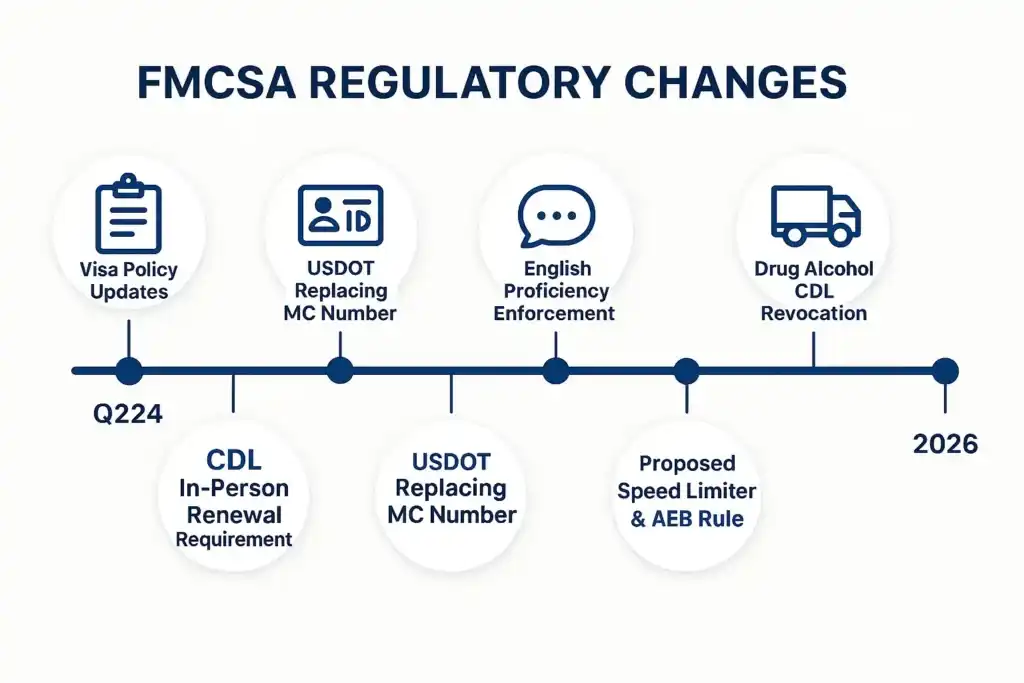
Tighter Enforcement of Driver Compliance on the Road
New regulations also beefed up enforcement of existing rules:
- English Language Proficiency (ELP) checks: Starting June 25, 2025, being unable to communicate in English became an out-of-service violation during roadside inspections. The rule that interstate drivers must read and speak English isn’t new, but now inspectors will actively test it and sideline drivers who can’t comply. In practice, roughly 20,000 drivers a year could be taken out of service under this policy – a relatively small fraction. Carriers are advised to ensure all drivers can communicate sufficiently (especially any recruited from non-English-speaking regions) to avoid surprises at weigh stations.
- Drug & Alcohol Clearinghouse penalties: The FMCSA’s Drug & Alcohol Clearinghouse (in effect since 2020) got tougher in late 2024. Now, any driver flagged “prohibited” in the Clearinghouse will have their CDL privileges automatically revoked until they complete the return-to-duty process. By 2025, this is having a real impact – about 35,000 drivers a year are sidelined for positive tests. Owner-operators must stay on top of random testing programs (even if you’re a one-truck operation, you need to be in a consortium) as part of FMCSA driver compliance. Failing to do so can literally cost you your license now.
- Entry-Level Driver Training (ELDT) fraud crackdown: Along with the visa-related CDL changes, officials are scrutinizing CDL training providers. Only a handful of truck driving schools have been penalized for ELDT non-compliance so far, but FMCSA is investigating reports of “CDL mills” that churn out unqualified. We could see more action on this front, meaning new drivers (or those adding endorsements) need to follow the rules by the book. As a dispatcher or small carrier, ensure any new hires have their training certificates in order.
Other Regulatory Changes Affecting Owner-Operators
Late 2025’s rule rollouts also include technology and safety updates:
- Automatic Emergency Braking mandate (proposed): A rule to require Automatic Emergency Braking on new trucks is in the works, likely effective by 2026–2027. It’s not law yet, but owner-operators buying trucks should be aware that AEB will eventually be standard. It may add cost (~$1,500-$3,000 per truck to retrofit). The goal is to prevent rear-end crashes (FMCSA estimates AEB could stop ~19,000 crashes a year). Large fleets are already piloting these; independent truckers might consider it for safety and possibly future insurance benefits.
- Speed limiter rule (coming soon): FMCSA has floated a proposal to cap speeds on heavy trucks via engine governorsbusiness.michelinman.com. The details (like the speed threshold) weren’t finalized in 2025, but it’s something on the horizon. Many big carriers already use speed limiters for fuel and safety. For owner-operators, a mandated limiter could level the playing field but also might slightly slow your transit times. It’s a reminder that carrier compliance isn’t just paperwork – it can extend to how you spec and operate your truck.
- Crash preventability program: Starting in 2025, FMCSA expanded its Crash Preventability Determination Program to let carriers challenge more types of accidents as “not preventable”. Practically, this means if someone hits your truck (say, a car loses control and strikes you), you can get that off your safety record. For small operators, this is a chance to protect your CSA score from unfair blame. It’s worth knowing what accidents qualify so you can file a challenge through FMCSA’s DataQs system if needed. Cleaner records mean lower insurance and easier business growth.
Each of these changes, big or small, feeds into the larger goal of FMCSA driver compliance and safety. For an owner-operator, staying ahead of these rules is part of staying competitive. It might seem like a lot to track, but taking a proactive approach – like adjusting your procedures and investing in compliance – will save headaches down the road.
Freight Market Outlook for 2025–2026: Stormy but Improving?
Regulations aren’t the only thing changing – the freight market itself in late 2025 is presenting new challenges. Here’s a freight market forecast that blends economic trends with the impact of these regulations:
A Tough 2025, But Glimmers of Recovery
The trucking spot market in 2025 has been in a slump. Industry data confirmed what many felt: the freight market forecast for 2025 showed overall volumes about 3% down year-over-year (YoY) – actually an uptick from gloomier predictions earlier in the year. By fall 2025, overall freight volumes were down about 3% year-over-year. One freight market forecast even considered that modest, noting -3% was better than expected. Key sectors like manufacturing showed little growth (output was only around 2019 levels), and consumer spending shifted toward services or high-end goods that don’t fill trucks. Retail inventories have been fairly lean, meaning there hasn’t been a big inventory restocking boost to freight. Non-store retail (e-commerce) keeps growing – 17.7% market share as of April 2025 – but that also doesn’t help freight demand much. In short, even though some economic data looked good, it didn’t translate into a strong environment for transportation. Many small carriers have already exited the industry due to high costs and low spot rates in 2025, which is slowly helping rebalance capacity – a promising sign noted in some freight market forecasts.
- Freight rates: Truckload rates remained soft through late 2025. Dry van and reefer rates were barely above 2024 levels (roughly +0.5% YoY), and flatbed around +2%. Essentially, rates haven’t had a real rebound yet. Forecasts suggest no strong rate surge until perhaps 2027. The current freight market forecast for 2026 is modest – a slow climb rather than a spike.
For owner-operators, this environment has been challenging. If you’re running on the spot market, you’ve likely felt the pinch of cheap loads and more competition. However, the market is expected to gradually improve through 2026:
- Mid-2026 recovery? Industry experts anticipate freight demand will pick up by mid-2026, assuming the broader economy avoids a major recession. When consumer spending broadens out and manufacturing orders rise, there will be more loads to go around. As most freight market forecast models agree, 2026 will likely be a year of gradual recovery, not a boom. The recovery is projected to be slow – “no real great, robust environment on the horizon” yet – but even a slight uptick can help tighten truck capacity.
- Equipment and capacity: Truck production surged in 2021–2022 and then cooled off. By late 2025, orders for new Class 8 trucks were down sharply (net orders in September 2025 were ~44% lower year-over-year). Fleets have pulled back on adding trucks, focusing instead on replacing older units. This discipline is good news for owner-operators: fewer new trucks means the supply of trucks isn’t growing as fast. Meanwhile, older rigs are being retired. This capacity correction sets the stage for better rates in 2026. In other words, the playing field is slowly tilting back in favor of truck owners as some excess capacity shakes out.
Regulatory Wildcard: How New Rules Could Shift the Market
Here’s where those late-2025 FMCSA rules tie in. Regulations affecting drivers can influence the freight market forecast by effectively reducing the driver pool or adding costs:
- Driver shortage vs. surplus: The crackdown on non-domiciled CDLs could significantly shrink the pool of available drivers. Roughly 194,000 drivers (mostly immigrants) are expected to leave or be forced out of trucking in 2025–2026 because they can’t meet the new visa policy for truck drivers or fear immigration consequences. To put that in perspective, that’s nearly 5% of all CDL drivers. If this happens, suddenly the carrier compliance crackdown becomes a major factor tightening capacity. Some freight market forecasts suggest that a high-end impact from this scenario would see truck utilization return to 2021 levels – basically back to the tight capacity of the pandemic freight boom, when trucks were in short supply and rates were sky-high. That would flip the market power back to carriers – great for owner-operators (higher spot prices), not so great for shippers.
- Uncertain timing: It’s hard to predict how fast these drivers might leave. Some may find ways to stay (switching visa status or becoming permanent residents), and enforcement might phase in over months. But even a portion exiting will tighten the market. In addition, aggressive ICE (immigration enforcement) activity in late 2025 – such as audits or raids on drivers without status – could accelerate the exodus. Small carriers who heavily used foreign drivers are already in a bind, with trucks sitting idle due to lack of qualified drivers. On the flip side, owner-operators who are properly documented might see more loads available and less rate competition once this adjustment works through.
- English proficiency rule impact: The new English rule likely won’t move the market much. Perhaps ~20,000 drivers per year could be temporarily sidelined for not meeting the standard, but many will resolve the issue (or stick to local routes not under interstate rules). This is more of a safety tweak than a capacity changer.
- Insurance and costs: Another factor in 2025–2026 is rising costs, especially insurance. Insurance premiums for trucking have climbed significantly in recent years and 2025 continued that trend. Many small operators face insurance bills of $15,000–$25,000+ per truck annually. If new FMCSA rules improve safety stats (fewer crashes, less cargo theft or fraud), insurers might eventually give breaks – but that’s a long game. In the short term, expect insurance to remain a pain point. The best strategy is to keep your safety record clean (e.g., take advantage of the crash preventability program to remove non-fault crashes from records) to qualify for any discounts.
Bottom line for the freight market: 2025 was a year of correction and survival. 2026 is poised to bring a modest rebound (according to most freight market forecast reports). For owner-operators, that could translate to better rates after a long dry spell. However, it’s crucial to run efficiently and stay compliant during this period. Those who adapt to the new FMCSA driver compliance norms and manage costs will be positioned to thrive when the market upswing arrives. Those who don’t may not make it to see that upswing.
Impact on Owner-Operators vs. Fleet Managers
New rules don’t affect all trucking businesses equally. Let’s compare how a single-truck owner-operator might feel these changes versus a larger fleet:
Owner-Operators: Challenges and Silver Linings
For independent owner-operators, compliance tasks often fall on your own shoulders. You don’t have a safety department updating files – it’s you and maybe a dispatcher or service handling paperwork. Here’s how the late-2025 rules touch owner-ops:
- Eligibility to drive: If you’re a U.S. citizen or permanent resident, the visa crackdown won’t restrict you – in fact, it might reduce competition if some drivers leave the market. But if you’re an immigrant running under your own authority on a temporary work visa, you’ll need to prove you meet the new visa policy for truck drivers requirements. Some owner-ops may even choose to pursue U.S. permanent residency or citizenship to secure their business. As hard as that process is, it offers stability: your CDL won’t be at risk from immigration rules. We’ve heard from a few owner-operators who are expediting their green card paperwork specifically due to FMCSA’s stricter stance on non-citizen CDLs.
- Administrative load: Switching to USDOT-only registration (no MC) is a one-time hassle: you’ll need to update records, but it’s manageable. Many owner-operators already operated just with a USDOT number (the MC was more for brokers’ reference). The key is making sure brokers and load boards recognize your authority. Using a good dispatch service or load board profile update can ensure you’re not passed over due to a “missing MC number” in some database.
- Cost of compliance: Some rules might force investments – e.g., if speed limiters become mandatory, you might have to get your ECM reprogrammed to a certain speed. If Automatic Emergency Braking is required on new trucks by 2026 or 2027, it could indirectly raise the cost of any truck you plan to buy. Unlike a big fleet, an owner-op can’t spread these costs across hundreds of trucks. It’s wise to budget ahead. The good news is that many carrier compliance measures (like ELDs, dashcams, safety tech) can actually save money in the long run through fewer accidents or violations. Think of compliance as part of your business investment – much like maintenance.
- Flexibility and niche options: Owner-operators can pivot faster. If new rules or market shifts make one segment less profitable, you can adapt. For example, if the freight market forecast shows flatbed demand rising due to infrastructure projects, an owner-op can consider swapping trailers or finding an agent/dispatcher in that niche quickly. Large carriers are like ships – slow to turn. So use your agility. Some independent drivers are finding opportunity in specialized freight now (like oversize loads or hazmat) because large fleets pulled back from those areas – just be prepared for the extra compliance that comes with any niche (permits, endorsements, etc.).
- Support network: Don’t go it alone on compliance. Many owner-operators join groups like OOIDA or use dispatch services (hi from Dispatch Republic!) that offer compliance support. For instance, at Dispatch Republic, we provide our clients reminders on renewals, carrier compliance audits, IFTA filings, and more. Taking advantage of such services can level the playing field, ensuring you don’t miss a regulatory requirement that could sideline your truck.
Fleet Managers: Different Scale, Different Concerns
For fleet managers (whether it’s a small fleet of 5 trucks or a large carrier), late-2025 rules bring a different set of challenges:
- Workforce management: If you employ drivers, the visa rule changes might suddenly shrink your driver pool. A fleet with 100 drivers could easily have a dozen non-citizen drivers. Managers now have to verify each driver’s CDL status and eligibility under the new FMCSA driver compliance rule. Some fleets are scrambling to sponsor green cards for their best immigrant drivers, or shifting recruiting to focus on U.S. drivers. Additionally, fleets will need to emphasize English proficiency in hiring and training – you don’t want trucks downed at weigh stations because a driver can’t answer the inspector in English.
- Compliance departments: Larger carriers usually have safety and compliance teams. These professionals will be busy updating policies – for example, ensuring every driver’s file has the required visa documentation, or adjusting renewal checklists to include in-person CDL renewals. Fleet managers should empower these teams to be thorough. The cost of non-compliance (fines, or trucks parked due to lapsed CDLs) far outweighs the cost of doing it right. Fleets will also be monitoring FMCSA’s announcements for additional guidance (like how exactly states handle the one-year CDL expirations). On the bright side, big fleets can handle paperwork more efficiently than an individual owner-op; they often use software to track compliance.
- Equipment upgrades: Mandates like AEB or speed limiters hit fleets across all trucks. This can mean a significant capital expense. Big carriers might lobby against aggressive rules or push for phase-in periods. But they’re also more likely to have newer trucks that already have many safety features (for instance, a 2023 Freightliner might already have collision mitigation that just needs activation). Fleet managers will weigh the trade-offs – a safer fleet with lower accident rates versus the upfront costs of upgrades. They’ll also be thinking about the residual value of their equipment: if older trucks can’t meet new rules, when do you sell and upgrade? In contrast, an owner-operator with one older truck might just run it locally or intrastate to avoid some rules (e.g., someone may decide not to cross state lines, so certain FMCSA rules don’t apply – an option a large interstate fleet doesn’t have).
- Operational adjustments: If capacity tightens due to these rules (e.g., driver shortages), large fleets might actually gain some pricing power after years of shipper-friendly rates. Fleet managers could finally negotiate better contracts in late 2026 because there are fewer trucks available (especially if many small carriers left). However, big fleets also rely on those small carriers (spot market capacity) during surges, so a reduced overall driver pool can pinch during peak seasons. It’s a balancing act.
In summary, owner-operators and fleet managers both have homework to do, but of different kinds. Owner-ops need to cover their bases on paperwork and find cost-effective ways to comply (since time and money are tight). Fleet managers need to mobilize their teams to adapt to new rules at scale, and possibly recalibrate their hiring and equipment strategies. The common thread is that carrier compliance is becoming more central to business success for both groups. Those who treat compliance as an afterthought risk fines or lost opportunities; those who integrate it into operations (like preventive maintenance for regulations) will likely see smoother sailing.
Real-World Voices: Adapting to the New Rules
What are truckers and dispatchers saying on the ground about these changes? Here are a couple of snapshots:
- Independent Trucker’s Take: Joe, an owner-operator hauling refrigerated loads, says the visa rule didn’t affect him directly, but he noticed something interesting in the load boards. “There are lanes where I used to compete with guys running super cheap – some of them were new carriers, often teams out of California. Lately those cheap trucks disappeared.” Joe suspects some of those outfits were hit by the new CDL crackdown or other compliance issues. It aligns with the idea that stricter FMCSA driver compliance rules (like the recent visa policy for truck drivers crackdown) can remove some low-cost competition from the market. Now he’s getting slightly better rates on those lanes. He’s hopeful this trend continues as the freight market forecast eventually improves next year.
- Small Fleet Dispatcher’s View: Dana runs dispatch for a fleet of 20 flatbeds across the Midwest. She spent October 2025 double-checking all her drivers’ paperwork. “We had three guys on work visas. All excellent drivers, by the way. We’re working with an immigration lawyer to keep them legal. In the meantime, I’ve had to assign some loads to other drivers and even turn down a few because we’re short-handed.” Dana also had to update their broker packets now that the MC number is gone – basically juggling the visa policy for truck drivers change alongside other compliance tasks – and identify all non-domiciled CDLs among her crew. Her takeaway: staying on top of carrier compliance is now part of her dispatch job more than ever. But she’s optimistic: “By next year, once this shakes out, I think we’ll see capacity tighten and better freight rates. We just have to get through the next few months of change.”
These stories show that while change is never easy, drivers and dispatchers are adapting. Truckers are nothing if not resilient. The key is sharing information (like knowing why a certain lane suddenly has fewer trucks, or why a particular driver needs a routing tweak to get to a DMV in person). In our community of owner-operators and dispatchers, we lean on each other – and we at Dispatch Republic are proud to help keep everyone informed and compliant.
Read more about African immigrants shaping the U.S. trucking industry – featuring Dispatch Republic’s insights – in Daily Trust’s article, “From Lagos to Louisville: African Immigrants Driving Success in the U.S. Car Hauling Industry.”
Stay Compliant, Stay Competitive
Late 2025’s rule changes by FMCSA are reshaping trucking, but they also create opportunities for those who stay compliant and seize the moment. If you’re an owner-operator, use these changes as a chance to tighten up your operation – focus on FMCSA driver compliance, get your paperwork in order, maybe invest in that safety upgrade, and position yourself as a reliable, compliant carrier. Shippers and brokers will gravitate toward carriers who can demonstrate FMCSA driver compliance with all the new rules (no one wants their load delayed because a driver got put out of service for a visa policy for truck drivers issue or a truck was held up by paperwork issues).
Remember, carrier compliance isn’t just a legal box to check – it’s becoming a competitive advantage. A well-run, compliant trucking business inspires confidence in customers and avoids costly interruptions. With freight markets expected to rebound slowly in 2026, being on top of regulations means you’ll be ready to capitalize on high-paying loads while others scramble.
If you’re feeling overwhelmed by the new rules or just want an expert team in your corner, consider reaching out to us at Dispatch Republic. We specialize in helping owner-operators navigate challenges like these – managing your loads, ensuring all your carrier compliance documents are up to date and you stay on top of FMCSA driver compliance requirements. Contact Dispatch Republic today to see how we can keep your wheels turning and your business growing, no matter what the regulators (or the market) throw your way.
(At Dispatch Republic, we’re a U.S.-based truck dispatching company built to support drivers through changes exactly like this – we’re here 24/7 to help with compliance, load planning, and more. Let’s ride the road ahead together.)
If you’re an owner-operator hauling specialized freight, don’t go it alone. Explore Dispatch Republic’s box truck dispatch services and car hauler dispatch services to access top-paying loads and compliance support. Check out our car hauling dispatch services and blog for more tips. Our dispatchers are experts in car hauling loads, flatbed loads, and reefer loads – we can match your truck to the best freight and handle the paperwork. Let us help you keep your rig loaded, safe, and legal.
For a deeper dive into the hotshot hauling business, read our Box Truck vs. Dry Van: Which Is Better for Your Business? and Step Deck vs. Flatbed: Which Is Right for Your Fleet?
Ready to make the most of your trucking business? 🚚💨 Reach out to Dispatch Republic and let our experts help maximize your earnings with tailored reefer dispatch service and dry van dispatch service solutions. We’ll handle the logistics while you keep on truckin’. Contact our truck dispatch service to get started on the road to greater profits and less hassle!
For more detailed guides, check Dispatch Republic’s resources on dispatching and the trucking business. Recent FMCSA Rule Changes for Immigrant CDL Holders if you’re weighing career paths, and Hotshot Dispatch and Compliance: Key Regulations Every Dispatcher Should Know to understand the dispatch side of the business.
If you’re an owner-operator juggling multiple responsibilities, consider partnering with a professional truck dispatch service to take the load off your shoulders—literally. At Dispatch Republic, we specialize in helping carriers run smarter and earn more by expertly managing load boards, negotiating top rates, and handling paperwork for dry vans, reefers, flatbeds, box trucks, step decks, and even hotshots. Our team monitors multiple premium load boards around the clock, ensuring your truck stays loaded with the right freight, at the right rate, on the right lane. Whether you’re scaling up or just getting started, having a dedicated dispatch team in your corner means fewer empty miles, less stress, and more time to focus on driving and growing your business.
Frequently Asked Questions
In late 2025, the FMCSA introduced several FMCSA driver compliance updates. The biggest is a rule tightening CDL eligibility for non-U.S. citizen drivers – essentially a new visa policy for truck drivers requiring employment-based visas and extra documentation for any non-domiciled CDL. Also important are the move to USDOT-only registration (eliminating old MC numbers) and stricter enforcement of existing rules (like roadside English proficiency checks and automatic CDL revocation for Drug & Alcohol Clearinghouse violations). These changes mean owner-operators must ensure all their paperwork, licenses, and safety practices meet the latest standards to avoid penalties or downtime.
The visa policy for truck drivers now requires that any non-citizen commercial driver hold a specific work visa and undergo regular status verification. In practice, this visa policy for truck drivers will likely remove many foreign drivers who previously held CDLs through state-level loopholes. For the industry, it means a potential driver shortage as up to 200,000 drivers could exit over the next couple of years. Owner-operators who are U.S. citizens or permanent residents may see less competition for loads (which could help rates according to freight market forecasts). However, carriers who relied on those drivers will need to recruit replacements, possibly pushing labor costs up. Overall, it’s a trade-off between tighter FMCSA driver compliance (for safety) and the capacity crunch it may cause. In short, the visa policy for truck drivers is raising standards but could worsen the driver shortage in the near term.
Carrier compliance refers to a trucking company (carrier) following all regulations and requirements set by agencies like FMCSA and DOT. This includes having proper registration (now USDOT number only, no separate MC), keeping driver qualification files, hours-of-service records, insurance, vehicle maintenance, and safety standards in check – including verifying driver credentials (like the new visa policy for truck drivers rule). It’s always been important, but recent events make carrier compliance crucial. FMCSA’s new rules (like the CDL visa mandate and stricter enforcement of English proficiency) mean that if you’re out of compliance, you can quickly face shutdowns or fines. Shippers and brokers are also paying more attention – many will not work with carriers that have poor safety or compliance records. In short, carrier compliance is key to staying on the road and competitive, especially as regulations increase.
The freight market forecast for 2025–2026 suggests a slow improvement. 2025 was tough – freight volumes were down (~3% year-over-year) and rates were soft due to overcapacity. Many small carriers felt the squeeze as load prices dropped. Looking into 2026, analysts expect freight demand to pick up by mid-year, which should help balance the market. Recovery will likely be gradual – one industry forecast said there’s “no robust environment on the horizon” until possibly 2027. In practical terms, owner-operators might see the spot market get a bit better in late 2026 compared to 2025, especially if a lot of drivers leave and capacity tightens. However, no one is predicting a boom yet – it’s more like a gentle climb. Even industry media are cautious – FreightWaves noted that meaningful recovery may not come until 2027 (and even then only slight). In other words, freight market forecasts from experts point to 2027 for any real improvement, so carriers should plan accordingly. It’s wise for small carriers to run lean, manage costs, and focus on core lanes while awaiting a better freight environment.
Not completely, but it’s a lot harder under the new visa policy for truck drivers. Foreign nationals can still obtain a CDL, but only if they meet strict criteria: they must be in the U.S. on an approved employment-based visa (or other lawful status), and they must continually prove their legal status for any CDL issuance or renewal. Essentially, “non-domiciled” CDLs (for drivers who aren’t citizens or permanent residents) are now restricted to those with specific work visas, and every renewal requires in-person verification of documents. Those just on work permits or here illegally are no longer eligible. And any state that issued CDLs improperly must cancel those licenses. The policy is about tightening FMCSA driver compliance to ensure every trucker on the road is vetted and legal. So while foreign drivers aren’t outright banned, the gate is much narrower, and many who can’t meet the new rules will be taken off the road. This new visa policy for truck drivers is part of FMCSA’s broader compliance push.
Owner-operators can take several practical steps to stay on top of FMCSA driver compliance requirements:
Keep documents updated: Make sure your CDL, medical card, vehicle inspections, insurance, and if applicable, work visa or residency proof, are all current. With rules changing, don’t let anything expire. A missed deadline on a medical exam or an outdated work authorization can put you out of service.
Use a compliance checklist: Create a simple checklist or calendar for key tasks – e.g., annual USDOT registration update, quarterly IFTA filing, Clearinghouse queries (if you hire other drivers), etc. Mark down when your carrier compliance items are due so nothing slips through.
Stay informed: Follow trucking news or blogs (Dispatch Republic’s blog, for example) for updates on rules, and monitor the FMCSA website for official announcements on FMCSA driver compliance changes, like the visa policy or upcoming mandates (speed limiters, etc.). Being aware means you can prepare.
Leverage technology: Use your ELD or a fleet app not just for logs but to remind you of maintenance, renewals, etc. Many apps can alert you when your inspection or license is due. Even simple phone reminders for things like “renew registration” help a lot.
Get help if needed: Many owner-ops partner with dispatch services or consultants for compliance. A good dispatch company will remind you of renewal dates, help with recordkeeping, and ensure you’re meeting carrier compliance requirements so you can focus on driving (for example, handling your IFTA filings or keeping your driver file in order).
By being proactive and organized, owner-operators can navigate FMCSA rules smoothly and avoid problems like fines or downtime. Whether it’s a major change like the visa policy for truck drivers or a routine paperwork renewal, staying ahead of compliance keeps you on the road.
Carriers – whether single-truck or fleets – should use this time before the market fully rebounds to get their house in order. First, tighten carrier compliance – a clean record (no out-of-service hits, all paperwork current) will let you run hard when freight picks up. Next, review your costs: fuel, maintenance, and insurance are big ones – see where you can save (fuel cards, preventive maintenance to avoid breakdowns, shop insurance rates). If you plan to expand or replace equipment in 2026, keep an eye on interest rates and consider doing it before demand rises (used truck prices might climb again if capacity tightens). Also, diversify your freight if you can – the freight market forecast indicates some sectors (like flatbed for construction, or reefer for pharmaceuticals and food) might outperform others. If you have the flexibility, position your business to tap into those stronger lanes. Lastly, build good relationships now – dispatchers, brokers, direct shippers. When things heat up, those who have reliable partners and a reputation for FMCSA driver compliance and on-time delivery will get the first call for high-paying loads. And of course, keep an eye on each new freight market forecast – being informed means you’ll be ready to act when the tide turns.
Dispatchers use tools like RMIS, MyCarrierPackets, DAT OnBoard, and sometimes Highway’s platform. They also use load board features: Truckstop and DAT have onboarding modules. By keeping active accounts on these services, dispatchers can quickly input carrier data and upload docs for any broker. Many also use FMCSA online systems to watch their own USDOT profiles and get alerts if something changes.
This owner-operator guide is designed to walk you through every step of broker-carrier onboarding by explaining the carrier setup packet process in detail. By following the guidance in this owner-operator guide, you’ll avoid delays during broker-carrier onboarding and ensure every carrier setup packet you submit is complete and correct. For maximum benefit, you can refer back to this owner-operator guide anytime you onboard with a new broker. In short, this owner-operator guide makes the broker onboarding process much easier for any carrier.
Absolutely. Dispatchers live and breathe the onboarding process. They keep track of all document deadlines (like insurance renewals) and deal with brokers’ requirements, which means fewer errors and faster approvals. For many carriers, using a dispatch service results in more loads and less hassle with paperwork, ultimately boosting earnings. A dispatcher can catch a missing comma or an outdated form before it becomes a problem, saving you time and money.
Ready to Take Your Trucking Career to the Next Level?
Whether you’re an owner-operator, a company driver, or a carrier company in need of truck dispatch services, Dispatch Republic is here to help. Our teamof experienced truck dispatchers offers affordable, professional truck dispatch solutions designed to save you time, increase your earnings, and make your business more efficient.
Thinking about outsourcing your truck dispatching? Contact Dispatch Republictoday and move smarter, not harder.
Found our Blog useful? Spread the word:
Check our latest posts:
[latest_posts_grid]
Contact us today to see how our team can support your trucking business.
Table of contents
- Car Hauling Freight Market Trends
- Step 1: Plan Your Car Hauling Business
- Step 2: Meet Regulatory & Licensing Requirements
- Step 3: Get the Right Equipment – Trucks and Car Hauler Trailers
- Step 4: Obtain Insurance and Handle Finances
- Step 5: Finding Loads and Running Efficient Operations
- Step 6: Maximize Efficiency and Profitability
- Step 7: Leverage a Dispatch Service (Optional but Powerful)
- Ready to Drive? Take the Next Step
- Frequently Asked Questions
Looking to start car hauling business in the current market? With 2025 and 2026 freight demand softening, owner-operators need to be strategic. Industry reports show demand is soft and load volumes are lower than a year ago, so efficiency and planning are vital. We break down each step — from licensing to finding loads — with practical tips and a dispatch company perspective. Our goal is to help you build a car hauling business that runs smoothly even in a down market. For example, see our section above on how to start car hauling business profitably. For extra tips and case studies, see our guide on car hauling tips for owner-operators.
Car Hauling Freight Market Trends
Before you invest in a truck and trailers, understand today’s freight market. Capacity remains high while freight demand is mixed, keeping spot rates flat to down. Carriers face higher costs for fuel, insurance, and equipment while loads are more competitive. However, used vehicle sales and relocations still create steady demand for auto transport. Knowing these trends helps you price contracts and plan routes to keep profit margins.
- Soft Demand: U.S. truckload volumes have softened, so empty trailer miles cost money.
- Spot Rates: Spot rates remain below seasonal norms. This means you may need to negotiate or accept slightly lower rates on some lanes.
- High Operating Costs: Fuel, insurance, and maintenance are pricier. As you start car hauling business, budget carefully for each run and use fuel surcharge programs to offset costs.
- Stable Need for Car Hauling: Despite a slow market, dealers, auctions, and relocations still need car carriers. Target busy hubs (like major auctions or port cities) so your trailers run full. Frequent auctions keep your car hauler trailers filled with vehicles.
Every drop in market conditions is a chance to beat the competition with smart dispatching and planning. With this knowledge, you can beat the competition as you start car hauling business.
Step 1: Plan Your Car Hauling Business
A solid plan is the first load you haul, outlining how to start car hauling business. Begin by defining your services and market. Will you run auctions, dealer transfers, or fleet relocations? Research competition and potential clients in your region. Outline startup costs: your truck, car hauler trailers, permits, and insurance.
- Business Plan: Write a business plan with realistic budgets to start car hauling business on track. Include expected costs (fuel, maintenance, insurance) and revenue per load.
- Market Research: Identify where demand exists. For example, target auto hubs like Chicago, Miami, or Dallas. Such markets are good places to start car hauling business.
- Financing: Decide if you’ll lease or buy equipment. A new 5-car trailer can cost tens of thousands, so plan financing for your truck and car hauler trailers. Have extra cash ready for deposits and licensing fees.
- Owner-Operator Checklist: Ensure you or your drivers have the right credentials. Being informed and ready will save headaches. Proper planning lets you start car hauling business without costly delays.
Getting these basics right is key. A well-planned car hauling business avoids costly surprises. Proper planning lets you start car hauling business without costly delays.
Step 2: Meet Regulatory & Licensing Requirements
Compliance is mandatory if you want to start car hauling business legally. As a for-hire carrier, you must register with FMCSA and your state. That means getting a USDOT number and Operating Authority (the new unified authority certificate). This applies because you’ll haul vehicles for clients across state lines. FMCSA now uses one USDOT identifier for everything, phasing out separate MC numbers by late 2025.
- USDOT & Authority: Apply on the FMCSA site for a USDOT number and authority. FMCSA explicitly requires interstate carriers to have operating authority in addition to a USDOT number. (Hauling cars for a dealer or broker counts as hauling goods of others.) See our guide on DOT car hauling regulations and compliance for specifics.
- State Credentials: Register your truck for IRP (apportioned plates) and get IFTA fuel permits for multi-state operations. Keep UCR (Unified Carrier Registration) dues paid.
- Commercial Driver’s License: Most car hauling requires a CDL Class A license, since multi-car trailers often exceed 26,000 lbs. Check your state’s rules. Typically, CDL A lets you tow larger car hauler trailers with confidence.
- Safety Compliance: Install an ELD (electronic log) to track hours-of-service. Develop a pre-trip inspection routine for truck and trailer. Follow all safety standards and car hauler requirements (inspections, securement, ELD) to avoid fines.
All car hauler requirements (licenses, registrations, permits, safety) must be in place before hauling loads. This can take weeks, so start early. By fulfilling every requirement in advance, you can start car hauling business on day one.
Step 3: Get the Right Equipment – Trucks and Car Hauler Trailers
Your gear must match the job. Choose a truck with enough power and brakes for full loads (many car haulers use a 450–500+ HP diesel). Then pick one or more car hauler trailers. These come in different sizes and styles. Open multi-car trailers (3-car, 5-car, up to 10+ cars) are common. Enclosed trailers protect vehicles from weather but cost more and add weight.
- Trailer Type: Many small fleets start with an open 3- to 5-car trailer, then scale up. For big contracts, 7- to 10-car trailers maximize revenue per run. Select car hauler trailers that match your projected loads. For example, many car haulers begin with a 3-car open trailer on their first runs.
- Quality and Maintenance: When buying equipment, inspect any car hauler trailers carefully for wear and safety. Check frame welds, lights, ramps, winches, and tires. Avoid shortcuts on safety gear. Keep a spare tire and tie-down straps on board. Even used trailers should have clear maintenance records.
- Customization: Some fleets add extra racks or telescoping ramps. Others prefer a drop-deck configuration for SUVs or trucks. Customize to your needs, but remember weight limits. Never overload.
- Costs: A well-equipped multi-car trailer is a major investment. Factor car hauler trailers cost into your budget. If cash is tight, consider leasing or buying a late-model used trailer.
Choosing the right trailer is as important as choosing your loads. A great truck with subpar car hauler trailers will limit your business. As you start car hauling business, prioritize trailers that are reliable and safe.
Step 4: Obtain Insurance and Handle Finances
Insurance for a car hauling business can be costly but is non-negotiable. Federal law mandates at least $750,000 in liability coverage, but most carriers carry $1 million or more to satisfy brokers. You’ll also need car hauler insurance for the cargo: typically $100,000 per vehicle on the trailer, or a blanket policy covering all vehicles up to a certain total.
- Liability Insurance: Covers damage you cause to others. For any owner-operator looking to start car hauling business, high liability coverage is essential. Aim for $1M liability, the industry standard. Crossing state lines means you must carry at least the federal minimum (currently $750k).
- Cargo Insurance: Covers the cars you haul. Car values can be high, so many brokers insist on at least $100k per vehicle, and some haulers carry $250k–$500k cargo policies. Make sure car hauler insurance covers both open and enclosed loads. Review any deductibles and exclusions (e.g. damage during loading).
- Physical Damage Insurance: This covers collisions or rollovers on your own truck/trailer. It’s not legally required, but many car haulers add it for peace of mind. If your truck is financed, lenders may require it.
- Other Costs: Budget for permits, bond fees (for some states or if you broker loads), toll transponders, and routine maintenance. Keep an emergency fund for repairs – heavy loads wear parts quickly.
Shop with agents who know trucking. Always compare quotes for car hauler insurance, and double-check that coverage meets customer and broker demands. Missing an insurance requirement can shut you down.
Read more aboutDOT Car Hauling Regulations and Compliance
Step 5: Finding Loads and Running Efficient Operations
With licensing and equipment ready, it’s time to run loads. Use every avenue to keep your truck and trailer busy:
- Load Boards and Brokers: Many car haulers rely on specialized auto-transport load boards (like Central Dispatch or Auto Hauler) and auto brokers. Brokers post runs from auctions, dealerships, and relocations. They handle contracts and payment, letting you focus on driving. Note that brokers will require proof of license and insurance – these are basic car hauler requirements.
- Direct Contracts: Cultivate direct customers such as local car dealers, rental companies, fleet operators, or dealerships. Direct loads usually pay more since no middleman fee is taken. Attend dealer open houses, auction weekends, or trucking meet-ups to hand out cards. Direct deals often have strict vendor requirements (like reliability and paperwork) so be prepared with compliance and records.
- Use Dispatch Services: A professional dispatch service (like ours) acts as your partner in finding high-paying runs. We plan multi-stop routes, combine multiple auction pickups, and leverage our broker network. For example, our car hauling dispatch service focuses on optimizing multi-stop runs to maximize each mile. This frees you to drive while we handle scheduling and negotiations.
- Route and Fuel Planning: Combine loads when possible. For instance, pick up 5 cars at Auction A, drop 2 at Dealer X and 3 at Dealer Y. Plan a profitable backhaul if you go empty one way. Use an ELD/GPS system to optimize routes. Use apps to find cheap fuel along your route and avoid congested traffic.
In short, don’t sit idle. A smart mix of broker loads, dealer contracts, and a proactive dispatch approach keeps your trailer busy. Always have a plan for the return trip so your car hauling business stays profitable. For instance, carry salvage or backhaul freight on the way home. An efficient carrier runs a profit even when rates dip.
Step 6: Maximize Efficiency and Profitability
Keeping a car hauling business profitable means trimming waste and staying flexible. Here are key strategies:
- Minimize Empty Runs: Every empty mile is a loss. Always plan your return. If no car loads are available, consider hauling LTL freight or scrap metal for the return. Alternate-use fleets can even tow flatbeds on empty legs if licensed. This is essential if you want to start car hauling business profitably.
- Monitor Costs: Track miles per gallon with trailer attached. Maintain proper tire pressure and wheel alignment. Scheduled maintenance (brakes, oil changes) prevents breakdowns.
- Price Loads Smartly: Know your break-even per-mile cost (including fuel, tolls, insurance, truck payments). Use that to set minimum rates. In a falling-rate market, be ready to negotiate or decline rates that don’t cover costs.
- Use Fuel Surcharges: Implement a fuel surcharge tied to an index (like DAT). This helps you recoup fuel increases without renegotiating each load.
- Stay on Top of Finances: Invoice promptly and keep detailed expense records. If cash is tight, consider invoice factoring at a small fee. Track every fuel receipt and repair bill for tax deductions and budgeting.
Efficiency wins the day. In a weak market, you can’t rely on rate hikes alone; you must squeeze more profit from each job. A dispatcher helps by finding best-paying loads and planning fuel-efficient routes. As a one car hauler said, a dispatch partner “frees me to drive” while they keep the loads and paperwork running.
Step 7: Leverage a Dispatch Service (Optional but Powerful)
Running loads is a 24/7 job. Working with a professional dispatch service can give you an edge. Dispatchers are load-finding experts and handle admin tasks. Here’s how a dispatch service (like our car hauling dispatchers) helps:
- Load Optimization: We build efficient multi-stop routes that fill your trailer to capacity. We access top auctions and prime lanes, so you get the best-paying runs.
- Paperwork and Compliance: Dispatchers collect carrier packets and contracts for you. We confirm insurance and license fit each load. You focus on driving; we handle IFTA filings, permits, broker paperwork, and other admin tasks.
- 24/7 Support: Breakdowns or last-minute changes? Dispatchers reschedule deliveries or secure new loads any time of day. That support means fewer idle days and more miles earning money.
- Protecting Margins: We won’t book a load unless the numbers work. Since we’re paid by a percentage of revenue, we aim for loads that keep your profits high. Our goals align with yours: more money per hour behind the wheel.
Many new owner-operators start out alone, but adding a dispatch team usually pays off quickly. As one veteran driver says, having dispatch “frees me to drive” while they keep the wheels turning and paperwork straight. For more on optimizing your runs, consider Dispatch Republic’s car hauling dispatch service or contact us for a quote.
Ready to Drive? Take the Next Step
Starting a car hauling business means facing a cautious market with knowledge and the right partners. Follow each step above: make a detailed plan, comply with all car hauler requirements, equip your truck with reliable car hauler trailers, and carry sufficient car hauler insurance. Focus on efficient operations: plan multi-stop runs, cut empty miles, and continually refine your routes.
Partner with Dispatch Republic if you want support: our car hauling dispatch service can find loads, handle paperwork, and help you navigate rate negotiations. By staying organized, compliant, and connected, you can build a profitable car hauling business even as the freight market changes. Good luck on your journey, and drive safely!
Want a global perspective? Our Senior Dispatcher, David Kartsotyants, recently shared how U.S. dispatch practices can inform Nigeria’s fast-growing auto transport market in this Daily Trust feature on car hauling dispatch and cross-border logistics efficiency
If you’re an owner-operator hauling specialized freight, don’t go it alone. Explore Dispatch Republic’s box truck dispatch services and car hauler dispatch services to access top-paying loads and compliance support. Check out our car hauling dispatch services and blog for more tips. Our dispatchers are experts in car hauling loads, flatbed loads, and reefer loads – we can match your truck to the best freight and handle the paperwork. Let us help you keep your rig loaded, safe, and legal.
For a deeper dive into the hotshot hauling business, read our Box Truck vs. Dry Van: Which Is Better for Your Business? and Step Deck vs. Flatbed: Which Is Right for Your Fleet?
Ready to make the most of your trucking business? 🚚💨 Reach out to Dispatch Republic and let our experts help maximize your earnings with tailored reefer dispatch service and dry van dispatch service solutions. We’ll handle the logistics while you keep on truckin’. Contact our truck dispatch service to get started on the road to greater profits and less hassle!
For more detailed guides, check Dispatch Republic’s resources on dispatching and the trucking business. Read How to get a TWIC card as a truck driver? if you’re weighing career paths, and Top 9 Load Boards for Owner-Operators to understand the dispatch side of the business.
If you’re an owner-operator juggling multiple responsibilities, consider partnering with a professional truck dispatch service to take the load off your shoulders—literally. At Dispatch Republic, we specialize in helping carriers run smarter and earn more by expertly managing load boards, negotiating top rates, and handling paperwork for dry vans, reefers, flatbeds, box trucks, step decks, and even hotshots. Our team monitors multiple premium load boards around the clock, ensuring your truck stays loaded with the right freight, at the right rate, on the right lane. Whether you’re scaling up or just getting started, having a dedicated dispatch team in your corner means fewer empty miles, less stress, and more time to focus on driving and growing your business.
Frequently Asked Questions
Carrier onboarding (or carrier setup) is the process of getting your trucking company approved by a broker. It’s important because it proves you’re legally authorized and insured to haul loads. A complete onboarding packet protects both you and the broker – the broker knows you have valid USDOT authority and insurance, and you know the broker is legitimate. Failing to properly onboard can mean loads are canceled or you don’t get paid.
A dispatcher gathers and submits all your paperwork. They fill out online portals (like RMIS or MyCarrierPackets), upload your W-9, insurance, operating authority, and broker-carrier agreement. They communicate with the broker’s compliance team if questions arise. In short, the dispatcher does the paperwork so you can focus on driving.
Typically you need a W-9, proof of operating authority (your FMCSA MC or USDOT authority), a Certificate of Insurance (with required coverage and the broker as a certificate holder), and the signed broker-carrier agreement. Some packets also ask for safety program details, an ACH form for payment, or a factoring agreement (NOA). A dispatcher will ensure you have all of these.
RMIS is an online carrier onboarding system (by Truckstop) used by many brokers. It lets carriers enter their info once and share it with multiple brokers. RMIS automatically pulls your DOT/FMCAS records and verifies W-9 TIN matches, speeding up compliance checks. For dispatchers, it means faster approvals: once your DOT and insurance data are in RMIS, future broker setups on that platform are smoother.
It depends on the broker. Many brokers require carriers to use a specific portal like MyCarrierPackets or DAT OnBoard. These portals let you store your documents in one place. Your dispatcher will tell you which system to use and help you register. In MyCarrierPackets, for example, you have one login for all brokers, and the portal handles your insurance paperwork for you.
Broker compliance means following FMCSA rules so brokers only use legal, safe carriers. It includes having valid USDOT authority, adequate insurance, and clean safety records. For drivers and carriers, this means always running with updated paperwork and reporting any changes. If a broker finds your compliance lacking (like expired insurance), they won’t dispatch your truck.
Dispatchers can verify a broker’s authority and bond by checking FMCSA records (every broker should have a USDOT/MC number and a $75,000 bond or trust). If a broker’s MC or bond is expired, a dispatcher will catch that and avoid taking loads from them. In practice, dispatchers often request the broker’s FMCSA registration info and surety certificate during setup to protect the carrier.
Dispatchers use tools like RMIS, MyCarrierPackets, DAT OnBoard, and sometimes Highway’s platform. They also use load board features: Truckstop and DAT have onboarding modules. By keeping active accounts on these services, dispatchers can quickly input carrier data and upload docs for any broker. Many also use FMCSA online systems to watch their own USDOT profiles and get alerts if something changes.
This owner-operator guide is designed to walk you through every step of broker-carrier onboarding by explaining the carrier setup packet process in detail. By following the guidance in this owner-operator guide, you’ll avoid delays during broker-carrier onboarding and ensure every carrier setup packet you submit is complete and correct. For maximum benefit, you can refer back to this owner-operator guide anytime you onboard with a new broker. In short, this owner-operator guide makes the broker onboarding process much easier for any carrier.
Absolutely. Dispatchers live and breathe the onboarding process. They keep track of all document deadlines (like insurance renewals) and deal with brokers’ requirements, which means fewer errors and faster approvals. For many carriers, using a dispatch service results in more loads and less hassle with paperwork, ultimately boosting earnings. A dispatcher can catch a missing comma or an outdated form before it becomes a problem, saving you time and money.
Ready to Take Your Trucking Career to the Next Level?
Whether you’re an owner-operator, a company driver, or a carrier company in need of truck dispatch services, Dispatch Republic is here to help. Our teamof experienced truck dispatchers offers affordable, professional truck dispatch solutions designed to save you time, increase your earnings, and make your business more efficient.
Thinking about outsourcing your truck dispatching? Contact Dispatch Republictoday and move smarter, not harder.
Found our Blog useful? Spread the word:
Check our latest posts:
[latest_posts_grid]
Contact us today to see how our team can support your trucking business.