Table of contents
- Why Flatbed Trailer Maintenance Matters
- Set a Preventive Maintenance Routine (and Stick to It)
- Tire and Wheel Care – Your First Line of Defense
- Brake System Maintenance – Stopping Power You Can Count On
- Suspension and Axles – Keep the Ride Smooth and True
- Deck and Frame Upkeep – Protect the Backbone of Your Flatbed Trailer
- Lights and Electrical – Be Visible, Be Legal
- Lubrication and Moving Parts – Little Grease, Big Difference
- Turn Miles into Money with the Right Strategy
- Frequently Asked Questions
Imagine cruising down the highway with a critical load on your flatbed, when bang – a tire blows or a strap snaps. In that instant, a profitable haul turns into a roadside emergency. Beyond the immediate danger, you’re facing lost time, unhappy customers, and possibly a DOT inspection you weren’t ready for. For truckers, owner-operators, and fleet managers running flatbed trailers, maintenance isn’t a “maybe” – it’s an absolute must. A flatbed trailer is a major investment (often costing tens of thousands of dollars), and keeping it in top shape ensures it stays on the road earning money instead of sidelined with repairs. In this guide, we’ll break down flatbed trailer maintenance tips that will help you extend your trailer’s life and improve its performance. You’ll see why regular upkeep is crucial, learn what specific areas to focus on, and get practical advice to prevent problems before they happen. Let’s dive in and keep those wheels turning safely and profitably!
Why Flatbed Trailer Maintenance Matters
Every experienced trucker knows that maintenance pays for itself. This is especially true for flatbeds, which haul heavy loads in harsh conditions. Here’s why diligent preventive care should be a top priority:
- Safety & Compliance: Neglected trailers are accidents waiting to happen. Worn brakes or cracked tires can turn deadly on a steep grade. In fact, roughly 23% of trucks inspected during the 2024 International Roadcheck were put out of service for critical safety violations – with brake defects being the number one cause and tire issues close behind. Regular maintenance helps you pass DOT inspections and avoid costly citations or out-of-service orders. Remember, federal regulations also require carriers to systematically maintain their equipment at all times – it’s not just good practice, it’s the law.
- Prevent Downtime: A breakdown on the road can derail delivery schedules and eat into your profits. A blown tire or broken suspension component means lost time waiting for roadside repair (and a hefty bill to match). Preventive maintenance catches these issues at home, on your schedule – not at 2 AM on the side of the interstate. It’s simple: a few hours in the shop now can save days of unplanned downtime later.
- Equipment Longevity: A well-maintained flatbed can last for decades. Regular care reduces metal fatigue, wood rot, and corrosion, keeping your trailer structurally sound. Think of maintenance as cheap insurance to protect an asset worth tens of thousands of dollars. Skipping basic repairs is false economy – any money you save by delaying fixes will be spent tenfold on premature failures. Taking care of your flatbed trailer’s deck and frame means it can handle load after load for years to come.
- Operational Efficiency: Maintenance directly impacts your bottom line. For example, as per research conducted by US Department of Energy keeping your tires properly inflated improves fuel mileage by around 0.6% on average (up to 3% in some cases), whereas underinflated tires increase rolling resistance (wasting fuel) and run hotter (risking blowouts). Well-serviced brakes and lubricated moving parts help your rig roll smoother with less strain on the tractor. In short, a healthy trailer keeps your whole operation running at peak efficiency – with minimal wasted fuel or time.
- Higher Earnings & Reputation: If your trailer is in top condition, you can take loads confidently and avoid turning down jobs due to equipment issues. Shippers and brokers value carriers who are dependable. Staying on top of maintenance enhances your reputation and load opportunities, since you’re less likely to cancel a haul because “the trailer’s in the shop.” Plus, a trailer that’s roadworthy 24/7 can be dispatched for back-to-back loads, maximizing your earning potential. (Note: Even the best truck dispatch service can’t help if your trailer is stuck in a repair bay! We at Dispatch Republic know a breakdown is a missed opportunity, so we work closely with our carriers to plan around maintenance needs.)
Bottom line: flatbed trailer maintenance isn’t just about avoiding breakdowns – it keeps you safe, legal, and profitable. Next, let’s look at how to build a routine to stay ahead of issues.
Set a Preventive Maintenance Routine (and Stick to It)
Staying ahead of problems requires a consistent maintenance routine. Don’t wait for something to feel wrong – by then you might already be on the side of the road. Here’s how to build a preventive maintenance schedule for your flatbed trailer:
- Daily Inspections: Start with thorough pre-trip and post-trip walkarounds. Every day, check your trailer’s tires, lights, brakes, and cargo securement before hitting the road. Look for obvious damage: underinflated or cut tires, dripping wheel seals, non-functioning lights, loose straps or chains, cracked welds, etc. Give special attention to things like brake air lines and couplers during your pre-trip (listen for air leaks) and ensure all tie-downs are in good shape. A 10-minute inspection can catch issues early. (Pro tip: use a flashlight to peek at brake linings and between dual tires during your pre-trip.)
- Weekly/Monthly Checks: Set aside time (for an owner-operator, maybe one day each week or month) for a deeper inspection. This includes measuring tire tread depth and checking tire pressure with a gauge (don’t just thump them), inspecting the brake drums and pads for wear, looking over the suspension (airbags or springs) for leaks or cracks, and crawling underneath to scan for loose bolts, worn bushings, or cracked crossmembers. Many seasoned drivers perform a mini “PM” every few weeks, especially if running heavy loads frequently. Also, keep maintenance records of what you inspect and fix – not only is this good practice, it’s required to keep logs of repairs and annual inspections.
- Periodic Services: Follow a regular service interval for more comprehensive maintenance. Many fleets do a thorough service every 3 to 6 months. Manufacturers often suggest a one-month and six-month service schedule for trailers: for example, Great Dane advises checking critical items (tires, lights, brakes, suspension, landing gear, kingpin, etc.) monthly, and doing a more in-depth inspection of brake linings, wheel bearings, alignment, and suspension components at least every six months. At minimum, every 12 months your flatbed must undergo a full DOT annual inspection by law. Plan these into your calendar. By sticking to a schedule of preventive maintenance and timely repairs, you’ll catch small issues before they snowball into expensive problems.
Remember, consistency is key. Maintenance routines only work if you follow them. Set reminders, use a checklist, and make trailer check-ups a non-negotiable part of your operations. It’s far better to replace a $20 light bulb or tighten a few bolts at home than to discover a failure on the road.
Now, let’s dive into the specific areas of your flatbed trailer maintenance that need regular TLC, and what steps you should take to keep them in top shape.
Tire and Wheel Care – Your First Line of Defense
Your tires are arguably the most critical (and costly) maintenance item on any trailer. They carry immense weight and face constant abuse from heat, debris, and long miles. A tire blowout can cause a wreck, damage your trailer, and certainly ruin your day. Flatbed trailers typically use standard 22.5″ commercial tires (often 8 tires on two axles, or 12 tires on a tri-axle spread). Here’s how to keep your rubber rolling safely and efficiently:
- Maintain Proper Inflation: Check tire pressure frequently with a reliable gauge – ideally every day or at least once a week. Proper inflation is vital for both safety and fuel economy. Underinflated tires run hot and are more prone to blowouts; overinflated tires can cause poor traction and uneven wear. Follow the tire manufacturer’s PSI recommendation (or the trailer VIN plate). Many trailer tires run around 100 psi cold. Make sure inside dual tires aren’t neglected – it’s easy to miss a flat inner tire without looking closely. Keeping tires at the right pressure not only reduces blowout risk but also improves fuel mileage (as noted earlier, even a few PSI low can lower MPG). If you struggle with manual checks, consider investing in a tire pressure monitoring system or an automatic tire inflation system – many modern trailers offer these options to alert you to leaks or keep tires inflated on the go.
- Regular Inspection & Rotation: During pre-trips, inspect each tire’s tread and sidewalls. Look for nails, cuts, bulges, or signs of uneven wear. If you spot one side of a tire wearing faster or cupping, it could indicate an alignment or suspension issue that needs attention. Remove any embedded debris (safely) before it causes a puncture. Rotating your trailer tires periodically (for example, swapping positions between forward and rear axle) can help even out wear, especially on flatbeds with spread axles that tend to scrub tires more in turns. Also, whenever a wheel has been off for service, ensure all lug nuts are properly torqued to spec – loose wheel studs are dangerous and surprisingly common if not checked after tire changes.
- Tread Depth and Replacement: Don’t run your tires down to racing slicks. Not only is it illegal to use trailer tires below 2/32″ tread depth, but traction on wet roads plummets as tread wears thin. Most prudent owner-operators replace trailer tires around 4/32″ remaining tread to stay safe. Use a tread depth gauge to monitor wear. If certain tires consistently wear out faster, investigate why (e.g. alignment issues or heavier load on one axle). When replacing tires, always use the correct size and load rating. Flatbed trailers usually require load range G or H tires – make sure the replacements match in size, ply rating, and speed rating. Never mix different sizes or types on the same axle, as that invites uneven loading and more blowouts. And if you run retreads on your trailer, inspect them even more vigilantly for separation or damage.
- Carry a Spare (If Possible): Unlike step decks, flatbeds use common tire sizes that most truck stops carry. Even so, having a spare tire (mounted on a rim) can be a trip-saver. If you have room on your trailer or headache rack to secure a spare, consider carrying one. A spare 22.5″ tire allows you or roadside assistance to get you moving again faster after a blowout, potentially saving you hundreds on service call fees. Just be sure to check your spare’s pressure occasionally too – it won’t help if your spare is flat!
- Wheel Hubs and Bearings: Tires don’t work alone – they rely on healthy wheel hubs and bearings. During maintenance, inspect hubcaps on each axle (especially if you have oil bath hubs) for proper oil level and any signs of leaks. A leaking wheel seal can sling oil and lead to a bearing failure (which can even cause a wheel fire or axle damage). If you see oil on the inside of a wheel or streaks on the rim, address it immediately – that usually means replacing the seal and refilling the hub oil, or repacking the bearings if they are grease-type. For grease-packed bearings, it’s wise to have them cleaned and repacked at least once a year (for frequent high-mileage use, some do it every 6 months). Catching a dry or pitted bearing early prevents a disastrous wheel seizure on the highway. While you’re checking hubs, also ensure all wheel studs are tight and none are cracked. Losing a dual wheel assembly is the last thing you want happening at 65 mph.
In short, give your trailer’s tires and wheels plenty of love. They carry tremendous loads and are literally where “the rubber meets the road.” A bit of attention – maintaining proper psi, frequent inspections, timely replacements, and keeping hubs lubricated – will reward you with fewer blowouts, better fuel mileage, and safer handling. It’s hard to make money when you’re limping to the tire shop or waiting for a tire truck, so make tire care a top priority.
Brake System Maintenance – Stopping Power You Can Count On
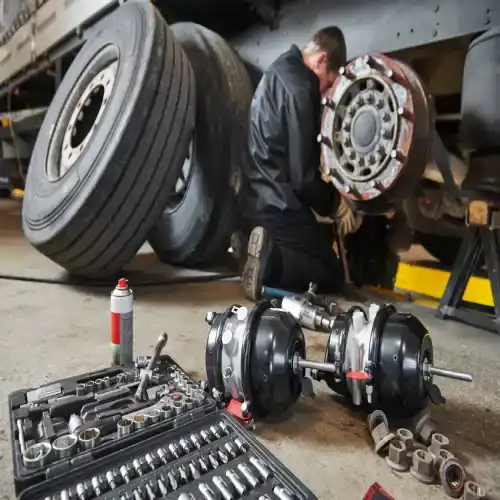
Your trailer’s brakes are a critical safety system, especially when hauling heavy equipment or full loads on a flatbed. Properly maintained brakes can mean the difference between a close call and a major accident. Flatbed trailers typically use air brakes, which include brake shoes (or pads), drums (or discs), camshafts, slack adjusters, air chambers, valves, and an air tank – all of which need attention. Here’s how to keep your trailer’s brakes working reliably:
- Inspect Brake Linings and Drums: Regularly check the thickness of your brake linings (the pads or shoes). Trailer brakes must have at least 1/4″ of lining remaining (per DOT), but don’t wait until they’re that worn. If linings look thin, cracked, or contaminated with grease/oil, schedule a brake job soon. Also inspect the brake drums (if equipped – or rotors for disc brakes). Look for cracks, heat spots, or deep grooves. Any drum with a crack more than about half an inch or reaching the edge is an out-of-service condition. It’s good practice to pull the drums and do a full brake inspection at least every 6 months (more often if you run in mountainous terrain frequently). During daily checks, you can often peek through inspection ports on the drum or between the dust shield and drum to see brake shoe thickness. Catching worn-out brakes before they fail keeps you safe and legal.
- Adjust Slack Adjusters: Most modern trailers have automatic slack adjusters that self-adjust brake stroke, but they can still fall out of adjustment if something’s off. During pre-trip inspections, do a quick brake pushrod check: with the brakes released, chalk the wheels (or have someone hold the brake pedal) and pull on each brake chamber’s pushrod (or have a partner lightly press and release the brakes while you watch the pushrod travel). There should be no more than about 1 inch of movement on pushrods (for Type 30 chambers) when pulled by hand. If you have manual slack adjusters on an older trailer, you must periodically adjust them (typically turning the adjuster bolt until the brake just drags, then backing off half a turn). Improper brake adjustment is one of the top DOT violations. Also, remember to grease slack adjusters (there’s usually a zerk fitting) at recommended intervals so they don’t seize up. Just a single non-working brake out of four or eight can seriously reduce your stopping power – and if 20% or more of your brakes are out of service, the trailer will be placed OOS on the spot.
- Air System Checks: Your trailer’s braking power depends on a healthy air supply. At least once a week, with the air system charged, walk around and listen for air leaks. Common leak points are the gladhand connections (worn rubber seals hiss), at brake chamber diaphragms (a “hissing” or bubbling sound on a chamber indicates a leak), or any hose fittings and the relay valve. Fix leaks promptly – even a small air leak can lengthen stopping distance and will fail an inspection. Additionally, drain the trailer’s air tank regularly to remove water and oil. There’s usually a pull-cable or petcock valve on the air tank for this. Moisture buildup in the tank leads to internal rust and can freeze in cold weather, causing brake malfunctions. Make it a habit to drain air tanks every few weeks or whenever you hear water in the system. And don’t ignore your ABS: verify the trailer ABS warning lamp lights up at startup and then goes out. If the ABS light stays on, get the anti-lock brake system checked – it could be as simple as a dirty wheel sensor, but you don’t want compromised ABS on slick roads.
- Hoses, Chambers, and Hardware: Include a visual check of the brake hoses and chambers during your routine. Look for chafed or cracked hoses and replace any that are damaged or dry-rotted. Ensure the air chamber brackets are secure and not bent. If a brake chamber is visibly dented or rusted through, that’s a failure waiting to happen – get it replaced. Also inspect S-cam bushings and slack adjuster linkages for wear or slack. A well-lubricated and tight brake linkage ensures even braking on all wheels. If you notice one brake is running much hotter or cooler than the others (using an infrared thermometer on wheels during a pit stop is handy), it could indicate that brake isn’t working properly – either dragging or not engaging – and needs adjustment or repair.
Keeping your flatbed’s brakes in top condition is absolutely essential. Not only will it keep you and others safe, but it also protects your CSA score and helps avoid violations. When you hit the brakes with 40,000 lbs of steel on the deck, you want confidence that your trailer will respond. A little time spent on brake maintenance – checking, adjusting, and servicing – goes a long way toward providing that peace of mind and keeping your rig DOT-compliant.
Suspension and Axles – Keep the Ride Smooth and True
The suspension system and axle components on your flatbed trailer take a beating from road shock and heavy loads. A typical flatbed has either a tandem axle (often a spread axle with 10-foot spacing between axles for weight distribution) or sometimes a tri-axle setup for heavy haul. Many use air-ride suspension, though some older ones have multi-leaf springs. Maintaining these parts is key to avoiding alignment problems, uneven tire wear, and even structural damage. Focus on the following:
- Suspension Inspection: Regularly inspect your trailer’s suspension, especially if it’s air-ride. Check each air spring (airbag) for dry-rot cracks, bulges, or leaks. An easy test is to listen for air hissing around the bags or spray soapy water on suspect areas to find bubbles. A blown airbag can sideline your trailer (and running loaded on a flat tire or flat airbag can damage the suspension or axle). If your trailer has shock absorbers, look for oil leakage or broken mounts – worn shocks lead to excessive bouncing and can contribute to tire cupping. For leaf spring suspensions, check for any broken leaves or shifted spring packs. A cracked spring can allow the axle to move out of alignment. Also ensure the U-bolts that clamp the axle to the springs are tight; they can loosen over time, especially after hard jolts from potholes. In short, replace any damaged suspension components promptly – it maintains ride height and alignment.
- Alignment and Axle Position: A misaligned axle will scrub tires and increase drag. If you notice your trailer dog-tracking (not pulling perfectly straight behind the truck) or see consistent inner or outer edge tire wear on multiple tires, it’s time to get the alignment checked. Spread-axle flatbeds in particular are tough on tires if alignment is even slightly off, due to the scrubbing in turns. It’s a good idea to have a professional alignment done annually, or any time you replace major suspension parts like springs or bushings. Also, if your flatbed has a sliding axle system (some 53’ flats allow the rear axle to slide for bridge law compliance), make sure that mechanism is kept clean and well-lubricated. The locking pins should fully engage in the holes at the desired position – a partially locked slider can shift unexpectedly during braking, which is very dangerous. Grease the slider rails and exercise them periodically to prevent seizing.
- Bushings and Wear Items: The suspension has many pivot points that rely on rubber bushings (like torque arm bushings, equalizer bushings, or radius rod ends). Over time, these bushings wear out or deteriorate, leading to slop and alignment issues. When doing a detailed inspection, pry on suspension arms and look for excessive play in the bushings. If an air-ride suspension has a height control valve, check that its linkages are secure and correctly adjusted – if ride height is set too high or low, it can over-stress the airbags and alter handling. Replacing worn bushings or torque rods during scheduled maintenance can tighten up the suspension and extend tire life. It’s much cheaper to press in a new $50 bushing than to buy a set of $500 tires that wore out due to a wandering axle.
- Axle and Hub Maintenance: Besides the wheel bearings (which we covered in the Tire section), keep an eye on axle seals at the hubs for any leaks (oil on the inside of wheels). Also, examine the axles themselves when you’re under the trailer. A bent axle tube (from an accident or severe overload) will cause chronic tire wear and should be replaced or professionally straightened if possible. If your flatbed trailer has any lift axles (sometimes used on tri-axle setups to raise an axle when empty), maintain those lift mechanisms too – whether they are air-operated or hydraulic, ensure the components are not leaking and cycle them occasionally to keep them functional. Don’t forget to grease the brake camshafts and S-cam bushings on each axle (there are usually grease zerks for these) – this ensures the brakes apply evenly and don’t stick.
- Frame & Landing Gear Alignment: The suspension’s condition also affects how your trailer sits when dropped. While flatbeds generally have plenty of ground clearance, you should still check the landing gear alignment and mounting. If the trailer’s frame is slightly twisted or the suspension sags, one landing gear leg might carry more weight, risking a bent landing gear. Always raise your air suspension (inflate the bags) before pulling out from under a loaded flatbed – this lifts the trailer a bit so the landing gear isn’t slammed with weight suddenly. As part of suspension care, ensure the frame around the landing gear isn’t cracked or bent. Lubricating the landing gear (as we’ll cover shortly) also helps it take the load smoothly.
A well-maintained suspension keeps your trailer tracking straight and riding level. That reduces strain on all other components – and on you, the driver, because the trailer will handle predictably without hopping or swaying. Proper suspension maintenance also ensures weight is distributed correctly across your axles, which is crucial both for tire life and staying legal on axle weights. In short, give those airbags, springs, and axles a good look on a regular basis. Your tires will thank you, your loads will ride smoother, and you’ll literally feel the difference in how the trailer pulls.
Deck and Frame Upkeep – Protect the Backbone of Your Flatbed Trailer
The deck and frame are the backbone of your flatbed trailer. The steel (or aluminum) frame rails, crossmembers, and wood deck boards bear the weight of every load and endure constant stress from loading equipment and road vibrations. Over time, metal can crack and wood can rot or splinter if not cared for. Extending the life of your flatbed means paying attention to these structural elements:
- Inspect for Cracks or Structural Damage: Flatbed frames are sturdy, but heavy use can create stress cracks in critical areas. During your maintenance checks, closely examine the main frame rails and crossmember welds. Pay extra attention around the suspension hangers, around any splice joints in the frame, and near the fifth-wheel kingpin plate up front. Use a flashlight to inspect where crossmembers meet the side rails under the deck. If you haul a lot of concentrated heavy loads (like steel coils or machinery), the frame endures extra strain at specific points – check those areas for any hairline cracks. If you find a crack in the frame or a crossmember, don’t ignore it. A small crack can propagate into a major failure if left unattended. Get any frame cracks professionally welded and reinforced before they grow. Also inspect the kingpin and upper coupler area (the steel plate under the front of the trailer that locks into your tractor’s fifth wheel). Look for cracks around the kingpin or any loose bolts/rivets where the upper plate attaches to the frame. A failing kingpin or coupler plate is extremely dangerous and a major DOT violation, so this is a must-check area.
- Wooden Deck Maintenance: Most flatbed trailers have wood plank decking (often oak or apitong hardwood) attached to the crossmembers. This wood is tough, but constant exposure to weather and heavy forklifts will wear it down eventually. To prolong the deck’s life, keep it as dry and clean as possible. After hauling messy loads, sweep off dirt, gravel, or chemicals that could hold moisture against the wood. In winter, road salt can wreak havoc – wash the trailer deck and underside when you can to remove salt. Inspect the deck boards regularly for rot, deep cracks, or loose/missing fasteners. If you find a rotten or broken board, replace it promptly – one weak board can break under a forklift wheel, which is unsafe and can damage cargo. Replacing a deck board is a routine part of flatbed ownership; consider it like replacing a tire (inevitable after enough use). Also, tighten any deck screws or bolts that have worked loose, as loose boards will flex more and wear out faster. For longevity, some truckers treat their decks with wood preservative or sealant annually. Applying a sealant (like linseed oil or a commercial deck sealant) can help repel water and delay rot – just use something appropriate and environmentally safe. A well-sealed, well-cared-for wood deck can last many years before needing major repairs.
- Corrosion and Rust Prevention: Your trailer’s frame is typically steel (though some higher-end flatbeds are aluminum). Steel will rust over time, especially in wet climates or road salt regions. Combat rust proactively. Whenever possible, rinse off the underside of your trailer after running on salted roads. If you spot areas where paint has chipped and surface rust is forming, take a wire brush to it and touch it up with rust-inhibiting paint. Pay special attention to weld seams, around lighting brackets, and any nooks where water can collect. Rust not only weakens the structure but also can seize up important fasteners and make repairs harder down the line. Many owner-operators schedule a “summer repaint” of trouble spots on the trailer, or even a full repaint every few years. It might seem cosmetic, but a coat of paint or a spray of rust converter can add a lot of life by keeping corrosion at bay. Also ensure any drain holes in the frame or crossmembers are clear so water doesn’t pool inside enclosed sections.
- Protecting the Deck During Loading: How you load your flatbed can significantly affect the deck and frame longevity. Heavy equipment with metal tracks (like dozers or excavators) can chew up wood decking in no time if loaded directly. Always use dunnage (wood blocking), rubber mats, or steel plates under metal tracks and bucket edges when loading machinery. This protects the deck boards from gouges and spreading apart, and also gives the machine better grip during loading. Similarly, if you haul steel coils or plates, use coil racks, rubber mats, or thick timbers to distribute the weight and avoid crushing individual deck boards or crossmembers. Proper load securement techniques aren’t just about preventing accidents – they also prevent cargo from shifting and smashing into your trailer. For example, ensure that tall loads are adequately strapped or have headboards so they don’t tip and hit your tractor’s headache rack. In short, securement isn’t only for safety; it also saves your equipment from unnecessary damage. (For a detailed look at best practices in loading and tie-down that also protect your trailer, check out our step deck/flatbed load securement guide on the Dispatch Republic blog – it’s packed with tips on keeping both your freight and your trailer safe.)
Taking care of the backbone of your trailer is an investment that pays off every mile. I’ve seen flatbeds from the 1990s still going strong because their owners fixed cracks when found, kept up with painting over rust, and replaced deck boards as needed. By doing the same, you ensure your trailer stays strong, straight, and able to handle the loads year after year. A sound deck and frame also maintain the trailer’s resale value – another bonus of good maintenance.
Lights and Electrical – Be Visible, Be Legal
Lights and the electrical system might seem like minor details – until one dark night when a burned-out light gets you pulled over, or worse, someone rear-ends you because they didn’t see your trailer. Flatbed trailers are required to have a full complement of lights: brake lights, turn signals, tail/running lights, side marker lamps, clearance lights at the top corners, a license plate light, and usually an ABS indicator light. These are all tied into the tractor via the 7-pin electrical connector. Keeping the lights on your flatbed burning bright (and your wiring in good shape) is an important part of maintenance:
- Do a Light Check Every Day: Make it a habit during your pre-trip to check all trailer lights. This means left and right turn signals, 4-way flashers, brake lights (you may need to have someone press the pedal or use a brake bar), tail lights, and all the side and front/rear marker lights. Don’t forget the license plate lamp and any mid-turn signal lights on the side if equipped. Also verify that the trailer’s ABS warning lamp (usually on the left front or left rear) comes on when you first supply power and then turns off after a few seconds – that confirms the ABS is functioning. Catching a burnt-out bulb or non-working LED before you leave the yard is far better than discovering it when a trooper issues you a ticket. Keep a few spare bulbs and fuses in your truck for quick fixes. For LED lights which can’t be “re-bulbed,” carry a spare unit for common ones if you can; otherwise, plan to swap the whole fixture at the next stop if it’s out. Being fully lit not only avoids violations, it also ensures other drivers can see you, preventing accidents.
- Protect Wiring from Damage: Trailer wiring lives in a harsh environment under the deck – exposed to vibration, water, salt, and debris. Periodically inspect the wiring harness that runs along the trailer. Look for hanging or sagging wires, cracked insulation, or rubbed spots. Common trouble areas are where wires enter light housings or junction boxes. If you find a dangling wire or a light that flickers, fix it before it fails completely. That might mean tightening a loose ground screw or replacing a corroded connector. Many flatbeds have a junction box at the front where the 7-way cord from the truck connects to the trailer’s wiring – open it up occasionally and check for corrosion or loose screws on the terminals. A dab of dielectric grease on connections can help fend off moisture. Also, ensure the main 7-pin plug’s prongs are clean and not bent; spritz a little electrical contact cleaner in there if needed. One simple tip: secure the trailer pigtail (electrical cord) so it’s not rubbing on the deck or frame when you’re driving, but leave enough slack for turns. A cord that’s too tight can pull out, and one that’s too loose can drag on the road – find the sweet spot with a spring or bungee.
- Secure and Neatly Route Cables: If you’ve added any extra lights or accessories (like marker lights, work lights, or a rear-facing camera), make sure all wiring is run neatly and secured with zip ties or clamps. Loose wires can get snagged by road debris or even by your own cargo or forklift during loading. Avoid sharp bends and never let wires chafe against metal edges – use rubber grommets where wires pass through any holes in the frame or rub rail. Keep the wiring high and tucked away so that even if straps or chains are hooked, they won’t pinch or cut any wires. Remember that trailer suspensions move relative to the frame, so allow enough slack in wires crossing from frame to axles (for ABS sensors, for example), but also secure those loops so they don’t get caught on anything. A little extra effort with zip ties can prevent a lot of electrical headaches down the road.
- Reflective Tape and Markings: Part of “lights” maintenance is also maintaining your trailer’s reflectors. Federal law requires trailers to have red-and-white reflective conspicuity tape along the sides and rear. Over time, this reflective tape can peel off or get covered in grime. During your inspections, take a moment to see that your reflective tape is intact and visible. Replacing faded or missing sections of tape is cheap and can greatly improve how well your trailer is seen at night or in bad weather. The same goes for reflectors or reflective strips on your mud flaps or elsewhere – make sure they’re clean. And of course, keep your license plate clean and its light working; a mud-caked plate or unlit plate can invite a stop. These little details might seem trivial, but a missing clearance light or dirty reflector is an easy reason for an officer to pull you over – and an easy fix beforehand.
- Troubleshoot Electrical Issues Promptly: If you notice a light out or an intermittent electrical issue, don’t just shrug and assume it’s “just a bad bulb.” Often, multiple lights out on one side indicate a bad ground connection. If all lights are dim, it could be a poor chassis ground or a nearly cut wire. Intermittent failures (lights flickering with bumps) usually point to a loose connection or frayed wire making contact. Use a multimeter or test light to trace voltage if needed. It’s worth learning the basics of the standard 7-pin trailer wiring schematic (which pin does what) so you can diagnose on the fly. Many times on the road, the fix for trailer lights might be as simple as cleaning the plug contacts or tightening a ground screw at a light. Carry some electrical repair supplies: spare fuses, a couple of common bulbs, electrical tape, some crimp connectors, maybe even a short roll of wire and a spare 7-way plug. Being able to jury-rig a broken clearance light wire or bypass a bad section of harness can save you from running dark or getting cited. And if a wiring problem is beyond a roadside fix, at least you’ll know what needs attention when you get to a shop.
Remember, functioning lights and electrical systems are your communication on the road – they signal your intentions to other drivers and keep you visible. A well-lit trailer is also a mark of professionalism; it shows you take your equipment maintenance seriously. So be visible, be legal, and make a habit of keeping the electrons flowing where they should.
Lubrication and Moving Parts – Little Grease, Big Difference
One of the simplest maintenance tasks – and one so often overlooked – is lubrication. Your flatbed trailer has numerous moving parts that need periodic greasing or oiling to work smoothly and avoid premature wear. A few shots of grease at regular intervals can prevent extremely expensive failures down the line. Here’s a rundown of key items to keep lubed on your flatbed:
- Landing Gear: Cranking the landing gear shouldn’t feel like a gym workout. If your flatbed trailer landing gear handles are extremely hard to turn or make awful squeals, they’re overdue for lubrication. Most landing gear legs have grease zerks (fittings) on the jack screw or gearbox – attach your grease gun and pump grease in until you see a bit coming out. Also, oil the crank handle shaft and gears (if accessible) with a heavy oil. Every few months, when the trailer is empty, you can even take some weight off the landing gear and run the legs up and down a few times after greasing to spread it around. Well-lubricated landing gear will save your back and also prevent gear failure (or a dropped trailer) when the trailer is heavy. Don’t forget to check that the landing gear mounting bolts are tight and any cross-braces are not cracked – those legs hold up the front of your trailer, and a collapsed landing gear can twist the whole frame.
- Deck Hardware and Hinges: Some flatbeds (and step decks) come with additional hardware like folding rear ramps, side kit posts, or moffett forklift brackets. If your trailer has any hinges (for ramps, fold-down stakes, removable bulkheads, etc.), keep those pivot points greased or oiled. Many ramp hinges have grease fittings – use them. For removable stakes or side kit posts, a spray of penetrating oil can keep them from rust-freezing in their pockets. Even toolbox door hinges and latches will last longer if you occasionally spritz them with oil. Basically, if it hinges, slides, or locks, a little lubricant will ensure it continues to move freely when you need it.
- Winches and Tie-Down Equipment: Flatbed trailers usually have multiple winches for straps along the side rails, which may slide on a track. These winches benefit from a bit of lubricant. Spray the winch pawl and gear with a light oil to keep them from rusting or sticking. If you have sliding winches on a track, a shot of silicone or light oil along the track can help them glide easier (just be careful not to get grease on the strap itself). Likewise, if you use chain binders, put a drop of oil in the hinge and screw threads of ratchet binders periodically. It’s all about preventing rust and easing operation – you’ll thank yourself on a freezing morning when your winches and binders are not seized up.
- Brake Slack Adjusters and S-Cams: We talked about brakes earlier, but it bears repeating here – grease your brake components where required. Manual slack adjusters have a grease fitting, and many automatic slack adjusters do as well. Give them a shot of grease at least at every chassis lube interval (some recommend every 25,000 miles or so). Also, the S-cam shafts (the cam rods that push the brake shoes) typically have bushings with a grease zerk on the tube or chamber bracket. Grease until you see old grease purge out. This prevents those cam bushings from running dry and wearing out, which would cause brake slop or sticking. A well-lubed brake system moves freely and gives consistent braking on all wheels.
- Fifth Wheel Plate and Kingpin: While this is technically part of the tractor-trailer interface, it’s worth mentioning. The kingpin on your trailer and the fifth wheel on your tractor need to be greased to prevent excessive wear. Your truck’s fifth wheel should always have a layer of grease, which in turn coats the trailer’s upper coupler plate as you turn. If you ever see your fifth wheel is dry or hear grinding when turning, apply more grease immediately – a dry fifth wheel can damage both the fifth wheel jaws and the trailer’s kingpin. When the trailer is unhooked, you can smear some grease around the kingpin and plate for good measure. Kingpins generally last a long time, but lack of lubrication accelerates wear. A worn-down (thinned) kingpin can lead to a sloppy connection or even a failure in extreme cases. So keep that coupling greased – it benefits both your tractor and trailer.
- Sliding or Adjustable Components: If your flatbed has any sliding components, keep them lubed. This includes sliding tandem axles (grease the slide rails as mentioned), sliding winch tracks (as above), or perhaps a sliding tarp system (like a Conestoga kit). For sliding tarps, silicon spray on the track and checking the roller bearings goes a long way to smooth operation. If you have any adjustable deck sections or extension pins on specialized flatbeds, keep those greased as well. Essentially, if it moves and it’s metal-on-metal, it probably needs some grease or oil occasionally.
A small grease gun, a spray can of penetrating oil, and some lithium grease spray should be part of your toolkit. Many pros will grease their trailers on a set schedule – say every 3 months or 25,000 miles, they go around and hit all the grease points (often during a 34-hour reset or scheduled service). It’s maybe 20-30 minutes of effort that can prevent hours of headaches. The mantra is simple: if it moves and it isn’t made of rubber, it likely needs lubrication. The payoff is smoother operation, less wear and tear, and far less chance of a seized part when you least expect it.
Conclusion
A flatbed trailer is a versatile workhorse, but like any hardworking tool, it needs care to stay at its best. By now, we’ve covered how regular flatbed maintenance – from tires and brakes to deck boards and lights – directly translates to longer life and better performance for your trailer. The key takeaways? Catch small issues early, stick to a consistent maintenance schedule, and never underestimate the power of a grease gun and a good inspection routine. Do this, and your flatbed will reward you with years of reliable service, fewer roadside surprises, and more money in your pocket from uninterrupted hauls.
In today’s trucking industry (as of 2025), running efficiently isn’t just a buzzword – it’s survival. Shippers expect on-time deliveries, enforcement isn’t getting any looser, and profit margins are tight. Proper preventive maintenance is one edge you can give yourself; it’s the difference between owning your equipment versus your equipment owning you. Keep that trailer in top shape, and you’ll be ready to seize every high-paying load opportunity, confident that mechanical troubles won’t hold you back.
Finally, remember that you don’t have to do it all alone. If you’re an owner-operator juggling maintenance, load hunting, and paperwork at the same time, let us lend a hand on the logistics side. Dispatch Republic is here to support carriers like you on the road to success. We’re a U.S.-based team that not only finds you quality freight but also understands the practical side of trucking – including the importance of keeping your equipment roadworthy. We help plan your loads around your maintenance needs and minimize your downtime. When you partner with us, you get more than just a load planner – you get an ally who cares about your safety and profitability.
Ready to keep your flatbed loaded and your business growing, without all the stress? Give Dispatch Republic’s expert team a try. Our flatbed dispatch service is tailored to open-deck operators, providing steady loads and 24/7 support while you focus on running safely and efficiently. We’ll handle the load planning and negotiating while you keep your equipment in top shape and your wheels turning. Reach out and Flatbed & Step Deck dispatch service to see how we can boost your earnings and simplify your life on the road. And if you’re curious to learn more or discuss your needs, don’t hesitate 【Contact us today】 and let’s get rolling toward greater profits and fewer headaches!
Turn Miles into Money with the Right Strategy
In the competitive trucking landscape of 2025, running a flatbed trailer profitably requires more than just hard work – it demands a smart game plan. We’ve covered how choosing the right flatbed loads and optimizing every aspect of your operation can substantially increase your earnings. Now it’s time to put these insights into action. Analyze your current hauls: are you maximizing your truck’s capacity and focusing on higher-paying opportunities? If not, make a change today.
At Dispatch Republic, we specialize in helping flatbed trailer owner-operators succeed. From combining partials to planning efficient routes, we act as your strategic dispatch partner to ensure you’re earning top dollar on every mile. You don’t have to navigate the load market alone. Boldly take the next step – let’s maximize your flatbed profit together. Reach out to our team and see how our professional dispatch service can keep your truck loaded with the best freight.
Ready to make the most of your trucking business? 🚚💨 Reach out to Dispatch Republic and let our experts help maximize your earnings with tailored hotshot dispatch service and flatbed dispatch service solutions. We’ll handle the logistics while you keep on truckin’. Contact us today to get started on the road to greater profits and less hassle!
For more detailed guides, check Dispatch Republic’s resources on dispatching and the trucking business. Read Hotshot vs Flatbed: Which is Better for Your Business? if you’re weighing career paths, and How to Become a Truck Dispatcher to understand the dispatch side of the business.
If you’re an owner-operator juggling multiple responsibilities, consider partnering with a professional truck dispatch service to take the load off your shoulders—literally. At Dispatch Republic, we specialize in helping carriers run smarter and earn more by expertly managing load boards, negotiating top rates, and handling paperwork for dry vans, reefers, flatbeds, box trucks, step decks, and even hotshots. Our team monitors multiple premium load boards around the clock, ensuring your truck stays loaded with the right freight, at the right rate, on the right lane. Whether you’re scaling up or just getting started, having a dedicated dispatch team in your corner means fewer empty miles, less stress, and more time to focus on driving and growing your business.
Frequently Asked Questions
As a rule of thumb, do basic inspections daily (pre-trip and post-trip) and more thorough maintenance monthly. Many drivers perform a deeper inspection every few weeks, checking tires with a gauge, examining brakes, lubricating joints, etc. In addition, trailers are required to undergo a full DOT annual inspection at least once every 12 months by a qualified inspector. Following a schedule like checking key items every month and doing a comprehensive service every 3-6 months is a good practice. Remember to address any issues immediately – if you notice a problem (like a leaky wheel seal or thin brake pads), service it now rather than waiting. Regular preventive servicing will keep your flatbed safer and save money in the long run.
The most common issues usually involve tires, brakes, and lights. Tire problems (underinflation, tread wear, punctures) are extremely common – flatbeds often run heavy, and tires take a beating, so blowouts or worn tires are a top issue. Brake problems (out-of-adjustment brakes, worn brake linings, or air leaks) are another frequent culprit that can lead to out-of-service violations. Lights and electrical issues (burned-out bulbs, bad ground connections, damaged wiring) also occur often, given the exposure of wiring to weather and cargo. Other things to watch: suspension wear (e.g. leaking air bags or broken springs can throw off alignment), wheel seals leaking (which can ruin bearings), and deck damage (rotting or cracked boards from heavy use). By regularly checking these common problem areas – tires inflated, brakes adjusted, lights working, suspension intact – you can avoid most roadside breakdowns and citations.
To maintain your flatbed’s wood deck, keep it clean and dry as much as possible. Sweep off dirt, gravel, and debris after loads, and wash off any chemicals or salt that could accelerate rot. Inspect the deck boards periodically for cracks, rot, or loose screws. If you find a board that is soft, splitting, or broken, replace it promptly – it’s a relatively simple repair that prevents accidents (like a forklift wheel breaking through). You can also extend deck life by applying a wood sealer or treatment once a year (for example, a penetrating wood oil or sealant) to repel water and delay weathering. When loading, use protective mats or lumber under sharp or heavy steel equipment to avoid gouging the wood. And keep an eye on the fasteners: re-tighten any deck screws or bolts that have loosened over time. With a bit of care, a quality hardwood deck can last many years before a full re-flooring is needed.
Rust prevention comes down to regular cleaning and touch-ups. After running on salted winter roads, always rinse the underside of your trailer and around the frame rails as soon as practical – salt is a killer for steel. Inspect the frame and undercarriage for any paint chips or surface rust. If you see rust starting, use a wire brush or grinder to remove the loose rust, then apply a rust-inhibiting primer/paint or rust converter on that spot. Pay attention to weld seams and areas around lights or bolts – these often start rusting first. Some owner-operators give their trailer a “freshen up” coat of paint every couple of years to seal up any starting corrosion. Also, ensure that any drain holes in the frame (many trailers have hollow sections) are clear so they don’t trap water inside. If you really want to be proactive, you can apply an undercoating or rustproofing spray to the trailer’s underside. In short: keep it clean, keep it painted, and address small rusty spots before they spread. This will significantly slow down rust and keep your trailer looking and functioning better for longer.
Generally, yes – a flatbed trailer’s maintenance is a bit more straightforward compared to a refrigerated trailer (reefer) or even a dry van. Flatbeds are essentially open platforms with no complex refrigeration unit or enclosed walls, so there are fewer systems to worry about. There’s no engine or fuel-powered unit to service as with a reefer, and no roll-up doors or insulated walls to maintain. That said, flatbeds do have their own challenges: the open deck means the frame and securement gear take more direct abuse from weather and loads (requiring you to watch for rust and deck wear), and flatbeds often haul heavier loads which can mean more tire and brake wear. The upside is that maintenance on a flatbed is mostly “mechanical” (tires, brakes, suspension, lights) which many drivers can handle on their own. Many owners consider flatbeds relatively low-maintenance – as long as you stay on top of tires, brakes, and basic lubrication, a flatbed trailer will generally serve you well with fewer surprise issues. The maintenance costs for a flatbed are usually lower than a reefer because you’re not dealing with an extra engine and its fuel/filters/etc. So while no trailer is truly “easy” to maintain (you can neglect anything and it will break), flatbeds keep it simple and reward regular inspections with reliable service.
Flatbed trailers are subject to the same FMCSA maintenance rules as other commercial trailers. This means each motor carrier (or owner-operator) must systematically inspect and maintain the trailer, and keep records of all inspections and repairs. You should have a maintenance file for the trailer documenting services and repairs. By law, every trailer needs a DOT periodic inspection at least every 12 months (often called the annual inspection), and you must keep proof of that inspection (a sticker or report) on the trailer. Drivers are also required to do Driver Vehicle Inspection Reports (DVIRs) at the end of each day for any vehicle issues – though for property-carrying CMVs, you only need to file the DVIR if a defect was found. It’s good practice to do a post-trip walkaround and note any problems to fix before the next run. In short, while there’s no additional special inspection just because it’s a flatbed (no reefer unit checks, for example), you do need to adhere to the standard CMV inspection and record-keeping requirements. Keep a log of your maintenance (many use a spreadsheet or a notebook), save receipts for any work done, and ensure your annual inspection is up to date. This not only keeps you legal but also helps if you ever sell the trailer or have a DOT audit – you can demonstrate it’s been well-maintained.
While a dispatch service doesn’t turn wrenches, a good dispatcher can be a big help when it comes to managing maintenance and minimizing its impact on your business. Here’s how Dispatch Republic assists our drivers: First, we work with you to schedule loads around your maintenance needs. If you tell us you need a day in the shop next week, we’ll plan your freight so that you’re home or free that day, avoiding any conflicts. If you have an emergency breakdown on the road (say your trailer springs break or you blow multiple tires), your dispatcher will spring into action to help – we’ll contact brokers and shippers to adjust appointment times or rebook the load if necessary, and help locate roadside repair services or a nearby shop so you’re not stranded longer than needed. Essentially, we become your support team in an urgent situation: handling the calls and logistics while you focus on getting the trailer fixed. Additionally, we keep records of any recurring issues; if we notice your trailer has had two tire blowouts in a month, we might suggest a conversation about load weight distribution or checking alignment – in that way, we’re proactively looking out for your operation. Dispatch Republic prides itself on being more than just a load-finder; we’re a partner in your success. We know that if your equipment isn’t moving, you’re not earning, so we do everything we can on the dispatch side to reduce maintenance-related downtime. This means helping you stick to preventative maintenance schedules (we won’t pressure you to skip that shop visit to take a load – safety comes first), and being flexible and supportive when something unexpected happens. In summary, our dispatch service has your back during maintenance intervals or emergencies, helping coordinate and communicate so you can get back on the road quickly and safely.
Ready to Take Your Trucking Career to the Next Level?
Whether you’re an owner-operator, a company driver, or a carrier company in need of truck dispatch services, Dispatch Republic is here to help. Our teamof experienced truck dispatchers offers affordable, professional truck dispatch solutions designed to save you time, increase your earnings, and make your business more efficient.
Thinking about outsourcing your truck dispatching? Contact Dispatch Republictoday and move smarter, not harder.
Found our Blog useful? Spread the word:
Check our latest posts:
[latest_posts_grid]
Contact us today to see how our team can support your trucking business.