Table of contents
Imagine you’re an owner-operator looking at two car trailers parked side by side: one is an open car hauler with vehicles stacked and visible in the open air, and the other is a sleek enclosed car hauler that shields its precious cargo. Both trailer types can earn you money in the auto transport industry, but they come with different costs, challenges, and opportunities. If you’re trying to decide between running an open trailer or an enclosed trailer for your car hauling business, you’re asking a crucial question. Which option is better for your business in 2025’s freight market?
As a car hauling dispatch service that supports auto transport carriers every day, we see both open and enclosed haulers on the road and understand their unique needs. From the perspective of a professional car hauler dispatcher, the choice isn’t one-size-fits-all. It depends on your goals, the kind of vehicles you want to haul, and how you plan to keep your truck loaded. In this in-depth guide, we’ll break down open vs. enclosed car hauling from a dispatcher’s viewpoint – comparing rates, demand, equipment, and dispatch strategies. By the end, you’ll have a clear picture of the pros and cons of each approach, and how a car hauler dispatch service can help maximize your profits no matter which trailer you choose.
Let’s dive into the key differences between open and enclosed car hauling and figure out which is the right fit for your trucking business.
Open vs Enclosed Car Hauler: Understanding the Difference
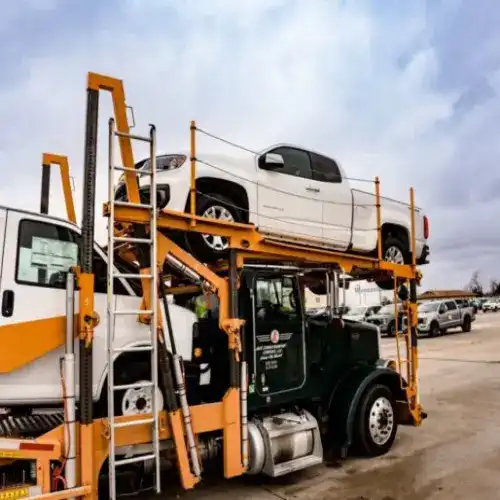
Open car hauling means transporting vehicles on an open-deck trailer with no walls or roof. The cars are exposed to weather and road debris, visible to everyone on the highway. This is the standard way most vehicles get shipped – from new cars headed to dealerships to used cars bought at auction. In fact, approximately 90% of car shipments are made using open trailers, making open carriers the workhorses of the car hauling industry. An open trailer often has two levels and can carry anywhere from 2 to 10 vehicles at a time, depending on its size and configuration. For example, a 3-car wedge trailer pulled by a pickup is a common open setup for hotshot operators, while a 7–10 car stinger-semi trailer is used by larger auto transport carriers.
Enclosed car hauling, on the other hand, involves transporting vehicles inside a closed trailer. The cars ride in a trailer with side walls and a roof, shielded from rain, snow, sun, and road debris. Enclosed trailers typically carry fewer vehicles (often 1 to 6 cars, due to size and weight limits) and are used for special situations – think classic cars, luxury sports cars, or motorcycles that require extra protection. Only a small fraction of shipments (perhaps 10% or less) go by enclosed carrier, because most customers opt for the cheaper open option unless protection is absolutely necessary. If your business targets high-end clients or specialty vehicles, enclosed service can be a premium niche.
Key differences at a glance: Open trailers are cheaper to acquire and operate, can haul more cars per trip, and are widely available. However, they expose vehicles to the elements and potential minor damage (like rain, snow, or rock chips from the road). Enclosed trailers cost more, haul fewer cars per load, and can be harder to find loads for – but they offer superior protection and security. As we’ll explore below, these differences impact everything from your rate per mile to how a car hauling dispatcher will plan your routes.
Equipment Costs and Investment
One of the first factors to consider is the investment in equipment. An open car hauler trailer generally costs less to purchase and maintain than an equivalent enclosed trailer. Open multi-car trailers are relatively common – you can find used 3-car or 7-car open trailers on the market at a reasonable price. Enclosed car carriers, especially those built to haul multiple vehicles, are specialized and often custom-built, which drives up the price. For instance, a new 4-car enclosed trailer with lift gates and a climate-controlled interior can cost significantly more than a standard 4-car open gooseneck trailer.
Besides the up-front purchase price, think about ongoing costs. Enclosed trailers are heavier and less aerodynamic due to the boxed-in structure, which means your truck will burn more fuel per mile compared to pulling an open trailer. Tires, brakes, and other components may also wear faster under the extra weight. In contrast, an open setup is lighter and puts less strain on the tractor, yielding better fuel economy. Maintenance on an open trailer (e.g. fixing ramps, hydraulic deck lifts, or replacing straps) is generally straightforward. Enclosed trailers have more components (like solid side walls, liftgates or winches for low-clearance cars) that can require maintenance or repairs.
Capacity differences: A key advantage of open trailers is volume – they can haul many vehicles at once. If you’re running a 7-car open carrier, you can generate revenue from multiple units in one trip. An enclosed hauler might only fit 2 or 3 cars (especially if they are large or you need space to avoid any contact between vehicles). This means to earn the same gross revenue in one run, an enclosed hauler often needs to charge much higher rates per vehicle. We’ll discuss rates in the next section, but this capacity factor is fundamental. Many owner-operators start out with open trailers because it’s easier to scale up your income by simply loading more cars.
However, don’t count enclosed trailers out just because of cost. If your business model is to cater to high-paying clients (say a customer with a $200,000 Ferrari or a rare classic that absolutely cannot see a drop of rain), those clients are willing to pay a premium that makes the enclosed setup worthwhile. The equipment investment is higher, but so is the potential pay per mile with the right loads. A car hauler dispatcher who understands your equipment can help find loads that justify the use of your rig – for example, locating two luxury cars along the same lane to fill your enclosed trailer so you’re not moving half-empty.
From a car hauling dispatch service perspective, knowing your equipment and its capabilities is step one. Your dispatcher will ask: How many cars can you carry? What’s your trailer type and weight limit? For open trailers, they might look for mix-and-match loads (like a couple of sedans and an SUV) that maximize your space. For enclosed trailers, they’ll prioritize the highest-paying vehicles or even single-car loads that cover your expenses. In other words, the cost and capacity of your equipment directly influence how a dispatcher plans your work.
Rates and Revenue: Open vs Enclosed Car Hauler
Of course, one of the biggest questions is: Which option makes more money? Generally, enclosed car hauling pays a higher rate per mile than open hauling – but you also haul fewer cars at a time. Let’s break down the earnings:
- Rate per mile: It’s common to see enclosed loads paying about 30–50% more per mile than equivalent open loads on the same lane. Shippers know they must pay extra for the exclusive, protective service of an enclosed carrier. For example, if an open trailer job offers $0.60 per mile per vehicle, an enclosed haul for a similar route might pay around $0.80 per mile for that car (or even more). In 2025, industry data shows enclosed auto transport has a higher cost (often up to 50% more) than open transport. That premium reflects the added value of protection. Still, as any experienced car hauling dispatcher will tell you, it’s not just about the per-mile rate – you have to keep your trailer full.
- Total load earnings: An open car hauler dispatcher will try to fill all your spots – say 7 cars at $0.60 each, which would gross about $4.20 per mile in revenue. An enclosed hauler might only move 2 or 3 vehicles at $0.80 to $1.00+ per mile each. Two cars at $1.00 per mile gives $2.00 per mile gross, which is less overall than the open trailer in this scenario. To match the open trailer’s revenue, an enclosed carrier needs either more cars (limited by space) or a much higher rate (like a single exotic paying $2.00+ per mile). The good news is that such high-paying loads do exist in enclosed hauling – for instance, transporting a rare antique car for a museum or an urgent dealer transfer of multiple luxury vehicles. A seasoned car hauling dispatcher knows that a single Ferrari or Lamborghini can sometimes pay what three ordinary sedans would pay on an open trailer.
- Load availability: It’s not just about posted rates, but how often you can get them. Open car loads are abundant – there are thousands of vehicles being shipped open on any given day. This means an open trailer can stay busy, though rates might fluctuate with seasonal demand. Enclosed loads are fewer and can involve waiting for the right customer. You might get a $3 per mile enclosed job one week, then struggle to find a good follow-up load the next. Consistency can be a challenge when running strictly enclosed, especially if you are picky about price. A skilled car hauler dispatch service will use load boards, broker contacts, and industry networks to find you those diamond-in-the-rough enclosed loads and to plan your schedule so you’re not sitting idle. They might also advise when it makes sense to take a slightly lower-paying load to reposition your truck into a hotter market, especially with enclosed hauling where markets can be niche.
- Seasonal swings: Both open and enclosed car hauling are seasonal, but open carriers tend to feel the ups and downs more strongly. During peak car-shipping season (spring and summer, and the fall “snowbird” migration), open trailer spot rates often rise because demand surges. In slower periods (like mid-winter), open rates can dip as many trucks chase fewer cars. Enclosed demand also has seasons – e.g. classic car auctions or luxury events might spike enclosed shipments at certain times. However, since it’s a smaller segment, a handful of big jobs can keep you rolling. From late fall into early winter, many drivers report the car haul market slows down; it’s not peak season now for either segment, but after the New Year, freight gradually gets better toward spring as dealers restock inventories and snowbirds return north. A knowledgeable car hauling dispatcher will factor these trends into your planning. In the slow season, an open carrier might diversify (haul different types of vehicles or adjust lanes), whereas an enclosed carrier might accept more moderate-paying loads just to keep moving until the high-paying jobs pick up again.
Pro Tip: Using a professional car hauling dispatch service can help you adapt to market swings. When rates drop, your dispatcher might find alternate routes or combined loads to keep you profitable. In peak season, a great car hauling dispatcher will ensure you’re booked on the highest-paying loads first.
Operations, Risks, and Challenges on the Road
Running an open versus enclosed car hauling operation will feel quite different day-to-day. Here are some operational factors to weigh:
- Loading and unloading: Open trailers often have built-in ramps or hydraulic decks to position vehicles on upper and lower levels. Loading a 7-car open trailer can be a puzzle – you must arrange vehicles by size and weight, drive them carefully up steep ramps, and secure each one with wheel straps or chains. It’s a time-consuming process, but one that becomes routine with practice. Enclosed trailers add an extra layer of complexity: you might be loading expensive cars with very low ground clearance (imagine a Lamborghini or Corvette) using liftgates or long ramps. There is little room for error inside an enclosed trailer – just inches of clearance around the vehicle. Many enclosed carriers use special equipment like winches, soft tie-downs, and floor tracking systems to secure cars without touching the vehicle’s body. A good car hauling dispatcher will schedule your pickups with enough time to load carefully, knowing you can’t just toss cars on an enclosed trailer in a hurry. Safety and damage prevention are paramount.
- Risk of damage: Open carriers expose vehicles to the weather, road salt, debris, etc. While serious damage is rare, minor scratches or paint chips can occur. Enclosed carriers shield vehicles from these outside risks, but loading incidents (like scraping a car on the trailer wall, or a tie-down slipping) are still possible. Insurance is a big piece of the puzzle here. If you’re hauling a load of average cars on an open trailer, you might carry cargo insurance that covers perhaps $50,000 per vehicle. If you’re hauling three Lamborghinis in an enclosed trailer, you may need coverage for $250,000+ per car. Insurance premiums for enclosed car haulers are often higher because the stakes are higher with exotic cargo. Every car hauler dispatch service wants to avoid claims, so they will remind you to double-check securement. (In fact, FMCSA requires at least two tiedowns per vehicle – front and rear – and many pros use four per car.) Whether you operate open or enclosed, proper securement and safe driving are critical to your success.
- Regulatory constraints: Both open and enclosed car carriers must comply with the same regulations for dimensions and weight. But an interesting difference is height: an open car hauler with a full load can be very tall – often pushing close to the 13-foot 6-inch legal height limit once you’ve got SUVs on the top deck. This means route planning is vital to avoid low bridges or overpasses. Enclosed trailers have a fixed roof height, so if your trailer is built to 13′6″ high, anything that fits inside should automatically clear bridges – you gain peace of mind on height, but you’re limited on what can fit inside (extra-tall or wide vehicles simply won’t load). Enclosed units also tend to be heavier (due to the walls/roof), so it’s easier to hit the 80,000 lb gross weight limit with fewer vehicles on board. You might need to skip taking a third large vehicle because of weight, even if physically it fits. A car hauler dispatcher familiar with your rig will factor in these constraints when finding you loads. For example, they won’t dispatch you three oversized SUVs if your enclosed trailer can only take two without exceeding weight limits. Open carriers also have to watch weight distribution, but they have a bit more flexibility to adjust where cars sit on the trailer axles.
- Client expectations: When you run an open trailer, you’re providing a standard service – many customers (dealers, auctions, individuals) are fine with it because it’s the industry norm. When you run enclosed, the clients often have higher expectations. They might expect white-glove treatment: absolutely on-time delivery, constant communication, and a pristine vehicle on arrival. You’re dealing with more demanding customers on average (someone shipping their show car or a luxury dealership manager). This means the level of professionalism and service required is elevated. Many enclosed car haulers even dress more professionally and will sometimes detail the vehicle upon delivery as part of the VIP service. If that’s the niche you want, it can build a strong reputation (and repeat business), but be prepared for the extra effort. From a car hauling dispatch service viewpoint, we know that enclosed haulers might spend more time per delivery – and that’s okay, as long as the rate reflects it. In dispatch terms, fewer loads per week is fine if each load pays great and the customer is happy.
- Finding and scheduling loads: As mentioned earlier, open load postings on boards are plentiful. You might not worry about finding a load, but rather focus on finding the best paying ones or combining multiple pickups efficiently. A car hauling dispatcher may be juggling 5–6 different vehicles to fill an open trailer, coordinating multiple pickup appointments that all align. Enclosed haulers often move one customer’s car (or a set of cars) directly, so the dispatch task is more about hunting down that next single load that’s worth your while. Networking is key: brokers and customers need to know you offer enclosed service. Sometimes enclosed work comes through word-of-mouth or repeat clients more than load boards. An experienced car hauler dispatcher will keep an ear out for special requests (like a race team that needs a car moved to the next track, or a movie production needing vehicles transported) that aren’t publicly advertised.
Open or Enclosed Car Hauler: Making the Right Choice for Your Business
So, open vs enclosed car hauling – which is better? The honest answer is that it depends on your business model. Here’s a recap and decision guidance:
- Open hauling advantages: Lower startup costs, easier to find loads consistently, ability to haul many cars at once, and generally simpler operations. If you’re a newer owner-operator or have limited capital, starting with an open trailer gets you earning sooner with less financial risk. You’ll tap into the huge market of standard vehicles that need transport. A competent car hauling dispatcher can usually keep an open carrier busy every day, negotiating good rates on volume moves. Open trailers are ideal if you want steady cash flow and don’t mind the hustle of multi-load logistics.
- Open hauling drawbacks: High competition (since so many carriers run open trailers), lower pay per car, and exposure of cargo to the elements. During slow seasons, open carriers might feel rate pressure because there are plenty of trucks available for those loads. Also, some prestige clients won’t consider open transport, so you miss out on that niche. You may deal with more frequent but smaller payouts (moving many cheaper loads).
- Enclosed hauling advantages: Ability to command premium rates and carve out a niche market. With an enclosed rig, you position yourself as a high-end service provider. There’s often less competition in this space – not everyone has an expensive enclosed trailer or the patience for white-glove service. Those who do can build a reputation and client list that is very loyal. A car hauler dispatcher working with enclosed loads can often negotiate higher rates because clients value the service (and they usually have high-value vehicles that absolutely need careful handling). Enclosed is great if you enjoy providing top-notch service and want to earn more per mile with potentially less total mileage and fewer cars.
- Enclosed hauling drawbacks: Bigger up-front investment and potentially irregular work. You might go a few days waiting for that perfect high-paying load, whereas an open trailer might take something daily. Cash flow can be spikier – one week you hit a big score, another week might be lean. Not every market has enough luxury or special vehicles moving around to support a full-time enclosed operation, so you may need to deadhead (drive empty) longer distances to areas where enclosed demand exists. You also have to be comfortable dealing with very meticulous customers. For some, that added stress isn’t worth it. A car hauling dispatch service can help smooth out the ride by finding creative ways to keep you loaded (for instance, pairing two partial loads for different customers in one trip), but it requires patience and planning.
Bottom line:If you’re in this business for volume and reliability, open car hauling is generally the better bet. If you’re aiming for higher-end work and are willing to invest time and money for potentially greater rewards, enclosed car hauling can pay off. Some owner-operators even do both over time – maybe start open, then later add an enclosed trailer to their fleet once they have the revenue base. Which is better for your business ultimately comes down to your goals and resources. It’s wise to evaluate your lanes (are you near areas with luxury cars or mostly standard vehicles?), your financial cushion (can you afford the enclosed trailer and possible downtime?), and your personal preference for the kind of work you enjoy.
No matter which path you choose, aligning with a reliable car hauler dispatch service can make all the difference. With the support of a dedicated car hauling dispatcher, you’ll have an expert constantly working to optimize your loads and negotiate top rates on your behalf. Here at Dispatch Republic, car hauler dispatch service isn’t just a term – it’s our specialty. Dispatch Republic’s car hauler dispatch service is singularly focused on keeping car carriers loaded and profitable. Our team will assign you a personal car hauling dispatcher who focuses on your preferred lanes and trailer type. That means whether you need to fill a 7-car open carrier or secure a single enclosed load, your car hauling dispatcher is on it. Trucking is tough enough – let a professional car hauler dispatch service handle the load hunting, paperwork, and scheduling so you can focus on driving. (And whether you need a full car hauling dispatch service or a single dedicated car hauler dispatcher for your operation, we’ve got you covered.)
Dispatcher’s Insight: Even if you run an enclosed trailer, a dedicated car hauler dispatcher can find creative opportunities. A savvy car hauler dispatch service might coordinate with luxury dealerships or auction houses to secure you exclusive contracts, keeping your high-end trailer busy and well-paid.
In short, every owner-operator can benefit from having a car hauling dispatcher manage the complexities of car transport.
If you’re an owner-operator hauling specialized freight, don’t go it alone. Explore Dispatch Republic’s box truck dispatch services and car hauler dispatch services to access top-paying loads and compliance support. Check out our car hauling dispatch services and blog for more tips. Our dispatchers are experts in car hauling loads, flatbed loads, and reefer loads – we can match your truck to the best freight and handle the paperwork. Let us help you keep your rig loaded, safe, and legal.
For a deeper dive into the hotshot hauling business, read our Box Truck vs. Dry Van: Which Is Better for Your Business? and Step Deck vs. Flatbed: Which Is Right for Your Fleet?
Ready to make the most of your trucking business? 🚚💨 Reach out to Dispatch Republic and let our experts help maximize your earnings with tailored reefer dispatch service and dry van dispatch service solutions. We’ll handle the logistics while you keep on truckin’. Contact our truck dispatch service to get started on the road to greater profits and less hassle!
For more detailed guides, check Dispatch Republic’s resources on dispatching and the trucking business. Recent FMCSA Rule Changes for Immigrant CDL Holders if you’re weighing career paths, and Hotshot Dispatch and Compliance: Key Regulations Every Dispatcher Should Know to understand the dispatch side of the business.
If you’re an owner-operator juggling multiple responsibilities, consider partnering with a professional truck dispatch service to take the load off your shoulders—literally. At Dispatch Republic, we specialize in helping carriers run smarter and earn more by expertly managing load boards, negotiating top rates, and handling paperwork for dry vans, reefers, flatbeds, box trucks, step decks, and even hotshots. Our team monitors multiple premium load boards around the clock, ensuring your truck stays loaded with the right freight, at the right rate, on the right lane. Whether you’re scaling up or just getting started, having a dedicated dispatch team in your corner means fewer empty miles, less stress, and more time to focus on driving and growing your business.
Frequently Asked Questions
It depends on your niche and business goals. If you’re just starting out or haul mainly standard vehicles, sticking with an open trailer is usually the safer bet – it’s cheaper to run and there’s a larger pool of loads. On the other hand, if you have access to customers with high-value cars (or you want to specialize in that market), an enclosed car hauler can set you apart. Just be ready for higher costs and possibly more downtime between loads. Many owner-operators begin with an open car hauler to build capital, then later invest in an enclosed rig once they see an opportunity. Think about your local market: are there luxury dealers, classic car shows, or auction events nearby? If yes, an enclosed trailer might fetch premium jobs. If not, an open trailer will keep you busy more consistently.
Enclosed car hauling generally pays significantly more per mile – often 30% to 50% higher rates than open hauling on the same lanes. For example, if open carriers are getting about $0.60 per mile per car, an enclosed carrier might get $0.90 or even $1.20 for a similar route, depending on the vehicle and urgency. We’ve seen cases where a single enclosed load (like a rare sports car) paid as much as hauling 3–4 ordinary cars on an open trailer. However, remember that you might not always have multiple enclosed cars at once, so your total income in a week could still be lower if you can’t find enough loads. That’s where working with a savvy car hauling dispatcher becomes valuable – they’ll help find those top-dollar loads to maximize your earning potential with an enclosed unit.
It can be challenging at times. There are definitely fewer enclosed car hauler loads out there than open loads. Many enclosed carriers stay busy by being flexible – they might haul one luxury car one day, then two motorcycles or an antique on the return trip. Networking is crucial: you want brokers and dealerships to have your number and know you’re available. If you rely solely on public load boards, you might find gaps. Some regions have more enclosed freight than others (big cities, luxury car hubs, warm states in winter for snowbirds, etc.). A car hauler dispatch service can greatly help here by constantly searching various sources for you. They can also coordinate backhauls (like picking up another high-value vehicle on your way back) so you’re not running empty. Yes, you can stay busy with enclosed hauling, but it requires hustle and often a car hauler dispatcher working alongside you to line up the next job.
For the most part, yes – open transport is generally safe and is used for the vast majority of vehicles, even new ones coming from the factory. Reputable carriers use proper securement (at least two straps or chains per car, often four) and carry plenty of insurance. However, if a car is extremely expensive or uniquely sensitive (like a vintage show car with perfect paint), open hauling does carry a small risk of road debris or weather exposure. Most owners of high-end cars prefer enclosed shipping for peace of mind. If your customer insists on the absolute safest method, you should recommend enclosed transport. But if they’re simply looking to save money, an open trailer with a careful driver can still do the job just fine. In our dispatch experience, we’ve seen car hauling dispatch service teams arrange open transport for luxury cars without issues – but we always make sure the owner understands the risks. It’s about the client’s risk tolerance and budget.
A car hauling dispatcher is like the air-traffic controller for your car hauling business. This person (or team) finds and books loads, negotiates rates, and handles the logistics of scheduling pickups and deliveries for you. For example, if you’re an owner-operator with a 5-car trailer, a car hauling dispatcher will search load boards and call brokers to fill those 5 spots with the best-paying vehicles heading in your direction. They plan efficient routes so you’re not zig-zagging all over, handle paperwork like load confirmations, and keep you aware of all the details (addresses, contacts, special instructions). A car hauler dispatcher focuses specifically on vehicles – they know the nuances of auto transport (like required condition reports, dealing with dealerships or auctions, etc.). If you work with a car hauling dispatch service, you essentially have an expert partner managing your load planning while you focus on driving. They’re paid a fee or percentage, but a good car hauling dispatch service is like having an experienced guide who usually increases your income well beyond their fee by keeping your trailer loaded with better freight. In short, a car hauling dispatcher (often working as part of a car hauler dispatch service) is dedicated to optimizing your loads and taking the logistics burden off your shoulders.
Absolutely. In fact, if you run an enclosed trailer, having a dedicated dispatch service is often a smart move because enclosed opportunities can be like finding needles in a haystack. A car hauling dispatch service will use its connections with specialty brokers, online marketplaces, and past clients to locate the kind of high-paying, enclosed-specific loads you need. They might know, for example, that an elite auto auction is happening next month and secure you a booking to haul some classic cars from it. Or they could hear that a luxury dealership relocation is coming up that requires enclosed transport. A skilled car hauling dispatcher keeps their ear to the ground for these opportunities. They’ll also negotiate better rates on your behalf, emphasizing the premium service you offer. If you tried to do all this while driving, it would be tough – that’s why many enclosed car carrier owner-operators team up with a car hauler dispatch service to stay profitable. In summary, an experienced car hauling dispatch service dramatically increases your chances of finding profitable enclosed loads consistently – think of it as a matchmaking service between your truck and those hard-to-find shipments.
For many, yes, it is worth it. When you’re handling all the driving, plus dealing with customers, inspections, maintenance, etc., having someone in your corner to take care of finding loads can be a lifesaver. A car hauler dispatch service typically charges a percentage (like 5–10% of the load price) or a flat fee per load. In return, they may boost your earnings by more than that – by getting slightly higher rates, keeping you loaded more consistently, and finding better routes. Plus, they save you hours of phone calls and stress. For a new owner-operator, a good car hauling dispatch service is like having an experienced guide; they can teach you market trends (for instance, advising when the market is slow in one region and suggesting you move to another hot area). Of course, you should choose a reputable car hauling dispatch service with proven experience in auto transport. Working with a truly professional car hauling dispatch service ensures you get maximum value. The bottom line: if you feel you’re missing opportunities or spending too much time hunting loads, a car hauler dispatcher can likely add a lot of value to your business. In fact, many owner-operators in the car hauling business find that partnering with a car hauler dispatch service or an expert car hauling dispatcher is one of the smartest moves to improve their bottom line.
Whether you run an open carrier or an enclosed trailer, having the right support can make a huge difference. As a leading dispatch partner for car haulers (car hauler dispatch service provider), Dispatch Republic is here to help. We know that whether you call our support a car hauling dispatcher or a car hauler dispatch service, the goal is the same: keeping your truck loaded and your business profitable. If you want steady high-paying loads and expert route planning, contact Dispatch Republic today to learn how our car hauling dispatch service can start working for you. Let our experienced team of car hauler dispatch service professionals keep your truck loaded and your business growing – so you can stay focused on the road ahead. For open and enclosed carriers alike, our car hauling dispatch service and our car hauler dispatcher experts are dedicated to maximizing your earnings.
Ready to Take Your Trucking Career to the Next Level?
Whether you’re an owner-operator, a company driver, or a carrier company in need of truck dispatch services, Dispatch Republic is here to help. Our teamof experienced truck dispatchers offers affordable, professional truck dispatch solutions designed to save you time, increase your earnings, and make your business more efficient.
Thinking about outsourcing your truck dispatching? Contact Dispatch Republictoday and move smarter, not harder.
Found our Blog useful? Spread the word:
Check our latest posts:
[latest_posts_grid]
Contact us today to see how our team can support your trucking business.