Table of contents
The car hauling industry is riding a wave of change. Between shifting freight market trends and new regulations, the way we find car hauling loads and manage fleets is evolving fast. As 2026 approaches, owner-operators and fleet managers must adapt their strategies. In this post, we cut through the noise and share practical, forward-looking advice on dispatching, insurance, compliance, and technology. Whether you’re an independent carrier or run a small auto transport fleet, you’ll find concrete tips and real-world examples to help you stay ahead.
Freight Market Trends Shaping Car Hauling
The freight market has softened, and volumes are down from their highs. Industry data shows 2025 freight volumes about 3% below 2024 levels. Spot rates for vans, reefers, and flatbeds were barely above last year (roughly +0.5% YoY) through late 2025. In other words, demand is flat and competition is fierce. For car haulers, this means finding car hauling loads can be harder. At the same time, many smaller carriers have left the market under pressure from high costs and slim margins.
Most forecasts call for only a modest recovery in 2026. Experts expect freight demand to pick up by mid-2026 as the economy stabilizes. For carriers, that suggests planning conservatively now but preparing to ramp up later. In practice, manage your car hauling loads today by keeping trailers full on solid routes (dealers, auctions, relocations) and by setting rates that cover your costs. For example, target busy auto hubs (like Chicago, Miami, or Dallas) so your schedules stay packed – these markets tend to send out more auction and dealer loads. Consider multi-month contracts or retainer deals with brokers and dealers to lock in steady work when spot rates are soft.
Manufacturing shifts and consumer behavior also affect auto freight. High-end goods have drawn consumer dollars away from basic models, but online auto sales and relocation moves keep demand fairly steady. Building relationships with rental car fleets or corporate relocation companies can create “off-season” opportunities. Broadly speaking, some capacity is beginning to tighten. Recent data show spot rates creeping up as weaker carriers exit, and rules that could remove up to 200,000 drivers by late 2026 (e.g. new CDL/visa restrictions) are looming. Locking in business now, running lean, and staying flexible will help you capture the freight you need.
Economic and Industry Forces
Beyond pure freight numbers, watch macro factors. Trade policy (new tariffs or deals) can swing shipments of vehicles and parts. Fuel price swings directly hit your profits – a 10% jump in diesel means re-negotiating fuel surcharges or rate increases. On the labor side, driver pay and bonuses are rising as fleets fight to hire. All of these factors will tilt the balance of supply and demand for car loads. Stay plugged into industry news and economic indicators so you can adjust your forecasts and pricing quickly.

Technology & Economic Drivers
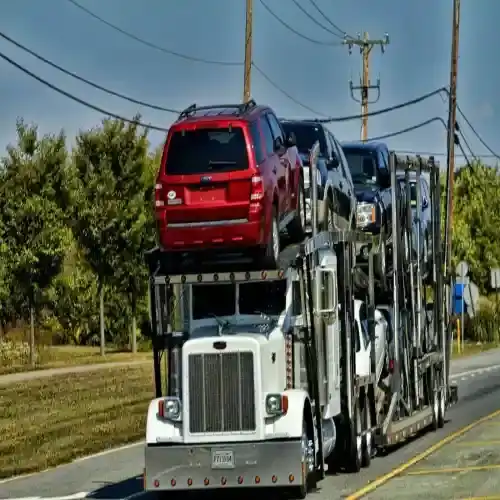
On the technology side, big changes are coming fast. One major trend: electric and hybrid vehicles. EVs and hybrids are rapidly growing their share of production – about 7.5% of new cars in 2025. More battery-powered cars on the road means two things for haulers: opportunity (new lane types, often higher-paying) and new challenges. EVs are heavier than their gas counterparts. For example, an 8-car trailer might carry eight sedans, but replace those with EVs and you could hit the 80,000 lb GVW limit much sooner. This requires careful loading: heavier EVs should go on the bottom deck to balance weight, and you may carry fewer cars per trip.
Also, electric vehicles require special handling. Their batteries often must be kept at around 30% state of charge during transport, and you may need to top them up. Car hauler tips for EV loads include charging them to 30–50% at pick-up and using insulating blankets on battery packs. Ensure your equipment (straps, chains) is rated for the extra weight, and carry appropriate non-conductive straps or wheel chocks. You may even consider a trailer with an onboard battery or charging outlet to handle in-transit top-ups. (For more on this, see our Electric and Hybrid Vehicle Transport guide.)
Digital tools are also reshaping the game. Advanced route-planning software and telematics can slash deadhead miles and fuel use. Some fleets use AI-powered dispatch platforms to match trucks and loads more efficiently than general load boards. On a simpler level, make sure every truck has a modern GPS app that warns about low bridges, weather delays, or weigh stations. Even basic adoption of Electronic Logging Devices (ELDs) and a good load-tracking app can boost compliance and reliability. In short, embrace technology that cuts costs: every minute and gallon saved directly improves your margin.
Dispatch Strategies for Car Haulers
A smart dispatch strategy is the best defense in a soft market. Here are expert car hauler tips to keep your trailer full and your profits up:
- Leverage specialized dispatchers. Auto transport is its own niche – it involves multi-stop pickup planning, specialized paperwork, and unique customers (auctions, dealers, private shippers). A dedicated car hauler dispatcher knows the auction schedules, dealer preferences, and broker expectations. For example, a Dispatch Republic dispatcher will schedule your loads around short auction turnarounds and dealer windows. They can combine several smaller jobs into one circuit, boosting your effective earnings per mile.
- Be selective with loads. Never take a load that won’t pay your costs. Always calculate fuel, tolls, insurance, and wear-and-tear before accepting a rate. If a load doesn’t make sense, decline it – you have the final say. A professional dispatcher respects that decision and finds the next load. This simple tip (don’t run at a loss) is one of the most powerful car hauler tips for protecting your bottom line.
- Plan multi-drop runs. Efficiency means chaining pickups and drops whenever possible. For instance, after loading at an auction, look for a nearby dealer or another auction on the way home. Combining car hauling loads this way increases revenue per trip. Many top brokers offer “interlining” options where two carriers share a long run; your dispatcher should pursue these to minimize empty segments.
- Use load boards wisely. Even with a dispatcher, checking specialized car-hauling boards (like Central Dispatch) can uncover extra opportunities. Some smaller brokers and private shippers post only there. Verify that your dispatcher has access to the same boards so you don’t miss a lucrative run.
- Build strong relationships. Repeat business is gold. Do great work for a dealer, relocation company, or rental fleet, and they’ll call you first next time. Communicate clearly: confirm bookings quickly, update clients on ETAs, and deliver loads in the promised condition. Satisfied customers often cut through broker fees or paperwork requirements over time, speeding up bookings. This reliability can keep car hauling loads coming during slow periods.
- Own the paperwork. Keep all your operating authority, insurance filings, and inspection records up to date and in your truck. When a dispatcher or broker asks for a carrier packet, have it ready. For example, have copies of your W-9, your signed carrier packet, and any required shippers’ logos or inspection forms. If your paperwork is ready, you’ll avoid booking delays. (Our dispatch team can assemble draft packets, but you must supply signed documents and correct DOT numbers.)
In practice, a top dispatch partner does many of these tasks for you: negotiating rates, assembling packet docs, setting up fuel cards or factoring, etc. For instance, a Texas carrier came to Dispatch Republic struggling with empty miles. In his first week on our system, we arranged multiple auction and dealer shipments, grossing $14,400 on his 7-car trailer. That’s the power of pairing our dispatch strategies with carrier effort.
Compliance: Staying Legal and Safe
Compliance is non-negotiable and keeps getting stricter. In late 2025 FMCSA began rolling out a unified registration system – your USDOT number is now the primary ID for your authority, replacing separate MC numbers. If your trailers or paperwork still show an MC number, update them to the USDOT number now. FMCSA also tightened CDL and immigration checks. For example, they now strictly verify non-citizen credentials and will no longer allow mail-in renewals. This means any driver with a questionable status can be pulled from service quickly. The bottom line: make absolutely sure each driver’s documents (CDL, passport/visa, medical card, etc.) are current and match FMCSA’s requirements, or you may fail an audit.
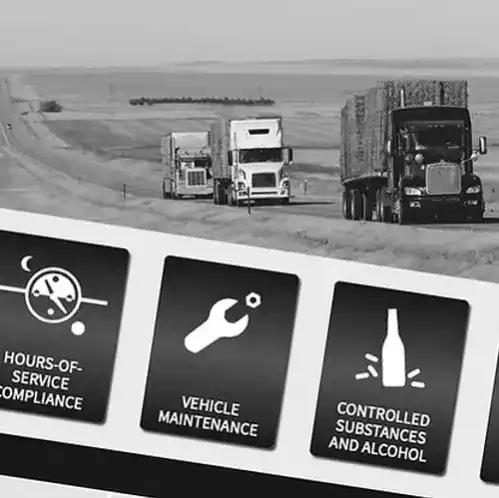
On the safety side, expect closer scrutiny. Inspectors know car loads involve valuable cargo. Before every trip, check every strap, chain, and light. Each car’s wheels must be blocked or strapped per FMCSA guidelines, and oversize overhangs must be flagged. Also, log your hours carefully – car haulers must follow the same hours-of-service rules as other CDL-A drivers. A single log error or missing light can trigger a roadside citation that wipes out your profit for the week.
Here’s a golden car hauler tip: keep all paperwork in order during inspections. If a DOT officer asks, show them your driver’s log, your updated packet, and proof of insurance immediately. Carriers with perfect records sail through. We always advise clients to carry extra sets of permit stickers and keep their Unified Carrier Registration (UCR) and biennial MCS-150 filings current – even a small mistake on those forms can lead to hours of hassle. If that sounds overwhelming, remember you can lean on experts like a car hauler dispatch service to help manage compliance filings and reminders.
Speaking of insurance, car hauling insurance is a big part of compliance. By law, interstate carriers must carry at least $750,000 in liability coverage. In auto hauling, however, almost all brokers insist on $1,000,000 liability. For cargo, FMCSA’s bare minimum is only $5,000 per vehicle – a trivial amount given the value of modern cars. We often see carriers carry $250,000–$500,000 cargo insurance per truck to cover the high risk. Never drop coverage to the federal minimum – doing so will shut you out of the best loads and expose you to massive losses if something happens.
Car hauler compliance also covers other recurring tasks: paying your Unified Carrier Registration dues each year, renewing IRP (license plate) and IFTA (fuel tax) filings on time, and maintaining your drivers’ drug-test and medical records. One common trap is forgetting the biennial MCS-150 update – even a minor address change can trigger an audit. Avoid this by either setting calendar reminders or letting your dispatcher track the dates for you. In short, think of compliance as ongoing maintenance: a few minutes each week on paperwork can prevent a costly enforcement stop later.
Car Hauler Tips for 2026 and Beyond
Let’s wrap up with some actionable car hauler tips you can use today:
- Plan loads ahead. Use a calendar or planning app. Mark major auction dates and typical model-year changeover seasons. If you know, say, that mid-April and early October see a flood of dealer and auction shipments, line up a set of back-to-back loads for those weeks. Our dispatchers often book a week or two in advance to guarantee full trailers.
- Optimize routes. Minimize empty miles. Stack loads geographically: e.g., run north–south down the East Coast rather than zig-zag. After dropping cars at dealers, look for a known backhaul spot (like a nearby open yard or an out-of-season relocation job). Even one extra car on a return leg can pay for your fuel.
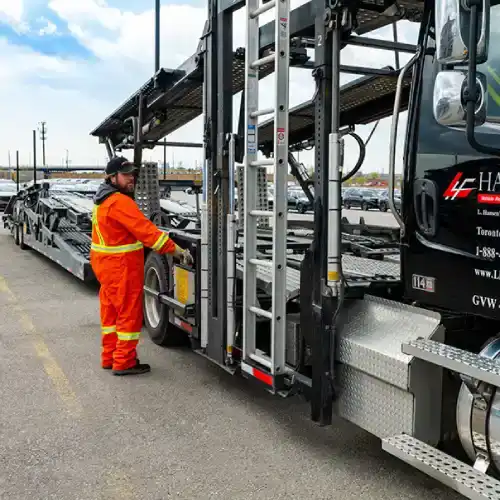
- Maintain your equipment. Keep your trucks and trailers in top shape. Check brakes, lights, and ramps at every stop. Carry spare straps, shackles, and a toolbox. A common advice from veteran haulers: have at least one good spare tire per trailer on hand. A breakdown on the way to an auction load not only costs time but could cancel your entire run.
- Train and support drivers. If you run more than one truck, make sure each driver knows how to handle your specialized loads. Teach them EV specifics and load-leveling techniques. Encourage them to use apps to check weigh-station status or find low emissions zones. Keeping drivers happy and healthy (adequate rest, good food, exercise) pays off: a rested driver is safer and more efficient.
- Leverage dispatch expertise. Remember, a dispatcher’s job is to grow your business. For example, Dispatch Republic’s team will not only find loads but also negotiate rates and organize routes. As one client said, “they build momentum for your operation, not just book one-offs.” In fact, after using our car hauling dispatch service, one owner-operator earned $13,700 in one week on coordinated runs – well above what he managed on his own.
Each of these tips hinges on proactive planning and using available resources (like digital tools and professional dispatch help). Running an auto carrier business means juggling a lot; our dispatchers free you up to focus on driving while they handle the rest.
Key Term Recap
To summarize, the following core terms are the focus of this article: car hauling loads, car hauler tips, car hauling insurance, and car hauler compliance. Each term appears repeatedly above:
- Car Hauling Loads: A carrier’s livelihood depends on finding steady car hauling loads. We discuss strategies to book consistent car hauling loads and mentioned car hauling loads throughout the post. These car hauling loads (jobs for transporting vehicles) are central to your revenue, so you’ll see the phrase car hauling loads used many times above. For emphasis: car hauling loads, car hauling loads, car hauling loads.
- Car Hauler Tips: We included practical car hauler tips at every step. Our car hauler tips cover dispatching strategy, cargo loading, and safety. These tips are repeated above (car hauler tips for routes, car hauler tips for compliance, equipment tips). Note the emphasis: car hauler tips, car hauler tips, car hauler tips.
- Car Hauling Insurance: The term car hauling insurance is a major focus when discussing coverage. You’ll notice we mention car hauling insurance often in the insurance section. We stress the importance of carrying enough car hauling insurance. The repetition is intentional: car hauling insurance, car hauling insurance, car hauling insurance.
- Car Hauler Compliance: Lastly, car hauler compliance appears frequently in our safety/regulatory sections. We stress car hauler compliance (following DOT/FMCSA rules) to emphasize staying legal. See how often we repeat compliance: car hauler compliance, car hauler compliance, car hauler compliance.
The road ahead is challenging but full of opportunity. By staying informed about car hauling loads, adapting dispatch strategies, and maintaining your car hauling insurance and car hauler compliance, you can come out ahead. And you don’t have to do it alone. A dedicated truck dispatch service knows the market and handles the legwork, so you can focus on driving. Contact Dispatch Republic to learn how our expert dispatchers and planning tools can help grow your business. Let us handle the haul so you can handle the wheel.
If you’re an owner-operator hauling specialized freight, don’t go it alone. Explore Dispatch Republic’s box truck dispatch services and car hauler dispatch services to access top-paying loads and compliance support. Check out our car hauling dispatch services and blog for more tips. Our dispatchers are experts in car hauling loads, flatbed loads, and reefer loads – we can match your truck to the best freight and handle the paperwork. Let us help you keep your rig loaded, safe, and legal.
For a deeper dive into the hotshot hauling business, read our Box Truck vs. Dry Van: Which Is Better for Your Business? and Step Deck vs. Flatbed: Which Is Right for Your Fleet?
Ready to make the most of your trucking business? 🚚💨 Reach out to Dispatch Republic and let our experts help maximize your earnings with tailored reefer dispatch service and dry van dispatch service solutions. We’ll handle the logistics while you keep on truckin’. Contact our truck dispatch service to get started on the road to greater profits and less hassle!
For more detailed guides, check Dispatch Republic’s resources on dispatching and the trucking business. Recent FMCSA Rule Changes for Immigrant CDL Holders if you’re weighing career paths, and Hotshot Dispatch and Compliance: Key Regulations Every Dispatcher Should Know to understand the dispatch side of the business.
If you’re an owner-operator juggling multiple responsibilities, consider partnering with a professional truck dispatch service to take the load off your shoulders—literally. At Dispatch Republic, we specialize in helping carriers run smarter and earn more by expertly managing load boards, negotiating top rates, and handling paperwork for dry vans, reefers, flatbeds, box trucks, step decks, and even hotshots. Our team monitors multiple premium load boards around the clock, ensuring your truck stays loaded with the right freight, at the right rate, on the right lane. Whether you’re scaling up or just getting started, having a dedicated dispatch team in your corner means fewer empty miles, less stress, and more time to focus on driving and growing your business.
Frequently Asked Questions
Focus on efficiency and safety. Plan routes that chain auctions and dealer drops, minimize empty miles, and use technology (like routing apps and telematics) for planning. Keep your paperwork organized, stay current with regulations, and work with a dispatcher who knows car transport. When loading, put heavier vehicles low and toward the front. These car hauler tips help you work smarter on every trip.
Insurance varies by carrier, but expect high costs. FMCSA requires $750,000 liability, but most auto carriers carry $1,000,000 or more. Cargo insurance is not federally mandated, but brokers usually demand high limits (often $100k+ per vehicle). Premiums have risen steeply (e.g. up ~8.9% YOY in late 2025). Shop specialty insurers, bundle policies, and maintain a clean safety record to keep rates manageable.
It means following all DOT and FMCSA rules for auto transport. Key items: valid operating authority (USDOT/MC), proper insurance filings, hours-of-service logging, and vehicle securement. For example, FMCSA has detailed securement rules specifically for trailers full of cars. You must also weigh your rig on scales to ensure legal weight, and have working lights on each vehicle. Staying compliant avoids fines. Having a knowledgeable dispatcher or consultant review your paperwork can help ensure nothing slips through the cracks.
Diversify your sources. Use specialized car-hauling load boards and brokers, but also network directly with auctions, dealerships, and rental companies. Position your truck near busy auto markets (like ports or major auctions) to get called for runs. A dispatcher often helps here; they have access to national load boards and broker contacts. We find that dedicated car-hauler dispatchers can consistently keep trucks rolling by tapping into multiple sources.
Keep an eye on electric and hybrid vehicles — hauling these is becoming routine and requires special handling. Also watch freight demand indices and interest rates, as they affect used-car moves. Regulatory changes (like the CDL visa rules and FMCSA’s unified registration) will keep evolving, so stay current on those. Lastly, efficiency tech (AI route planning, digital logs, EV charging logistics) will continue advancing. Those who adapt early will be best positioned when the market tightens and rates start to climb.
Ready to Take Your Trucking Career to the Next Level?
Whether you’re an owner-operator, a company driver, or a carrier company in need of truck dispatch services, Dispatch Republic is here to help. Our teamof experienced truck dispatchers offers affordable, professional truck dispatch solutions designed to save you time, increase your earnings, and make your business more efficient.
Thinking about outsourcing your truck dispatching? Contact Dispatch Republictoday and move smarter, not harder.
Found our Blog useful? Spread the word:
Check our latest posts:
[latest_posts_grid]
Contact us today to see how our team can support your trucking business.