
Table of contents
- Weather Hazards in Trucking: A High-Stakes Challenge
- Proactive Monitoring: Your Eyes on the Sky 24/7
- Smart Re-Routing Around Storms
- Constant Communication with Brokers and Shippers
- Ensuring Compliance and Safety During Delays
- More Than Booking Loads: A Partner in Tough Times
- The Dispatch Republic Difference: Always Here to Help
- Frequently Asked Questions
You’re hauling a load over a mountain pass when an abrupt blizzard hits, or a sudden downpour turns highways into rivers. Weather is one of the biggest wildcards in trucking, capable of upending even the best-laid plans. In fact, severe weather causes roughly 23% of trucking delays and costs the industry almost $3.5 billion each year. For owner-operators and small fleets, a major storm or road closure can spell lost revenue, missed deliveries, and serious safety risks. So how do smart truckers keep rolling when Mother Nature throws a punch? The answer for many is trucking dispatch support. A dedicated dispatch service acts as your back-office weather navigator, helping you adapt on the fly and stay safe. This post will explore exactly how dispatch services provide critical driver support services during weather-related disruptions – from re-routing around storms to re-booking loads and handling all the frantic phone calls – so you can keep moving forward even when the skies turn against you.
Weather Hazards in Trucking: A High-Stakes Challenge
Every trucker knows that the weather can be a make-or-break factor on any trip. The United States is a vast country with diverse climates, and high-risk trucking regions are scattered coast to coast. In winter, the Northern states and mountain corridors become high-risk trucking regions with blizzards and ice storms that shut down interstates. For example, Colorado’s high elevations and passes on I-70 often see sudden heavy snow, while Wyoming’s I-80 is notorious for whiteouts and gale-force winds. In the Southeast and Gulf Coast, hurricane season can bring torrential rain and flooding that wash out roads. The Great Plains are prone to severe thunderstorms, tornadoes, and high winds that make handling a tall trailer extremely dangerous. Even a typical summer downpour in the Midwest can slick the roads enough to cause accidents. Weather-related disruptions come in many forms:
- Road Closures and Delays: Authorities may close major highways due to blizzard conditions, black ice, fog, or hurricane damage. Detours can add hundreds of miles. If you’re on a tight schedule, a storm can easily make you late. Every year, truckers lose over 32 billion vehicle-hours stuck in weather-related traffic or shutdowns.
- Accidents and Safety Risks: Slippery roads and low visibility greatly increase crash risk. A patch of black ice or sudden crosswind can put a rig in a jackknife. Driver safety becomes a huge concern when nature turns the road treacherous. Seasoned drivers often share owner operator trucking tips about slowing down and keeping extra distance in bad weather – but even caution has its limits when conditions get extreme.
- Schedule Chaos: Weather doesn’t just slow drivers; it disrupts the whole supply chain. Shippers and receivers might shut down (think of warehouses losing power in an ice storm), appointments get missed, and reload plans fall apart. Loads can be rejected or delayed simply because a receiver closed early for a storm. All this uncertainty means constant coordination is needed to adjust plans.
- Compliance Pressures: Delays bump up against Hours of Service limits. If you’re stranded in a snowed-in traffic jam, your 14-hour clock doesn’t care – you could easily time out. The FMCSA does have an “adverse driving conditions” exception that lets drivers extend drive time by up to 2 hours to reach a safe stop. But this rule only applies if the bad weather was unforeseen before dispatch. In other words, if a storm was forecast and the load was dispatched anyway, you technically can’t use the extension. Navigating such fine print while you’re stressed on the road is tough.
- Stress and Fatigue: Perhaps the biggest impact is on the driver’s nerves. Driving through heavy rain or snow for hours is exhausting. Worrying about whether you’ll make a delivery or where to find a safe parking spot when truck stops are overflowing can add enormous mental strain.
Clearly, weather is an adversary that truckers can’t fight alone. This is where a quality dispatch service becomes worth its weight in gold. Trucking dispatch support personnel are like air-traffic controllers for drivers – constantly watching conditions, communicating, and making real-time decisions to steer you out of harm’s way. Let’s break down how these driver support services work in practice when bad weather strikes.
Proactive Monitoring: Your Eyes on the Sky 24/7
One of the greatest advantages of having dispatch support is advanced weather monitoring. A lone driver can’t constantly check forecasts while driving, but a dispatcher can. Professional dispatch services use weather alerts, radar, and route-planning tools to keep tabs on Mother Nature hour by hour.
How does this help? It means you often get a heads-up before you even hit the road. For instance, if a dispatcher sees a winter storm warning for Wyoming two days ahead, they might adjust your route or departure time to skirt the worst of it. Many dispatchers subscribe to detailed forecasting services and traffic cameras along freight corridors. They’ll monitor NOAA advisories, state DOT alerts, and live weather maps covering all high-risk trucking regions on your route.
If a sudden change pops up – say a flash flood warning on your planned highway – your dispatcher will notify you immediately. This kind of trucking dispatch support ensures you’re never the last to know about a looming hazard. It’s like having a personal meteorologist who also understands trucking. Instead of you checking weather apps every hour and worrying, the dispatcher filters that info and gives you actionable updates.
Real-world example: During a fierce 2024 snowstorm in the Sierra Nevada, hundreds of truckers got stranded when I-80 closed near Truckee, CA. One owner-operator later noted that he avoided being stuck simply because he watched weather apps and adjusted his plans ahead of the storm. Now imagine having a dispatcher doing that watching for you – you’d likely have been routed away from the closure well in advance.
Bottom line: Dispatch services keep a vigilant eye on weather so you don’t have to. Early warnings mean you can make smarter decisions – whether that’s to reroute, delay a trip, or get off the road early before conditions turn ugly. This proactive monitoring is a core driver support service that boosts both safety and on-time performance.
Smart Re-Routing Around Storms
When bad weather makes your original route impossible or dangerous, a dispatcher steps in with Plan B (and C, D, and E if needed). Rerouting a truck on the fly isn’t as simple as clicking “avoid” on Google Maps – you need to account for things like low bridges, weight limits, and where you can get fuel or rest on the new path. Dispatchers excel at this kind of dynamic route optimization.
Here’s what happens: As soon as a dispatcher learns of a closure or severe hazard ahead, they’ll start looking for alternate roads that can accommodate your rig and load. They use mapping software, knowledge of freight lanes, and often their own network of intel from other drivers. For example, if an ice storm shuts down I-40 in the Texas Panhandle, your dispatcher might guide you down to I-20 or another safer corridor to bypass the worst hit area. They’ll also check if certain states have issued emergency declarations (sometimes states lift trucking restrictions during crises). By having someone off-road to do this legwork, you can keep focus on driving while trucking dispatch support identifies the safest, most efficient detour.
Crucially, dispatch can communicate these changes to all parties. If you must divert hundreds of miles, the dispatch service will update the broker or customer about the new ETA. They may suggest meeting points or swap locations if needed. All this coordination in the background means that as a driver, you aren’t left frantically searching a map or making 10 phone calls from the side of the road. Your dispatcher essentially charts the new course and feeds you the turn-by-turn details.
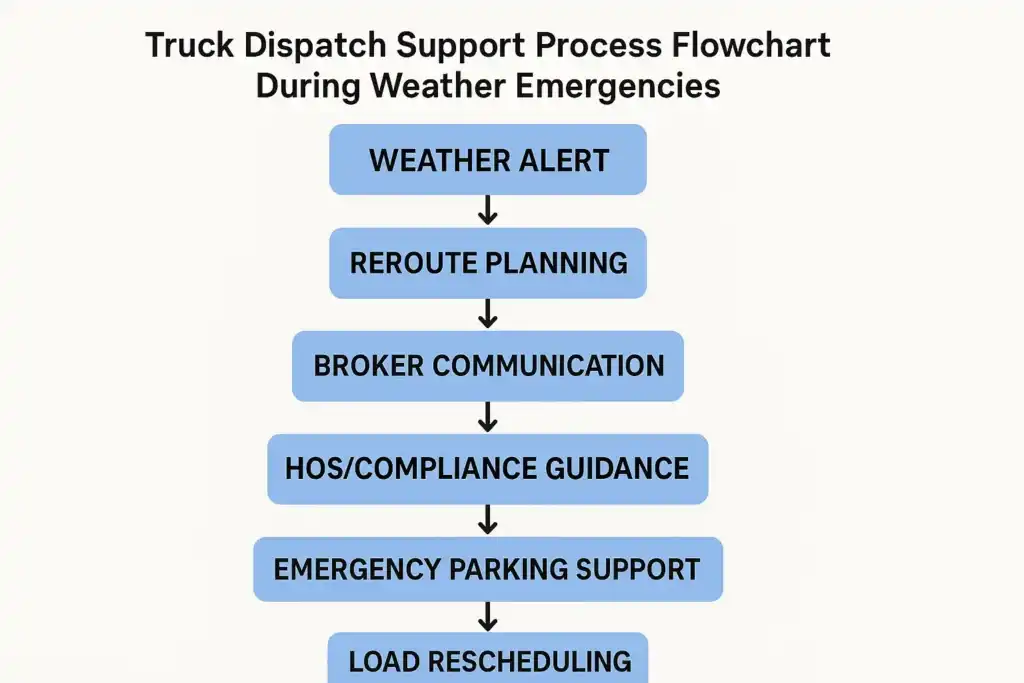
Of course, not every weather problem has a handy detour. In truly extreme conditions (like a blizzard closing every route through the Rockies), the best decision might be to pause. Here too, dispatch is key – helping you find a safe haven and plan when to resume. They might direct you to a trusted truck stop, an open rest area, or even a friendly warehouse lot to park until the roads reopen. Knowing where to park a 75-foot rig in a snowstorm on short notice isn’t easy; dispatchers maintain directories of truck stops and often have contacts at facilities across the country. Driver support services mean you’re not alone in finding a refuge when you need to get off the road for safety.
Key point: Whether it’s identifying an alternate highway around a flooded zone or guiding you to a safe parking spot during a tornado warning, dispatchers provide real-time navigation support that keeps you out of danger. This flexibility and problem-solving is a huge part of trucking through high-risk trucking regions and unpredictable weather. As one industry guide put it, truck dispatchers help fleets navigate weather delays by taking charge of rerouting and scheduling adjustments – they handle the chaos so you can keep your hands on the wheel.
Constant Communication with Brokers and Shippers
When weather derails a schedule, communication is everything. Someone needs to inform the shipper, receiver, or broker about what’s happening – and ideally negotiate a solution that avoids a financial hit for the driver. Dispatch services shine in this role as the chief communicator and advocate for the driver during disruptions.
Consider this scenario: You’re running behind because a sudden downpour caused a multi-car accident ahead, and traffic ground to a halt. You know you won’t make the receiver’s 5 PM delivery appointment. Rather than you trying to explain things while driving (unsafe and often futile), your dispatcher can immediately call the broker/receiver. They will explain that you’re delayed due to an unforeseen weather incident – a situation out of your control – and work on rescheduling the delivery or securing a late unload without penalties.
Dispatchers often have established relationships with brokers and load planners. They can negotiate in a professional way, leveraging those relationships to maintain trust. In many cases, a good dispatcher can get fees like late penalties waived by documenting that a delay was caused by weather (which is generally considered force majeure, or an “act of God”). They’ll note the incident in emails or the load tracking system so there’s a record. This not only protects you from unfair blame but also keeps the customer informed, which they appreciate.
Additionally, dispatch will keep you updated on any changes. If the receiver decides to close early because of a coming hurricane, a dispatcher will likely hear about it through industry channels or directly from the broker. They can relay that info to you pronto: “Warehouse is closing at noon for the storm – divert to X yard and we’ll deliver after it passes.” This saves you from driving into a closed facility or wasting hours. It’s a prime example of driver support services that go beyond finding loads – they handle the on-the-fly logistics so you don’t have to.
Effective communication also matters for return loads and re-bookings. Let’s say a snowstorm caused your original load to cancel; a proactive dispatch service will already be looking for replacement freight in nearby areas that are less affected. They might quickly re-book you on a different load once the roads clear, minimizing your downtime. Without dispatch, an owner-operator stuck in a truck stop during a storm might lose days of productivity. With dispatch, as soon as the weather breaks, they could have a new load lined up or be first in queue when freight starts moving again. This agility keeps your wheels turning and income flowing even around weather-related disruptions.
In summary, dispatch services act as the liaison between you and the rest of the supply chain when bad weather strikes. They make the calls, send the emails, and update the load boards while you concentrate on driving safely. This professional representation is a huge value-add. It’s far easier for a dispatcher in an office to negotiate a new plan than for a driver dealing with highway hazards to do so. When you have trucking dispatch support, you essentially gain a personal operations manager who’s always looking out for your schedule and bottom line, especially in tough situations.
Ensuring Compliance and Safety During Delays
Getting stuck in weather isn’t just a schedule issue – it can create legal and safety dilemmas too. That’s why a knowledgeable dispatch service focuses on compliance support as part of their trucking dispatch support duties during weather disruptions. They help make sure that drivers stay within regulations (and stay safe) even when plans go awry.
Hours of Service (HOS) Management: As mentioned earlier, the FMCSA allows an Adverse Driving Conditions exception – up to 2 extra hours to complete a run if something like unexpected weather hits. But there are conditions on using it: the conditions must be unforeseen and it can’t be used just because you or the carrier ignored a known forecast. A good dispatcher will know these rules cold. They’ll advise you when it’s appropriate to use that extra time and ensure you annotate your ELD properly to stay legal. If you’ve been sitting in traffic for hours due to an accident in a surprise blizzard, your dispatcher might say, “Go ahead and use the adverse condition exception – note the snowstorm delay in your log.” On the flip side, if the weather was known, they won’t push you to drive over hours because that could invite violations or liability.
Dispatchers also keep track of your hours as the delay unfolds. They might rearrange your loads or appointment times so that you can take a 10-hour break when needed and not violate your 14-hour clock. For example, if a highway closure means you’ll be parked for 5 hours waiting, your dispatcher could coordinate with the receiver to deliver first thing next morning instead, letting you log an overnight break and reset your clock. This kind of driver support service in compliance can save you from accidental log breaches and fines. It’s like having a personal logbook assistant who’s adapting your plan to fit the rules while you deal with the road.
Safety and Recovery: Compliance aside, dispatchers care about your well-being. If conditions get truly hazardous, a quality dispatch service will advise you to shut down. Far from pressuring drivers, reputable dispatchers put safety first. They may say, “Find the next safe parking and pull in – we’ll reschedule as needed. No load is worth your life.” This moral support is huge, especially for newer owner-operators who might feel pressure to keep going. Knowing your dispatcher “has your back” if you decide to park until daylight or until winds die down encourages better safety decisions. Veteran truckers will tell you one of the smartest owner operator trucking tips is knowing when to get off the road; a good dispatcher reinforces that wisdom rather than punishing you for it.
Furthermore, after a weather incident, dispatch can assist with any paperwork or reports needed. If you were delayed by a declared emergency (say a hurricane emergency zone), there might be HOS waivers or special permits – dispatchers keep tabs on those FMCSA emergency declarations and can guide you on what’s allowed. They also can document delays for your records. For instance, should a broker dispute a delay charge, your dispatch can provide proof like weather service bulletins or state DOT incident reports to validate that it was an uncontrollable event. This level of detailed backup can protect you from unjustified costs or hits to your reputation.
In short, trucking dispatch support extends into the realm of compliance and safety by giving you expert guidance. They help navigate the rulebook during abnormal situations and always prioritize that you operate legally and safely. As the old saying goes, “logs and loads can be fixed, a lost life cannot.” Dispatch services make sure that neither loads, logs, nor lives are lost by poor decisions in chaotic weather.
More Than Booking Loads: A Partner in Tough Times
It should be clear by now that a dispatch service does far more than find freight. When you’re facing weather adversity, your dispatcher becomes a lifeline and problem-solver. This is a huge value-add, transforming the dispatcher from a simple load-finder into a true partner in your business. Let’s highlight a few additional ways dispatch services prove their worth during weather disruptions:
- Strategic Planning and Flexibility: Experienced dispatchers plan buffer time into your schedules during risky seasons. They might arrange shorter runs or extra days on loads in winter, knowing that snow delays are likely. They can also quickly adjust your trip plan if you need to leave a day early to beat a storm, or lay over a day to let a hurricane pass before you enter a region. This flexibility keeps you profitable and safe. Flexibility is exactly what independent drivers need – and it’s built into good dispatch service operations.
- Resource Connections: Dispatchers often maintain lists of resources and contacts useful in a pinch. For example, if you need roadside assistance because your fuel gelled in a deep freeze, your dispatcher can help connect you to a nearby mechanic or driver support services like roadside tire repair. If you’re stuck in a blizzard, they might know which truck stops haven’t filled up yet or have available motel rooms nearby. Some dispatch companies even have relationships with warehouses if emergency storage is needed for a load. You have an entire support network behind you, instead of being solo in a crisis.
- Moral Support and Experience: There’s a psychological benefit too. Trucking can be a lonely job; that’s amplified during stressful events like weather emergencies. Having a dispatcher on the line providing calm guidance can be a huge relief. They might remind you of basic owner operator trucking tips for the situation (“remember to keep your fuel tanks full to prevent icing” or “this is a good time to throw on iron chains if you haven’t already”). Many dispatchers are former drivers or highly experienced in the industry – their advice comes from real-world knowledge. That mentorship aspect often gets overlooked, but in dire moments it can boost a driver’s confidence and decision-making.
Ultimately, dispatch services bring safety, compliance, and flexibility to the table, on top of their usual role in finding loads. This comprehensive support is something even highly experienced truckers find valuable. It’s like having an insurance policy not just for loads, but for situations. You hope you won’t hit a terrible storm – but if you do, you’ll be infinitely grateful to have an expert dispatcher in your corner.
The Dispatch Republic Difference: Always Here to Help
As a truck dispatch company operating across the U.S., Dispatch Republic understands what it takes to keep drivers moving in all conditions. We’ve guided carriers through blizzards in the Rockies, rerouted flatbeds around Gulf Coast hurricanes, and hustled to re-book loads when flash floods canceled original plans. Our approach to trucking dispatch support is built on being proactive, communicative, and safety-focused. When you partner with Dispatch Republic, you’re not just getting load booking – you’re getting round-the-clock driver support services that truly have your back when it counts.
Don’t weather the storms alone. Whether you’re an owner-operator or run a small fleet, consider how a professional dispatch team can make a difference. From advising on safe parking during a tornado warning to handling all the broker calls in a blizzard, we take pride in keeping our clients safe, legal, and profitable no matter the forecast. Get in touch with Dispatch Republic – let our experts help plan your routes, manage weather disruptions, and keep your wheels turning through rain, snow, or shine. With our dispatch specialists watching out for you, you can drive with confidence that no storm will stop your business. Stay safe and successful on the road – and let us handle the rest!
If you’re an owner-operator hauling specialized freight, don’t go it alone. Explore Dispatch Republic’s box truck dispatch services and car hauler dispatch services to access top-paying loads and compliance support. Check out our car hauling dispatch services and blog for more tips. Our dispatchers are experts in car hauling loads, flatbed loads, and reefer loads – we can match your truck to the best freight and handle the paperwork. Let us help you keep your rig loaded, safe, and legal.
For a deeper dive into the hotshot hauling business, read our Box Truck vs. Dry Van: Which Is Better for Your Business? and Step Deck vs. Flatbed: Which Is Right for Your Fleet?
Ready to make the most of your trucking business? 🚚💨 Reach out to Dispatch Republic and let our experts help maximize your earnings with tailored reefer dispatch service and dry van dispatch service solutions. We’ll handle the logistics while you keep on truckin’. Contact our truck dispatch service to get started on the road to greater profits and less hassle!
For more detailed guides, check Dispatch Republic’s resources on dispatching and the trucking business. Recent FMCSA Rule Changes for Immigrant CDL Holders if you’re weighing career paths, and Hotshot Dispatch and Compliance: Key Regulations Every Dispatcher Should Know to understand the dispatch side of the business.
If you’re an owner-operator juggling multiple responsibilities, consider partnering with a professional truck dispatch service to take the load off your shoulders—literally. At Dispatch Republic, we specialize in helping carriers run smarter and earn more by expertly managing load boards, negotiating top rates, and handling paperwork for dry vans, reefers, flatbeds, box trucks, step decks, and even hotshots. Our team monitors multiple premium load boards around the clock, ensuring your truck stays loaded with the right freight, at the right rate, on the right lane. Whether you’re scaling up or just getting started, having a dedicated dispatch team in your corner means fewer empty miles, less stress, and more time to focus on driving and growing your business.
Frequently Asked Questions
During winter storms, a dispatch service provides real-time support by monitoring weather and road closures and guiding the driver accordingly. They’ll suggest safe alternate routes or advise you to pause travel if conditions are too dangerous. Dispatchers also communicate with shippers and receivers about delays, so you’re less likely to face late fees or unhappy customers due to a blizzard. In short, trucking dispatch support keeps you informed, safe, and on track as much as possible when snow and ice disrupt your schedule.
Dispatchers offer a range of driver support services to help truckers through bad weather. These services include constant weather monitoring and alerts, route planning around storms, finding safe parking locations, and handling all necessary calls (to brokers, shippers, receivers) to update plans. They also assist with compliance – for example, advising on using the adverse driving conditions HOS exception – and provide moral support by checking in on drivers’ well-being. Essentially, dispatch services handle the logistics and planning in the background so the driver can focus on driving safely.
High-risk trucking regions are areas known for severe weather that can impact trucking. In the U.S., examples include mountain passes (risk of heavy snow and ice), the Upper Midwest and Northeast (harsh winters), the Great Plains (blizzards and high winds, plus tornadoes in spring), and the Southeast/Gulf Coast (hurricanes and flooding). Dispatchers plan for these regions by building in extra travel time and closely watching regional forecasts. For instance, when sending a truck through Colorado’s Rockies in January, a dispatcher will ensure the driver has chains and might schedule a lighter workload to allow flexibility. In hurricane-prone regions, dispatchers will have alternate routes ready and may avoid dispatching into an area if a tropical storm is on the horizon. Their planning and local weather knowledge help minimize risks in all these high-risk areas.
Key owner operator trucking tips for weather delays include always being prepared and staying flexible. First, plan ahead: check forecasts before trips and communicate with your dispatcher about any concerns. Carry emergency supplies – food, water, warm clothing, blankets, and if it’s winter, items like tire chains and anti-gel fuel additive. Second, slow down and drive cautiously when weather hits; no load is worth an accident. Third, stay in communication – update your dispatcher as soon as you encounter trouble so they can start problem-solving (rerouting or rescheduling) immediately. Finally, don’t be afraid to park and wait it out if conditions become unsafe. Expert owner-operators say it’s better to deliver late than not at all. With good planning, the right equipment, and a supportive dispatch service, you can ride out most weather delays safely.
Yes, one big advantage of having dispatch support is their ability to re-book loads quickly if yours falls through. If a receiver closes for a hurricane or a shipper cancels loading because of an ice storm, a dispatch service will immediately tap into load boards and their broker network to find a replacement load so you don’t sit idle. They often have access to many freight opportunities and can prioritize finding you a load in a safer region or schedule it for after the storm. This keeps your revenue stream going. On your own, you might struggle to spend hours searching for new freight while also dealing with the weather chaos, but a dispatcher handles that hustle for you.
Absolutely. Dispatchers are well-versed in regulations and will help ensure you remain compliant even if delayed. For example, they might remind you to use the FMCSA adverse driving conditions exception to extend your hours (when applicable)eroad.com, and they’ll instruct you on properly annotating your electronic log about the delay. If a state or federal emergency waiver is issued (for instance, suspending certain HOS rules due to a disaster), your dispatcher will know and inform you so you can legally take advantage of it. They also rearrange schedules to fit legal driving windows – like finding you a safe stopping point to take a required 10-hour break if you’re running out of hours in a storm. This compliance guidance is a key part of driver support services that dispatch companies provide during weather disruptions.
Ready to Take Your Trucking Career to the Next Level?
Whether you’re an owner-operator, a company driver, or a carrier company in need of truck dispatch services, Dispatch Republic is here to help. Our teamof experienced truck dispatchers offers affordable, professional truck dispatch solutions designed to save you time, increase your earnings, and make your business more efficient.
Thinking about outsourcing your truck dispatching? Contact Dispatch Republictoday and move smarter, not harder.
Found our Blog useful? Spread the word:
Check our latest posts:
[latest_posts_grid]
Contact us today to see how our team can support your trucking business.